
Razer Barracuda X not connecting to PC is a common issue that shows up right after unboxing or after a Windows update quietly changes a driver setting. The good news is that this problem almost always comes down to a handful of fixable causes: a mismatched wireless mode, an outdated dongle driver, or a USB port that is not delivering a stable connection. This guide walks through the exact fixes that get the headset paired and streaming audio again, in the order that solves the issue fastest.
Key Takeaways
- The fastest fix is usually the mode switch under the volume wheel – it toggles between Bluetooth and 2.4GHz Lightspeed wireless.
- Unplugging and re-plugging the USB dongle resolves the issue for most users within seconds.
- Outdated firmware and drivers are the second most common cause of pairing failures.
- A faulty or overloaded USB port can silently block the dongle from getting a stable signal.
- Windows sound settings sometimes disable the headset even when it is properly paired.
Method 1: Check and Switch the Wireless Mode
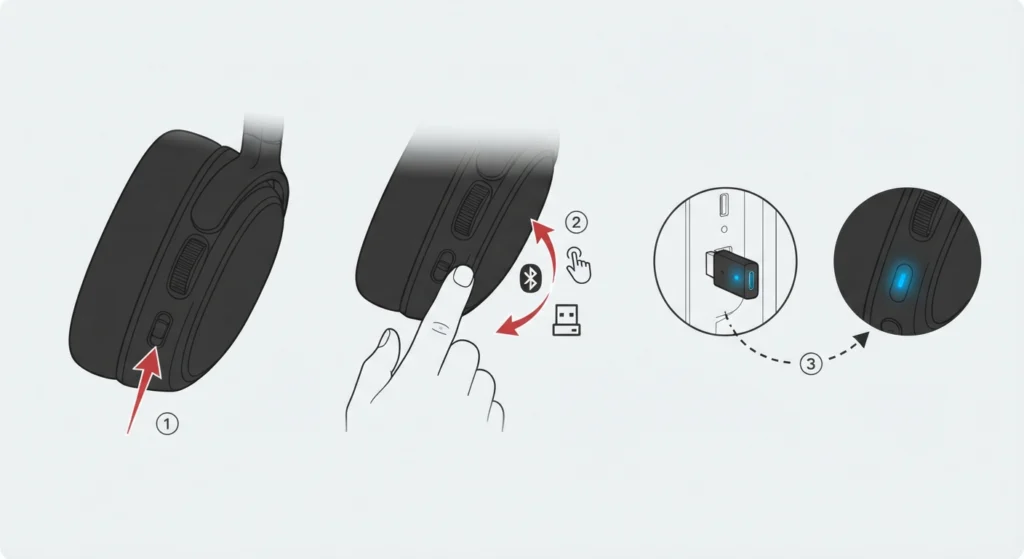
The Barracuda X ships with a small switch located just under the volume wheel on the left ear cup. This switch controls whether the headset connects through Bluetooth or through the 2.4GHz Lightspeed dongle, and it is easy to bump it by accident when adjusting the headset. Most people find that a mismatched mode is the actual reason the headset appears to be pairing endlessly without ever finishing the connection.
- Step 1: Locate the small switch beneath the volume wheel on the left ear cup.
- Step 2: Double-click the switch to toggle it between Bluetooth mode and 2.4GHz wireless mode.
- Step 3: Confirm the dongle is inserted into the PC before switching, then wait a few seconds for the LED to turn solid.
- Step 4: Test audio playback once the light stops blinking to confirm the connection has been made.
Pro-Tip: If the LED keeps blinking blue and never turns solid, the headset is almost certainly stuck in the wrong wireless mode rather than experiencing an actual hardware fault. Double-clicking that switch resolves this for a large share of reported cases before any other step is needed.
Method 2: Re-Seat the USB Dongle
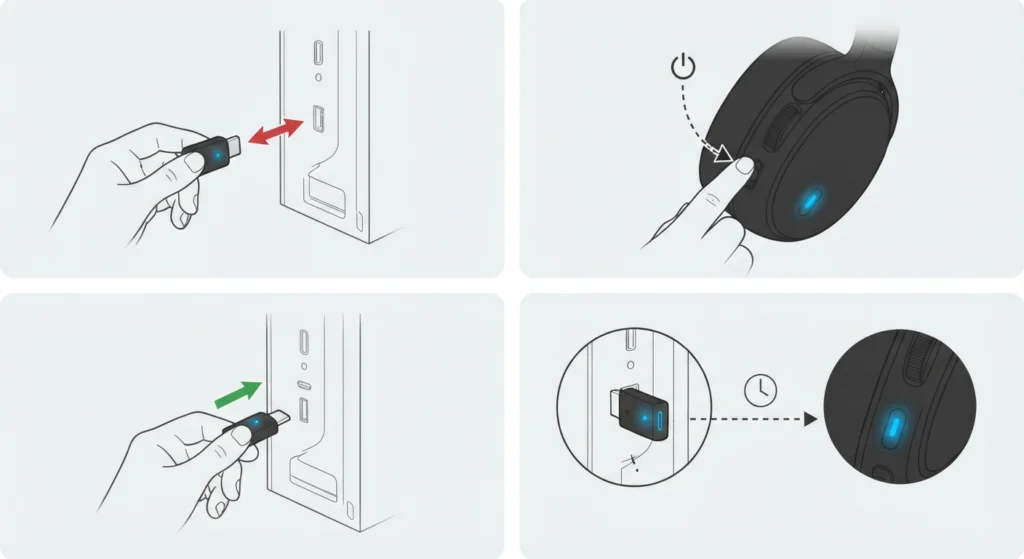
This sounds almost too simple, yet it works more often than any driver reinstall. The dongle sometimes fails to establish a stable handshake with the headset the first time it is plugged in, especially after a PC restart or a sleep cycle.
- Step 1: Remove the USB dongle completely from the PC.
- Step 2: Turn the headset off, then hold the power button until the LED blinks blue, indicating pairing mode.
- Step 3: Plug the dongle back into the same USB port.
- Step 4: Allow ten to fifteen seconds for the light to turn solid before testing sound.
This works best when the dongle is plugged directly into a rear motherboard port rather than a front-panel USB hub, since front hubs on many desktop cases deliver a weaker or less consistent signal.
Method 3: Try a Different USB Port
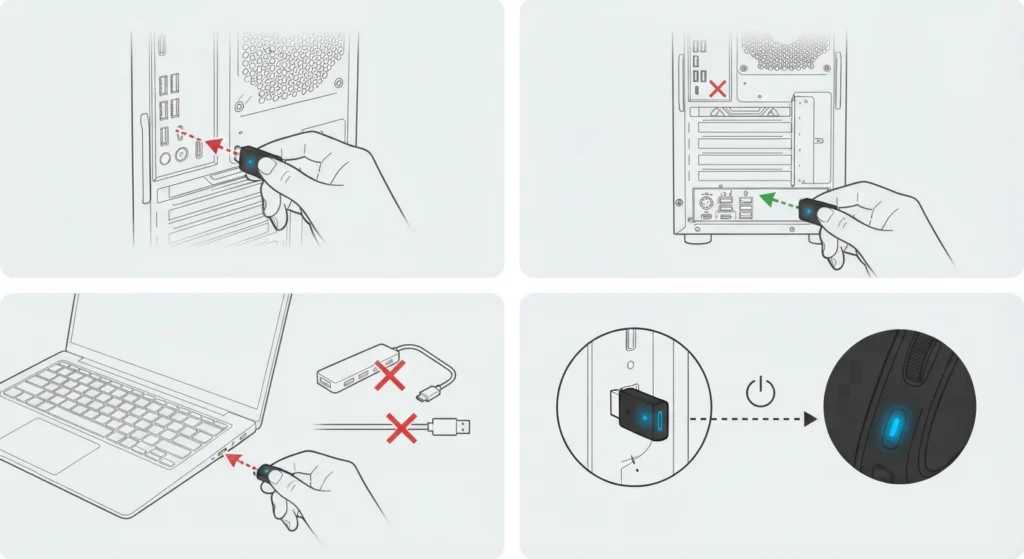
Not every USB port on a computer performs the same job. Some are wired through internal hubs that share bandwidth with several other devices, and that congestion can prevent the dongle from maintaining a clean connection.
- Step 1: Unplug the dongle from its current port.
- Step 2: Insert it into a USB port located directly on the back of a desktop tower, or a different port on a laptop.
- Step 3: Avoid USB extension cables or hubs during this test, since they often introduce interference.
- Step 4: Power the headset on again and check whether the LED becomes solid.
Method 4: Update Headset Firmware and Drivers
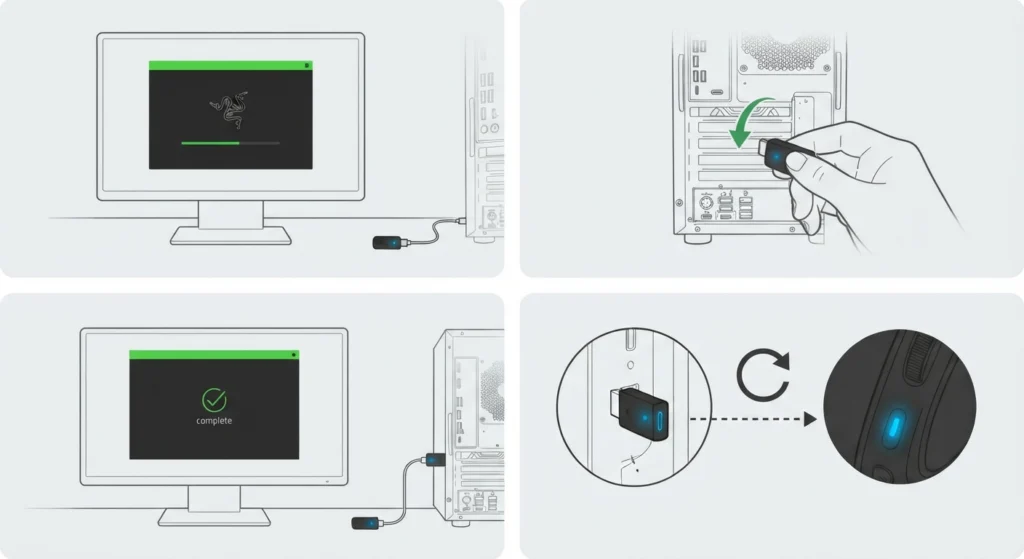
Outdated firmware is a frequent culprit, particularly on units that have not been connected to Razer Synapse in a while. An outdated driver can also cause Windows to misidentify the device or fail to load it correctly after startup.
- Step 1: Install Razer Synapse from the official Razer website.
- Step 2: Open Synapse and allow it to detect the Barracuda X headset.
- Step 3: Check for any available firmware update and install it fully without disconnecting the dongle.
- Step 4: Restart the PC once the update finishes, then reconnect the headset.
Pro-Tip: Firmware updates can take a few minutes and the headset LED may flash oddly during this process. Interrupting an update midway is one of the few ways to actually cause a lasting connection problem, so patience here matters more than it seems.
Method 5: Check the Microphone Cable Placement
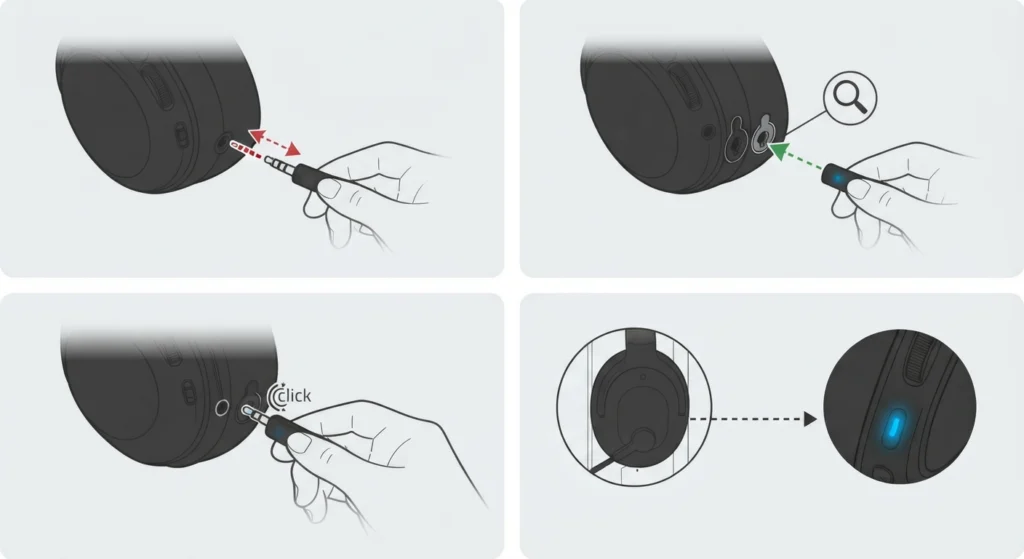
The Barracuda X has two ports on the ear cup near the volume wheel, and only one of them is the correct microphone jack with a locking connector. Plugging the boom mic into the wrong port can interfere with the pairing process entirely, not just the microphone function.
- Step 1: Remove the microphone cable from its current port.
- Step 2: Identify the port with the locking mechanism, which is the correct one.
- Step 3: Reinsert the microphone cable until it clicks securely into place.
- Step 4: Power the headset on and check the connection status again.
Method 6: Adjust Windows Sound Settings
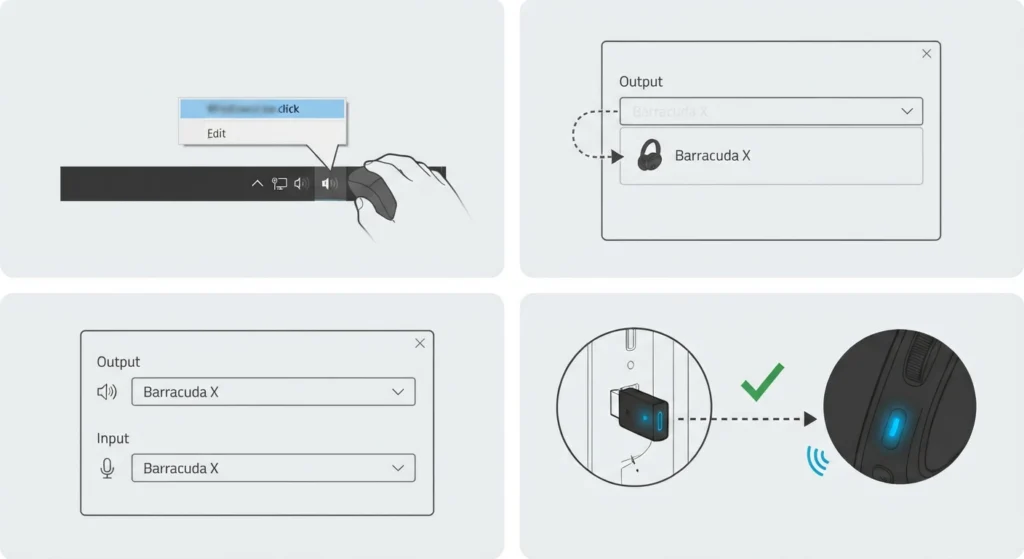
Sometimes the headset connects perfectly at the hardware level, yet Windows keeps routing audio to a different output device. This makes it look like the headset failed to connect even though it is working fine in the background. Reviewing the playback device list and adjusting the audio output settings usually clears this up in under a minute.
- Step 1: Right-click the speaker icon in the Windows taskbar.
- Step 2: Select Sound settings and check the list of available output devices.
- Step 3: Set Barracuda X as the default playback and recording device.
- Step 4: Test audio again to confirm sound is routed correctly.
Anyone who has run into similar routing issues before may find it useful to walk through a full guide on adjusting audio output settings on Windows 11, since the same steps apply to most wireless headsets, not just this one.
Tips for a Stable Connection
- Keep the dongle within a few feet of the headset, since walls and metal desk frames weaken the 2.4GHz signal.
- Avoid placing the dongle near other wireless devices such as routers or wireless mice, which can cause interference.
- Charge the headset fully before a long session, since low battery sometimes triggers unstable pairing behavior.
- Check for Windows updates periodically, since Microsoft occasionally changes USB power management settings that affect wireless dongles.
Common Problems and Troubleshooting
A handful of recurring issues show up across different setups, and each one has a specific fix rather than a generic reset.
- Headset disconnects after PC sleep: Open Device Manager, find the USB Root Hub associated with the dongle, and uncheck the option that allows Windows to turn off the device to save power.
- Bluetooth mode will not pair with a phone or laptop: Confirm the switch is set to Bluetooth mode, then follow a dedicated guide on how to re-pair Bluetooth earbuds for stereo sound on Windows for the exact pairing sequence.
- Microphone is not detected even though audio works: This usually points to a Windows privacy setting blocking microphone access, which a guide on resolving microphone detection problems on Windows 11 covers in detail.
- Headset shows in Device Manager but produces no sound: A full audio reset often clears this, and the process is outlined in a guide on resetting audio settings on Windows 11.
- Multiple input devices are causing conflicts: When several microphones or headsets are connected at once, Windows can pick the wrong one automatically, which a guide on managing audio input devices on Windows 11 explains how to correct.
Frequently Asked Questions
Why does the Barracuda X LED keep blinking blue and never turn solid?
A blinking blue light that never stabilizes almost always means the headset is stuck in pairing mode because the wireless mode switch does not match the dongle. Double-clicking the switch under the volume wheel typically resolves this.
Does the Barracuda X work with both Bluetooth and a USB dongle at the same time?
No. The headset uses one connection method at a time, and the physical switch determines whether it operates in Bluetooth mode or 2.4GHz Lightspeed mode through the dongle.
Why does the headset disconnect every time the PC wakes from sleep?
This is typically caused by Windows USB power management settings that shut down the port during sleep. Disabling the power-saving option for that USB Root Hub in Device Manager usually fixes it.
Is a firmware update necessary if the headset already connects fine?
It is still recommended. Firmware updates often include stability improvements for the wireless connection that prevent future dropouts, even if the current connection seems fine.
Can a USB extension cable cause connection problems?
Yes. Extension cables and hubs can weaken the signal between the dongle and the headset, leading to intermittent pairing or complete failure to connect.
Why does the microphone not work even though audio plays correctly?
This is often related to the microphone cable being plugged into the wrong port on the ear cup, or a Windows privacy setting blocking app access to the microphone.
Does the front USB port on a desktop PC work as well as the rear ports?
Rear motherboard ports generally provide a more stable and direct connection than front-panel ports, which are often wired through an internal hub.
What should be done if none of the standard fixes work?
Reinstalling Razer Synapse from scratch and testing the dongle on a completely different PC can help isolate whether the issue is with the headset, the dongle, or the original computer’s USB ports.
How long should a firmware update take to complete?
Most firmware updates for the Barracuda X complete within a few minutes. The headset should not be disconnected or powered off during this process.
Can outdated Windows updates affect the Barracuda X connection?
Yes. Windows occasionally changes USB and Bluetooth driver behavior through system updates, which can affect previously stable wireless connections until the headset drivers are refreshed.