
Earbuds that cause pain after extended use is one of the most common complaints among everyday listeners, gamers, and remote workers alike. The discomfort is real, and it can range from mild soreness to sharp pressure pain inside the ear canal. The good news is that most cases are completely fixable with the right adjustments. This guide walks through exactly what to do, step by step, so earbuds feel comfortable again – even during long sessions.
Quick Summary: Key Takeaways
- Wrong ear tip size is the most common cause of earbud pain
- Switching to memory foam or comply tips dramatically improves comfort
- Wearing angle and insertion depth both matter more than most people think
- Taking short breaks every 60-90 minutes prevents pressure buildup
- Cleaning ear tips regularly reduces irritation from bacteria and debris
- Some ear shapes simply need over-ear hooks or a different earbud style
How to Fix Earbuds That Hurt Your Ears
Fix 1: Change to the Correct Ear Tip Size
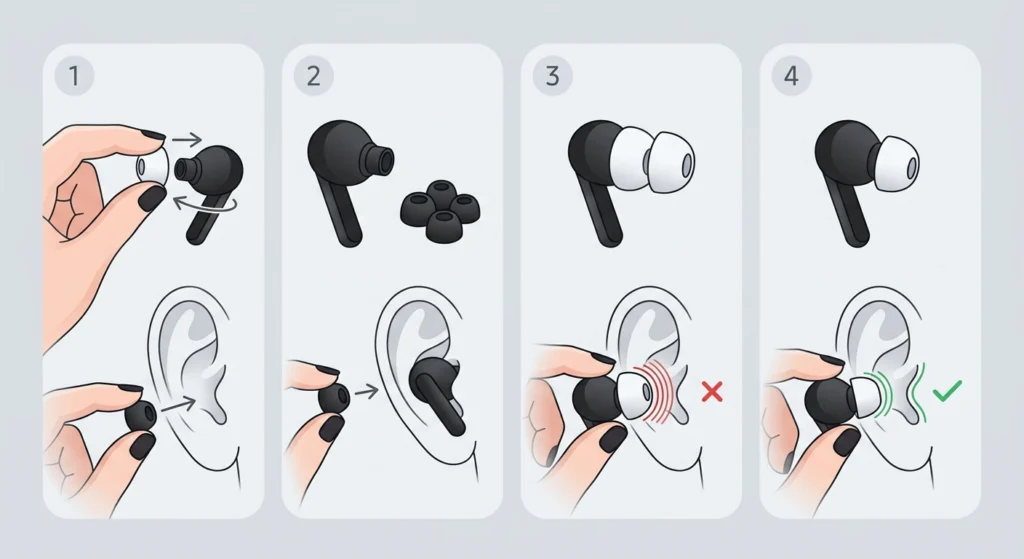
The number one reason earbuds hurt is the wrong tip size. Most people grab the medium tips that come pre-installed and never think twice. But ear canals vary widely – what feels neutral to one person creates painful pressure for another.
- Step 1: Remove the current ear tips from the earbud nozzle by gently pulling and twisting.
- Step 2: Try the small tips first. Insert the earbud and check if there is still a secure seal without pressing hard.
- Step 3: Try the large tips next. If the medium or large creates a tight, pressurized feeling, go smaller.
- Step 4: The correct size should sit in the ear canal comfortably with a light seal – no forcing, no gaping.
Most earbuds come with three sizes. If none of the included options work, aftermarket tips from brands like Comply, Spinfit, or Symbio are worth trying.
Fix 2: Switch to Memory Foam Ear Tips
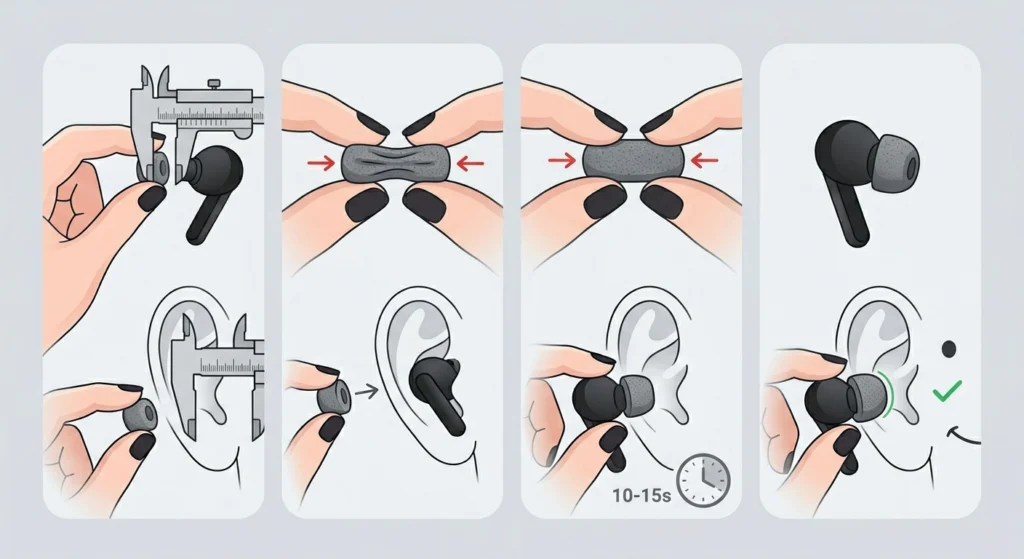
Silicone tips are the default on nearly every pair of earbuds, but they are not ideal for everyone. Silicone is firm and does not conform to the unique shape of each ear canal. Memory foam tips, on the other hand, compress on insertion and then slowly expand to fill the canal evenly – no pressure points.
- Step 1: Purchase memory foam tips that match the nozzle diameter of the earbuds. Check the earbud brand’s website or measure the nozzle width.
- Step 2: Compress the foam tip between two fingers for about three seconds before inserting.
- Step 3: Insert while the foam is still compressed, then hold in place for 10-15 seconds as it expands.
- Step 4: The fit should feel snug and even – no sharp edges, no single pressure spot.
Most people find that memory foam tips also improve sound quality alongside comfort, since the better seal enhances bass without raising the volume.
Pro-Tip: Comply foam tips are specifically designed for pain-prone ears. Their ‘Sport’ and ‘Isolation’ lines offer different densities – softer foam works best for all-day wear, while denser foam suits those who want more sound isolation during workouts.
Fix 3: Adjust the Insertion Angle
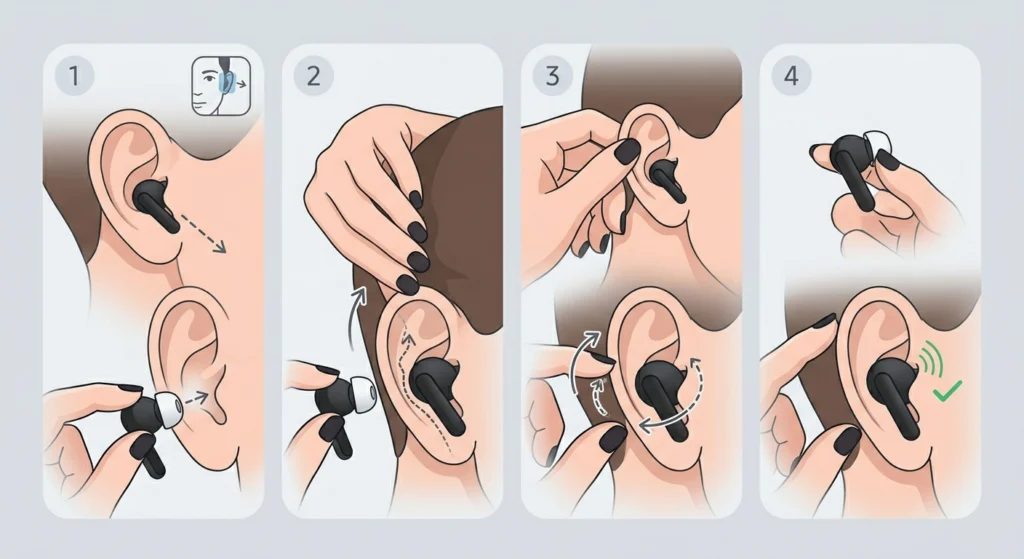
Earbuds are not meant to go straight into the ear canal like a plug. The natural ear canal angles slightly forward and downward. Inserting at the wrong angle creates pressure on one side of the canal wall, which causes soreness after 30 minutes or less.
- Step 1: Hold the earbud so the nozzle points slightly forward (toward the face), not directly inward.
- Step 2: Use the opposite hand to gently pull the outer ear upward and backward – this straightens the canal slightly and makes insertion easier.
- Step 3: Insert with a gentle twisting motion rather than pushing straight in.
- Step 4: Check that the earbud body rests flush and natural against the outer ear without pressing hard.
This technique takes a few tries to get right, but once the correct angle clicks, insertion becomes faster and far more comfortable.
Fix 4: Reduce Insertion Depth
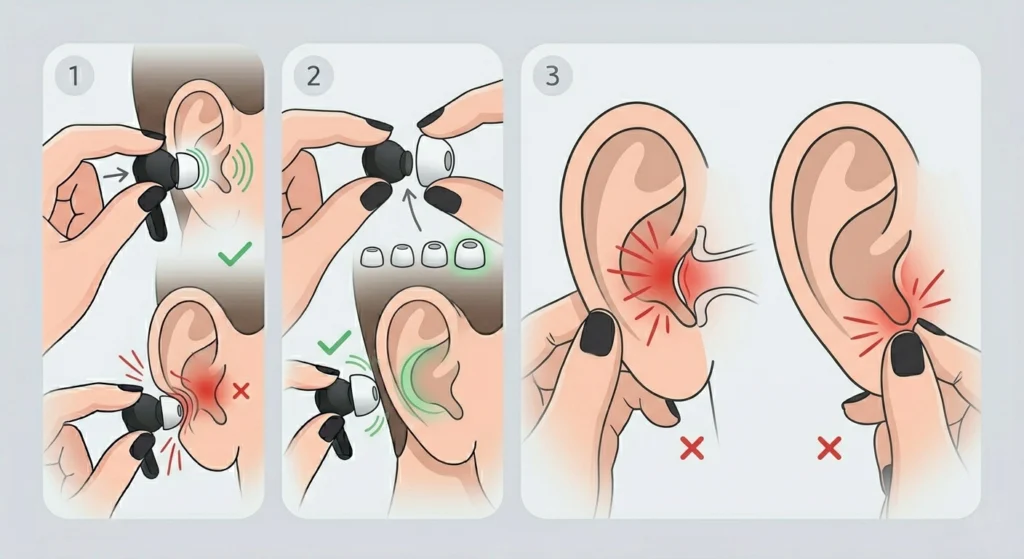
Pushing earbuds too deep is a surprisingly common habit, especially among people chasing a better bass response. Deep insertion compresses the eardrum and puts sustained pressure on sensitive inner-canal tissue. The key is to stop once a light seal forms – deeper is not better.
- Step 1: Insert the earbud only until a gentle seal is felt – a slight drop in background noise is the signal.
- Step 2: If the urge is to push further for more bass, try a larger ear tip size instead to improve the seal without going deeper.
- Step 3: After a listening session, note where the pain is. Pain deep in the canal usually means over-insertion; pain at the opening usually means the tip is too large or too firm.
Fix 5: Use Over-Ear Hooks or Wings for Stability
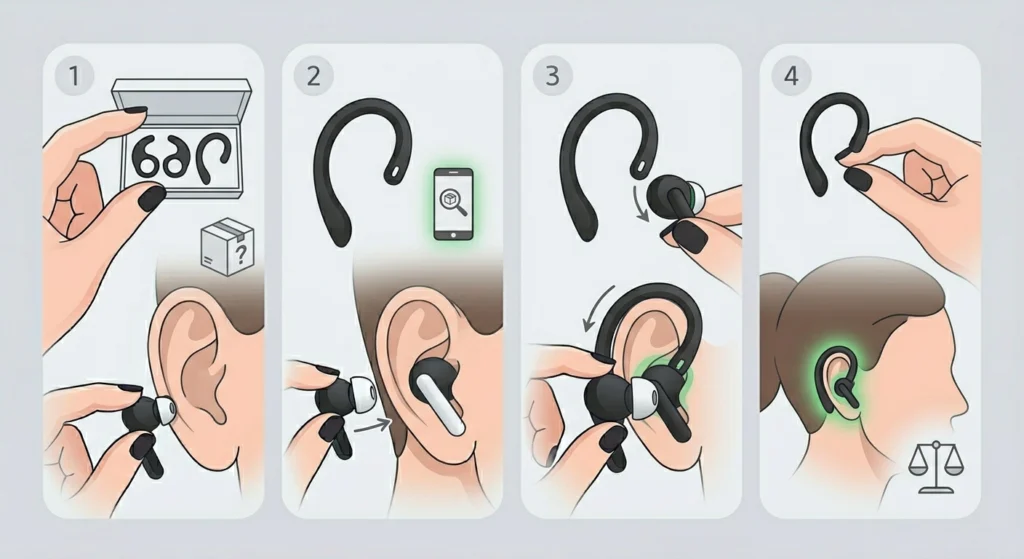
When earbuds feel like they are constantly falling out, the instinct is to push them in harder. This constant re-insertion and over-tightening is a major cause of ear fatigue. Over-ear hooks or ear fins (wingtips) hold earbuds in place without relying on canal pressure at all.
- Step 1: Check if the earbuds came with silicone ear fins or wing attachments – many sport earbuds include these in the box.
- Step 2: If not included, search for universal ear hooks compatible with the earbud model.
- Step 3: Attach the hook so it loops over the upper ear. Adjust position until the earbud sits stable without pressing into the canal.
- Step 4: The earbud should stay in place during movement without any canal pressure holding it there.
Fix 6: Take Regular Listening Breaks
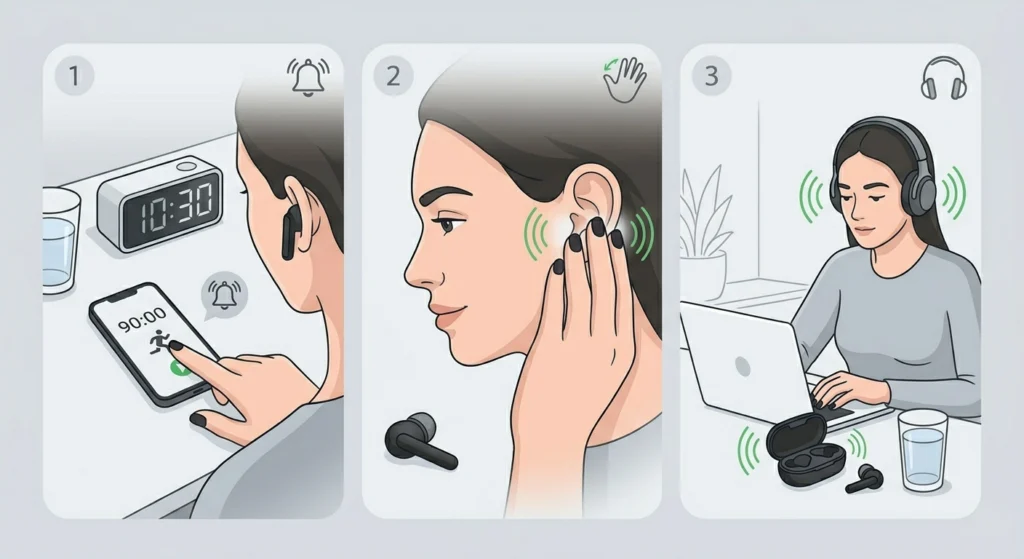
Even a perfectly fitted earbud will cause discomfort if worn non-stop for hours. The ear canal is lined with sensitive skin and cartilage – sustained pressure from any object, no matter how soft, causes soreness over time. This is purely a usage habit fix.
- Step 1: Set a timer to remove earbuds every 60 to 90 minutes.
- Step 2: During the break (5-10 minutes is enough), massage the outer ear gently to restore circulation.
- Step 3: If working in a quiet environment, use open-back or on-ear headphones as an alternative during breaks to give the canal a rest.
Pro-Tip: Alternating between earbuds and a good pair of over-ear headphones throughout the day is the most effective long-term solution for people who spend 6+ hours in audio daily. The ear canal simply was not designed for all-day sealed contact.
Fix 7: Clean Ear Tips Regularly
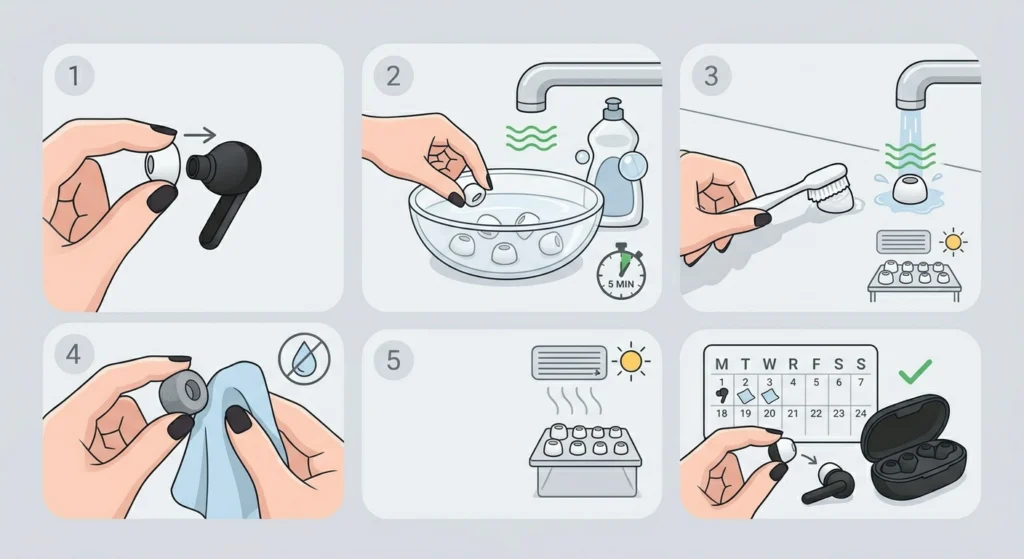
Dirty ear tips are rough, stiff, and harbor bacteria that irritate the skin inside the ear canal. Earwax and debris build up faster than most people notice, and even a thin film of residue changes the texture and fit of the tip.
- Step 1: Remove the ear tips from the earbuds completely.
- Step 2: Soak silicone tips in warm water with a small drop of dish soap for 5 minutes.
- Step 3: Gently scrub with a soft toothbrush, rinse thoroughly, and let air dry completely before reattaching.
- Step 4: For foam tips, wipe gently with a slightly damp cloth only – do not soak, as foam absorbs water and loses its shape.
- Step 5: Clean tips at least once a week for daily users.
Fix 8: Try a Different Earbud Style
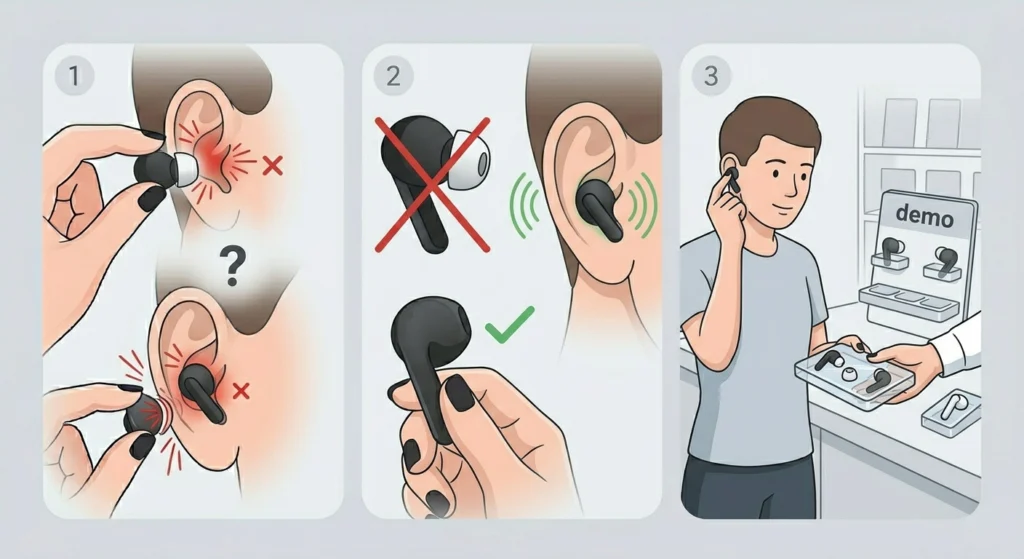
Some ear shapes are simply not suited for in-ear canal earbuds. There is no shame in that – it is anatomy, not a flaw. Semi-in-ear (open-fit) earbuds like the standard Apple AirPods design rest in the outer ear without entering the canal at all. They are not as isolating, but they eliminate canal pressure entirely.
- Step 1: Identify whether the pain is inside the ear canal or at the outer ear. Canal pain points to tip or depth issues. Outer ear pain suggests the earbud body shape is incompatible.
- Step 2: If outer ear pain is the issue, look for open-fit or semi-in-ear designs that rest in the concha (the bowl-shaped part of the outer ear).
- Step 3: Try earbuds in-store when possible before purchasing. Most electronics retailers have demo units for exactly this reason.
Tips for Long-Term Earbud Comfort
- Always start with the smallest ear tip size and work up rather than defaulting to medium
- Store earbuds in their case – tips deform when crushed in a pocket or bag, changing the fit
- Replace ear tips every 3-6 months even if they look fine – silicone hardens and loses flexibility over time
- Keep the volume at 60% or below to avoid straining both the ears and the urge to push earbuds deeper for bass
- If ears feel warm or itchy after use, try hypoallergenic silicone tips – some people react to standard silicone compounds
- For those who also use a computer setup, adjusting audio output settings on Windows 11 to balance EQ can reduce the need for high volume, which indirectly reduces the habit of pressing earbuds in deeper for more sound
Common Problems and Solutions
Problem: Pain After Just 20-30 Minutes
This usually means the ear tip size is wrong – most likely too large, creating constant outward pressure. Try the next size down immediately. If pain persists even with the smallest tip, switch to memory foam, which distributes pressure more evenly than silicone.
Problem: One Ear Hurts More Than the Other
Ear canals are rarely identical. It is common for one canal to be slightly smaller or angled differently. Use different tip sizes on each earbud if necessary – left small, right medium is a completely valid setup and more common than most people realize.
Problem: Earbuds Keep Falling Out, Leading to Over-Insertion
Stability issues almost always trace back to tip size (too small creates no grip) or ear shape incompatibility. Add ear wings or hooks first. If earbuds still do not stay, the earbud design itself may not match the ear shape – open-fit styles tend to stay in place better for people with this problem. For those who also notice audio issues, knowing how to re-pair Bluetooth earbuds for stereo sound can rule out connectivity drops that cause the urge to constantly adjust fit.
Problem: Ear Canal Feels Blocked or Pressurized After Removing Earbuds
This is a sign of over-insertion or a tip creating too strong a seal. The pressure difference between the sealed canal and the outside air is the culprit. Reducing insertion depth and trying a slightly smaller tip with a less aggressive seal usually resolves this within a few sessions.
Problem: Itching or Skin Irritation Inside the Canal
Itching after earbud use is often a reaction to silicone material, earwax buildup on the tip, or moisture trapped in the canal. Clean tips thoroughly, let ears dry fully before reinserting, and consider switching to comply or other foam tips which are generally gentler on sensitive skin.
Frequently Asked Questions
Why do earbuds hurt my ears but not other people’s?
Ear canal size, shape, and sensitivity vary significantly between individuals. Some people have narrower or more curved canals, softer cartilage, or more sensitive skin. What fits one person perfectly creates real discomfort for another. The fix is finding the right tip type, size, and insertion angle for a specific ear shape – not assuming the default setup works for everyone.
Is it normal for earbuds to cause ear pain after long use?
Some mild awareness after extended use is normal, but actual pain is a signal that something about the fit or usage pattern needs adjustment. Pain is not an acceptable trade-off for good audio. With the right tips and habits, earbuds should be comfortable for 2-3 hours without discomfort.
Can wearing earbuds cause permanent ear damage?
Persistent pressure on the ear canal skin can cause minor abrasions and soreness, but properly fitted earbuds used at safe volumes do not cause permanent structural damage in most cases. The bigger hearing risk is volume, not pressure. Keep volume at or below 60% of maximum to protect hearing over time.
What ear tip material is best for sensitive ears?
Memory foam is generally the most gentle option for sensitive ears because it conforms to the canal shape instead of pressing against it. For those who react to foam materials, look for tips labeled ‘hypoallergenic silicone’ or ‘medical-grade silicone’ – these use softer compounds that are less likely to cause skin reactions.
How often should ear tips be replaced?
For daily users, silicone tips should be replaced every 3-6 months. Memory foam tips wear out faster – typically every 2-3 months with daily use – as the foam loses its rebound elasticity and starts to feel firm and uneven. Worn tips are a surprisingly common but overlooked cause of renewed earbud discomfort.
Do more expensive earbuds hurt less?
Price alone does not determine comfort. Many premium earbuds include higher-quality ear tips and more size options, which helps – but fit depends on ear anatomy, not cost. An affordable pair with the right aftermarket tips can be far more comfortable than an expensive pair with the wrong default fit.
Can cleaning ears more often help with earbud pain?
Yes, to a degree. Excess earwax can change the effective diameter of the ear canal and create uneven pressure against the tip. Regular, gentle ear cleaning can help earbuds fit more consistently. However, cleaning ears too aggressively removes the protective wax layer and increases sensitivity, so balance is important.
Are in-ear or over-ear headphones better for people with ear pain?
For those with chronic earbud pain, over-ear (circumaural) headphones eliminate canal pressure entirely since the cups rest around the ear rather than inside it. Semi-in-ear (open-fit) earbuds are a middle option. In-ear earbuds can still be comfortable for pain-prone users with the right fit, but over-ear designs are inherently gentler on the ear canal for all-day use.
Why does only one earbud hurt?
Asymmetrical pain usually comes from asymmetrical ear anatomy – one canal is smaller, angled differently, or has a sharper curve. Using a smaller tip on the painful side is the first fix. Also check that both earbuds are being inserted at the same angle, as habits can cause one side to sit deeper or more pressured than the other without noticing.
How long should it take for ear pain to go away after adjusting earbuds?
Mild soreness from a single session typically clears within a few hours of removing the earbuds. If the fit has been causing daily irritation, it may take 1-2 days of rest before the canal feels fully normal again. If pain persists beyond 48-72 hours or is accompanied by hearing changes, consult a healthcare professional to rule out any ear canal irritation or infection.