
Earbuds that keep falling out are one of the most common and frustrating problems for headphone users. Whether it happens during a run, a commute, or a quiet listening session, a poor fit ruins the experience fast. The good news is that most of the time, fixing earbuds that fall out does not require buying a new pair – it just requires knowing what to adjust. This guide covers every proven fix, from the simplest swap to the smartest wearing technique.
Quick Summary: Key Takeaways
- The most common reason earbuds fall out is using the wrong ear tip size
- Changing how earbuds are inserted or worn can immediately improve fit
- Aftermarket ear tips and ear hooks offer long-term solutions for difficult ear shapes
- Sports and over-ear-wire styles provide the most secure fit for active use
- Cleaning ear tips regularly helps maintain grip and prevents slipping
How to Fix Earbuds That Fall Out: Step-by-Step Fixes
Fix 1: Switch to the Right Ear Tip Size
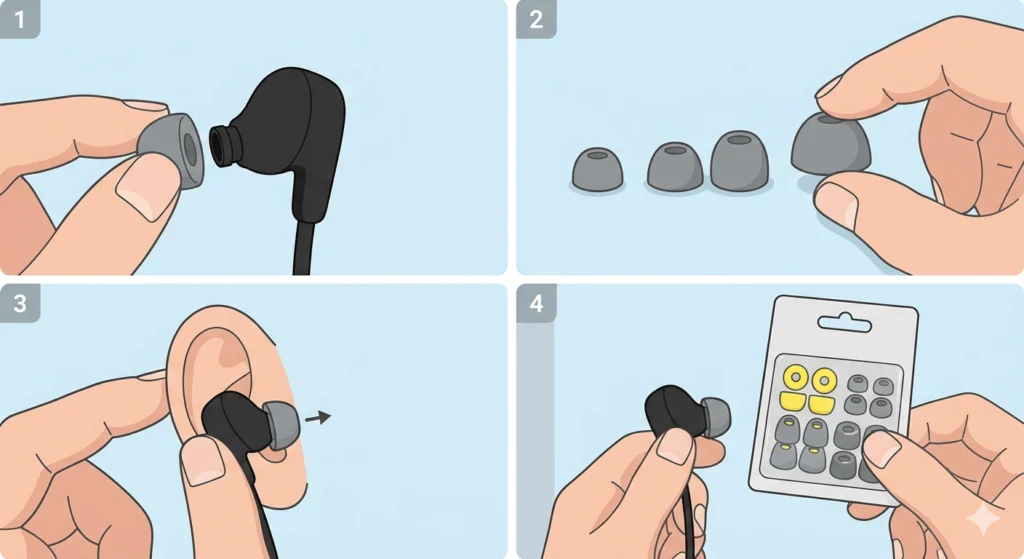
This is the single most effective fix and the first place to start. Most earbuds include at least three sizes of silicone ear tips – small, medium, and large. Many people default to medium without testing the others, and that is where the problem begins.
- Step 1: Remove the current ear tip by pulling it gently off the nozzle.
- Step 2: Try the next size up if the earbuds feel loose, or the next size down if they feel uncomfortable or create pressure.
- Step 3: Insert the earbud and give it a light tug. A proper-fitting tip should stay in place with minimal resistance.
- Step 4: If the included sizes do not work, consider buying third-party memory foam or silicone tips in more specific sizes.
This works best when testing multiple sizes back to back in a quiet environment, so the difference in fit is easier to feel.
Fix 2: Change the Way the Earbuds Are Inserted
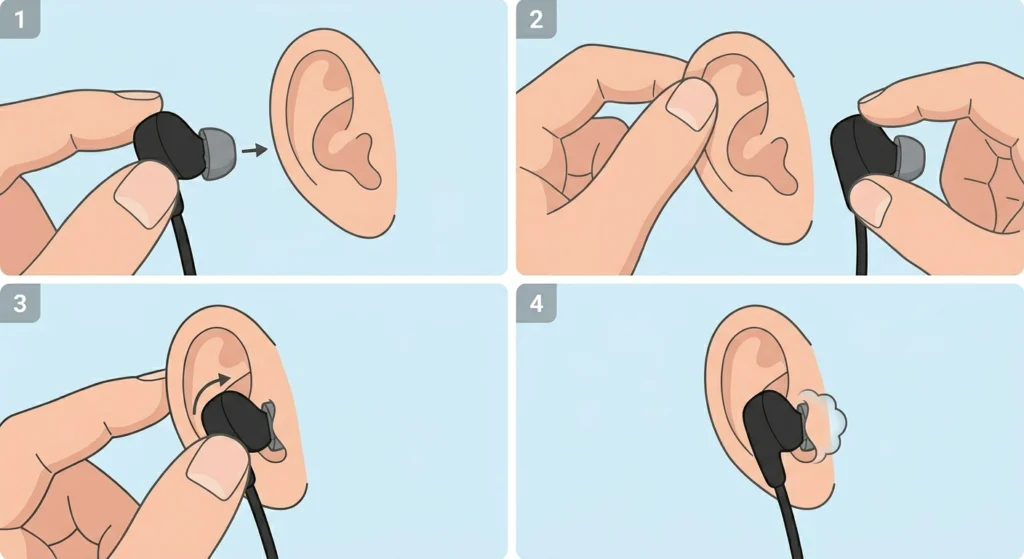
Insertion technique matters more than most people realize. Simply pushing an earbud straight into the ear canal rarely creates a secure seal.
- Step 1: Hold the earbud between the thumb and index finger with the nozzle pointing toward the ear canal.
- Step 2: Use the free hand to gently pull the top of the ear upward and slightly back. This straightens the ear canal and opens it up.
- Step 3: Insert the earbud and give it a gentle twist – usually about a quarter turn – until it seats snugly.
- Step 4: Release the ear. The earbud should feel locked in place with a slight suction-like seal.
Most people find that this pulling and twisting method works on the first try. The key is straightening the canal before inserting, not forcing the tip in at an angle.
Pro-Tip: If one earbud falls out more than the other, it is likely because the ear canals are slightly different sizes – which is extremely common. Use a different ear tip size on each side if needed. Many users find success pairing a medium tip on one ear and a small tip on the other.
Fix 3: Try Memory Foam Ear Tips
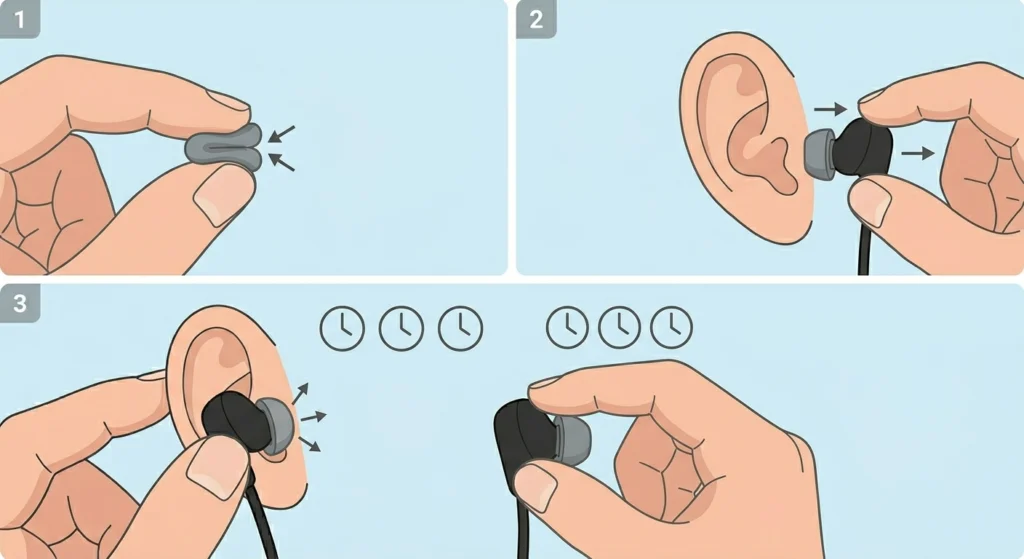
Memory foam tips conform to the unique shape of each ear canal, creating a custom-like seal that standard silicone cannot replicate. Brands like Comply and Spinfit make universal foam tips that fit most earbud nozzle sizes.
- Step 1: Compress the foam tip between the fingers before inserting.
- Step 2: Insert quickly while the foam is still compressed.
- Step 3: Hold the earbud in place for a few seconds while the foam expands and molds to the canal.
The expansion creates a grip that is significantly more secure than rigid silicone, especially for ears that sit at an unusual angle or have a wider-than-average canal.
Fix 4: Use Ear Hooks or Ear Wings
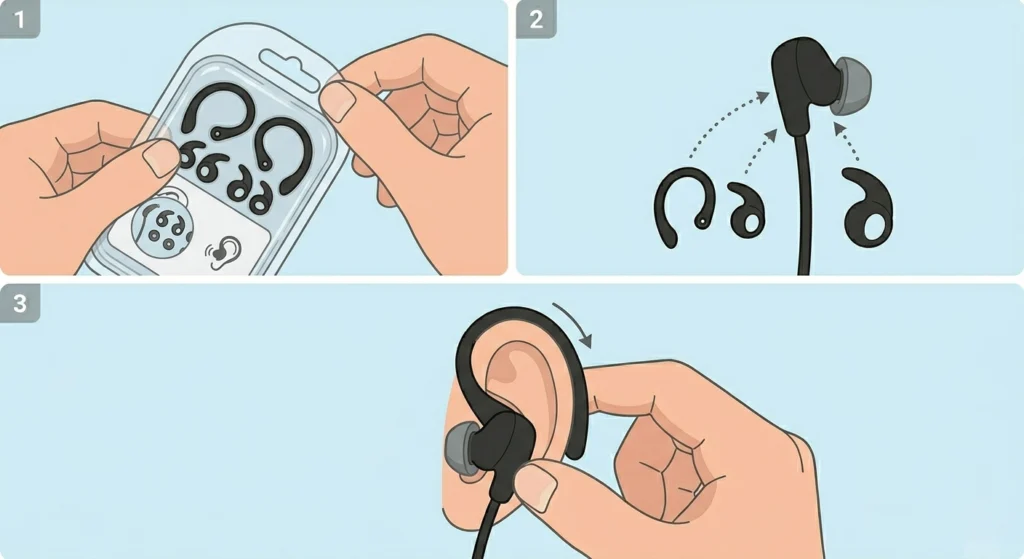
Ear hooks and ear wings are add-on accessories that wrap around or hook over the outer ear, giving the earbud a second point of contact beyond the ear canal. These are especially useful for workouts, running, or any activity with a lot of movement.
- Step 1: Purchase universal ear hooks or wings that fit the specific earbud model. Many are sold in multi-packs with different sizes.
- Step 2: Attach the hook or wing to the earbud body, following the product instructions.
- Step 3: Insert the earbud as usual, then loop the hook over the top of the ear or press the wing into the outer ear bowl (concha).
This approach is particularly popular with true wireless earbuds like the AirPods, which lack the in-canal depth of other designs. Several third-party accessories are made specifically for models prone to falling out.
Fix 5: Wear the Earbud Cable Over the Ear (Wired Models)
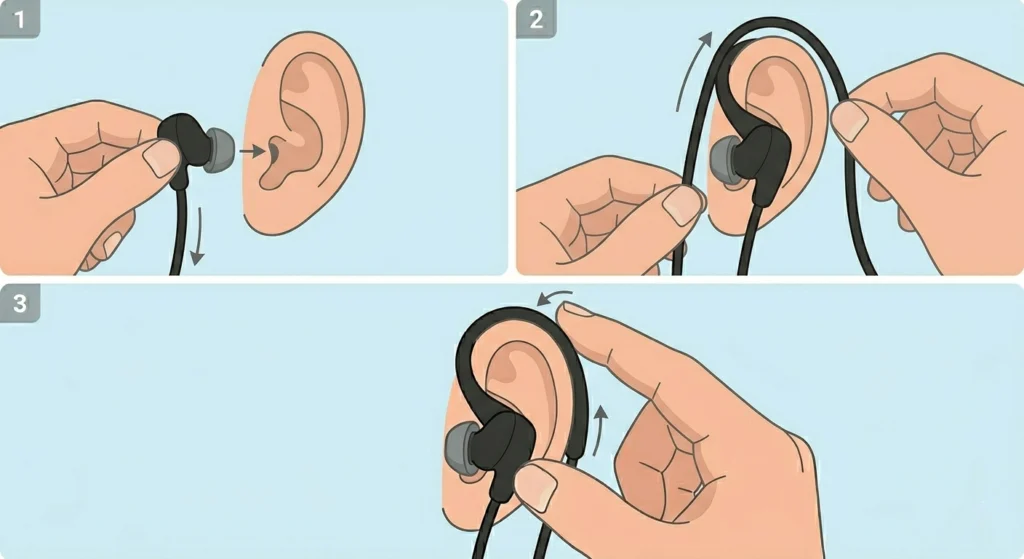
For wired earbuds, wearing the cable over and behind the ear rather than letting it hang down changes the physics of how the earbud sits. This technique is also useful when re-pairing Bluetooth earbuds for stereo sound on Windows, since proper physical positioning helps maintain a stable connection. The cable tension shifts, pulling the earbud inward rather than downward.
- Step 1: Insert the earbud as normal.
- Step 2: Loop the cable up and over the top of the ear, letting it drape down the back.
- Step 3: Adjust the earbud angle so the cable exits comfortably at the top without pulling.
Many in-ear monitors (IEMs) are designed to be worn this way from the factory. It takes a minute to get used to, but the stability improvement is significant.
Fix 6: Clean the Ear Tips Regularly
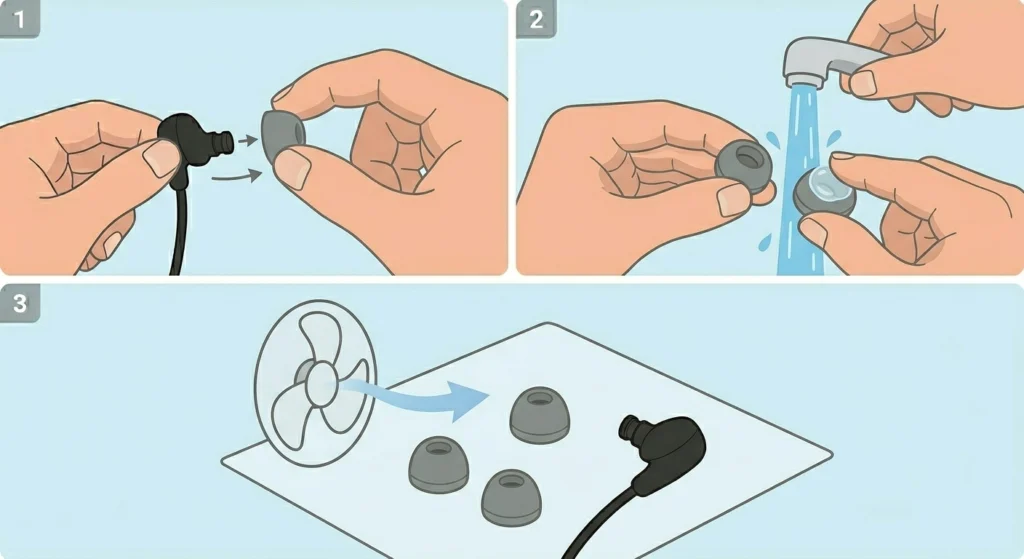
Ear tips accumulate oils from the skin, earwax, and debris over time. This buildup reduces grip, making it much easier for earbuds to slide out. Cleaning takes less than two minutes and should be done at least once a week for daily users.
- Step 1: Remove the ear tips from the earbuds.
- Step 2: Rinse them under warm water and gently rub with a small amount of mild soap.
- Step 3: Rinse thoroughly and allow to fully air dry before reattaching.
Never use alcohol wipes directly on foam tips, as this degrades the material quickly. Silicone tips can tolerate a light alcohol wipe if needed for sanitizing.
Fix 7: Upgrade to Earbuds Designed for Secure Fit
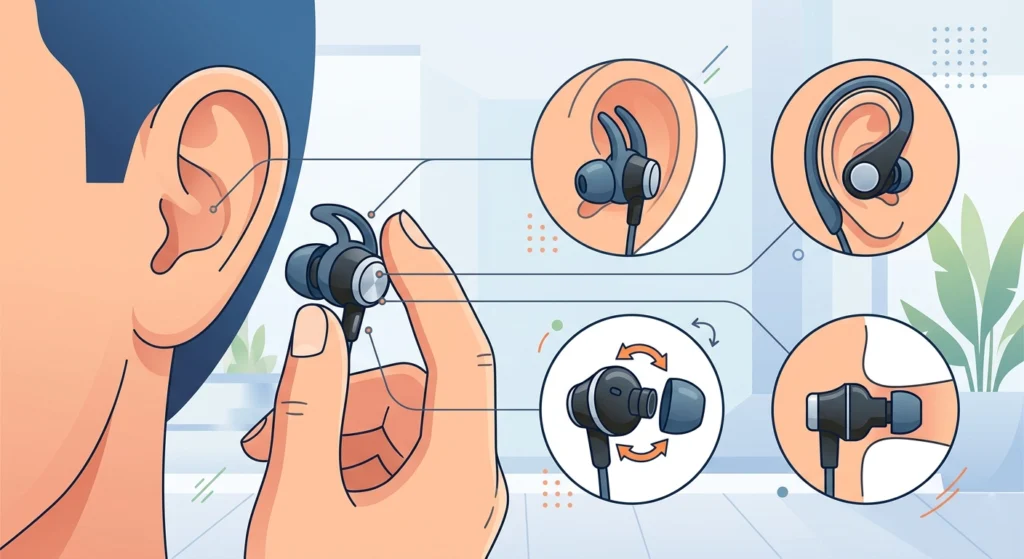
Sometimes the earbuds themselves are simply not suited for a particular ear shape. Not every model works for every person – this is a reality of how ears vary in size, angle, and structure.
Look for earbuds with these design features for a more secure fit:
- Built-in ear fins or wings integrated into the housing
- Over-ear cable routing (common in IEMs and sport models)
- Adjustable nozzle angles that can be tilted to match ear canal direction
- Shorter nozzle length designed for shallow insertion (better for narrow canals)
Sport-focused earbuds from brands like Jabra, Shokz, and Bose are engineered specifically for movement and tend to offer much more secure fits out of the box.
Tips for Keeping Earbuds in Place
- Always pull the ear up and back before inserting to open the canal
- Twist the earbud into position rather than pushing straight in
- Test ear tip sizes when ears are clean and dry – oil on the skin affects how tips grip
- Store earbuds with the tips attached to prevent the tips from losing their shape
- If using earbuds during exercise, apply a small amount of anti-slip athletic tape to the earbud housing for extra grip
- For users who run or cycle, look for earbuds rated IPX4 or higher – sweat resistance also tends to correlate with a tighter physical fit design
Pro-Tip: Jaw movement – like talking, chewing, or yawning – changes the shape of the ear canal slightly and can dislodge earbuds that were previously secure. Memory foam tips handle this better than silicone because they re-conform as the canal shifts. If earbuds consistently fall out during calls or while eating, switching to foam tips is the most reliable solution.
Common Problems and Troubleshooting
Problem: One Earbud Falls Out but the Other Stays
This almost always means the ear canal sizes differ between the two ears. Try a smaller tip on the ear that loses the earbud. Asymmetric sizing is normal and more common than most people expect.
Problem: Earbuds Fall Out During Exercise
Sweat reduces the grip of silicone tips significantly. Switch to memory foam tips, add ear hooks, or look for earbuds with a sport fit design. Wiping the outer ear dry before inserting the earbuds also helps.
Problem: Earbuds Feel Secure at First but Gradually Slip
This is usually caused by earwax or skin oil building up on the tip during use, reducing friction over time. Cleaning tips regularly resolves this. It can also be caused by jaw movement gradually loosening the seal – foam tips help here as well.
Problem: No Ear Tip Size Feels Comfortable or Secure
Standard round silicone tips do not work well for every ear shape. Oval-shaped tips (offered by brands like Final Audio) or double-flange tips create a better seal for ears with unusually angled or narrow canals. Third-party tip markets offer far more variety than what comes in the box.
Problem: Earbuds Hurt After a Short Time
Pain during wear usually signals that the ear tip is too large, creating too much pressure in the canal. Sizing down one level should relieve the discomfort. If smaller tips still cause discomfort, the earbud nozzle shape may not be compatible with that ear canal geometry, and a different earbud model may be necessary. Once fit is resolved, users on Windows 11 who experience sound issues may also want to look into resolving microphone detection problems to ensure the earbuds work correctly across all functions.
Frequently Asked Questions
Why do earbuds keep falling out of my ears?
The most common cause is using the wrong ear tip size. Ear canals vary significantly in size and angle between individuals, and the default tip included with earbuds does not fit everyone well. Other causes include improper insertion technique, worn-out or dirty tips, and earbud designs that simply do not match certain ear shapes.
What is the best ear tip material for staying in place?
Memory foam is generally the most secure material because it expands to fill the unique contours of the ear canal. Silicone tips work well when sized correctly, but foam provides a more adaptive and grippy fit, especially during movement or talking.
Can I use different ear tip sizes on each ear?
Yes, and this is actually recommended when one earbud falls out more than the other. Human ear canals are almost never identical in size. Using a small tip on one ear and a medium on the other is a completely valid and effective solution.
How do I know if my ear tips are the right size?
A properly sized ear tip should create a subtle seal when inserted – a slight sense of pressure or suction that blocks some ambient noise. If there is no seal and sound sounds thin or distant, the tip is too small. If the ear feels painful or overly plugged, the tip is too large.
Do ear hooks really work?
Yes, ear hooks significantly improve earbud stability during physical activity. They work by anchoring the earbud to the outer ear structure, reducing the load on the ear canal tip alone. They are especially useful for true wireless earbuds that have no cable to help stabilize them.
Why do my earbuds fall out when I talk or chew?
Jaw movement shifts the shape of the ear canal slightly, which can break the seal that holds earbuds in place. Memory foam tips are the most effective fix because they re-conform as the canal changes shape. Inserting earbuds with a slightly tighter fit can also help.
How often should ear tips be replaced?
Silicone tips typically last six months to a year with regular use, though they should be replaced sooner if they crack, harden, or no longer create a proper seal. Memory foam tips wear out faster – usually within one to three months of daily use – as the foam loses its ability to fully expand.
Are there earbuds that are specifically designed not to fall out?
Yes. Earbuds with built-in ear fins, sport hooks, or over-ear cable routing are engineered for a more secure fit. Models from Jabra, Bose Sport, and various IEM brands are designed specifically around fit security. Some, like the Jabra Elite Active series, include multiple fin sizes alongside tip sizes for a fully customizable fit.
Can the earbud case affect how well the tips grip?
Yes. Some charging cases compress memory foam tips when the earbuds are stored, which can reduce the foam’s ability to expand fully during use. Removing foam tips before placing earbuds in the case, or allowing the tips a few seconds to expand before inserting them, solves this issue.
What should be done if earbuds still fall out after trying everything?
If no tip size, insertion technique, or accessory resolves the issue, the earbud’s nozzle shape may simply not be compatible with the ear canal geometry. In this case, exploring a different earbud model with a different nozzle angle or a shorter insertion depth is the most practical next step. Consulting user reviews that mention fit for specific ear types can help narrow down a better match before purchasing.