
Key Takeaways
- Peeling ear pads on headphones can be fixed with fabric glue, replacement covers, or full pad replacements, depending on how bad the damage is.
- Cleaning the surface before repair makes any fix last longer.
- Silicone or leatherette pad covers are the fastest fix for light peeling.
- Full replacement pads are the best long-term solution for badly cracked or flaking foam.
- Regular cleaning and proper storage prevent ear pads from peeling again.
Peeling ear pads on headphones happen to almost everyone who wears them daily, especially with leatherette or protein leather materials that break down from heat, sweat, and skin oils over time. The good news is that this is one of the easiest headphone problems to fix at home, and most methods take less than thirty minutes with tools already lying around the house.
Step-by-Step Guide to Fix Peeling Ear Pads
The method used depends on how far the peeling has progressed. Light peeling can often be patched, while heavily cracked or flaking pads usually need a full replacement. Both approaches are covered below.
Method 1: Fixing Light Peeling with Fabric Glue
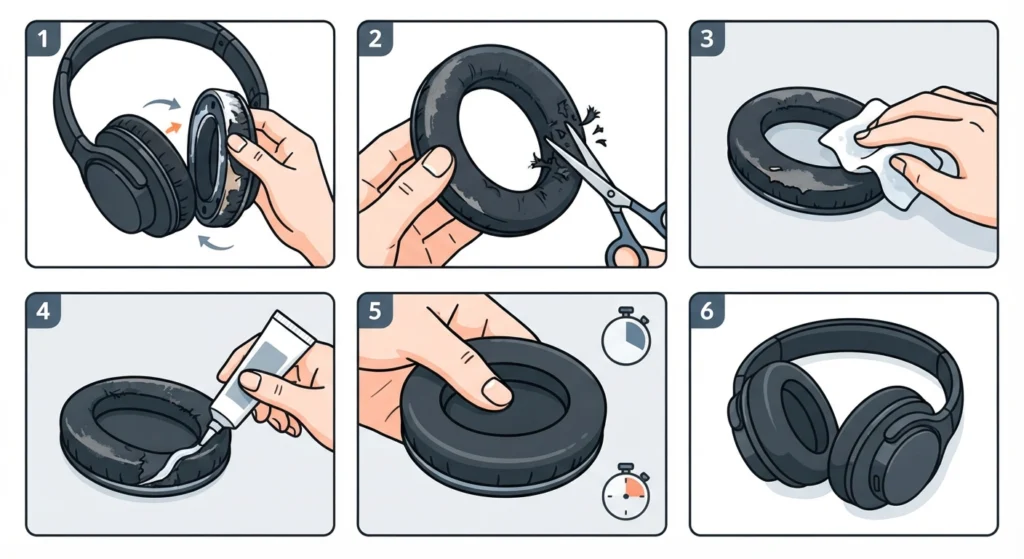
- Step 1: Remove the ear pads from the headphones by gently pulling or unclipping them from the ear cup frame.
- Step 2: Trim away any loose or flaking pieces of material using small scissors so the surface is even.
- Step 3: Wipe the pad with a slightly damp cloth and let it dry completely before applying anything.
- Step 4: Apply a thin, even layer of fabric glue or leather repair adhesive over the peeling section.
- Step 5: Press the material down firmly and hold it in place for about sixty seconds.
- Step 6: Let the pads cure for at least four to six hours before reattaching them to the headphones.
Pro Tip: A hairdryer on the lowest heat setting, held about a foot away, can help fabric glue set faster without warping the pad material.
Method 2: Using Silicone or Stretch Pad Covers
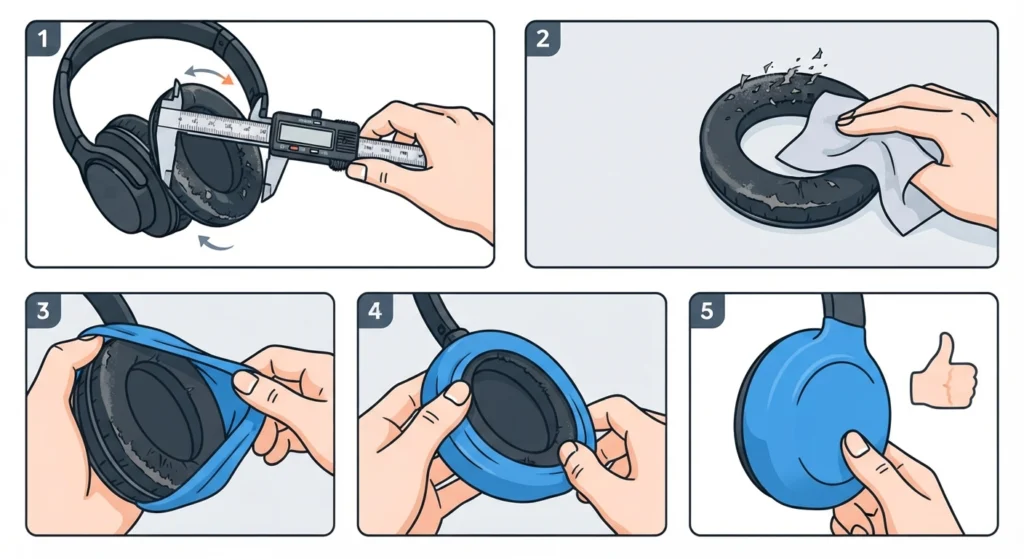
- Step 1: Measure the diameter of the ear cup to find covers that match the headphone size.
- Step 2: Clean the peeling pad surface with a dry cloth to remove any loose flakes.
- Step 3: Stretch the silicone or fabric cover over the existing pad, starting from one edge.
- Step 4: Work the cover around the pad evenly until it sits flush against the ear cup.
- Step 5: Check both sides for a snug, even fit before wearing the headphones again.
Method 3: Full Ear Pad Replacement
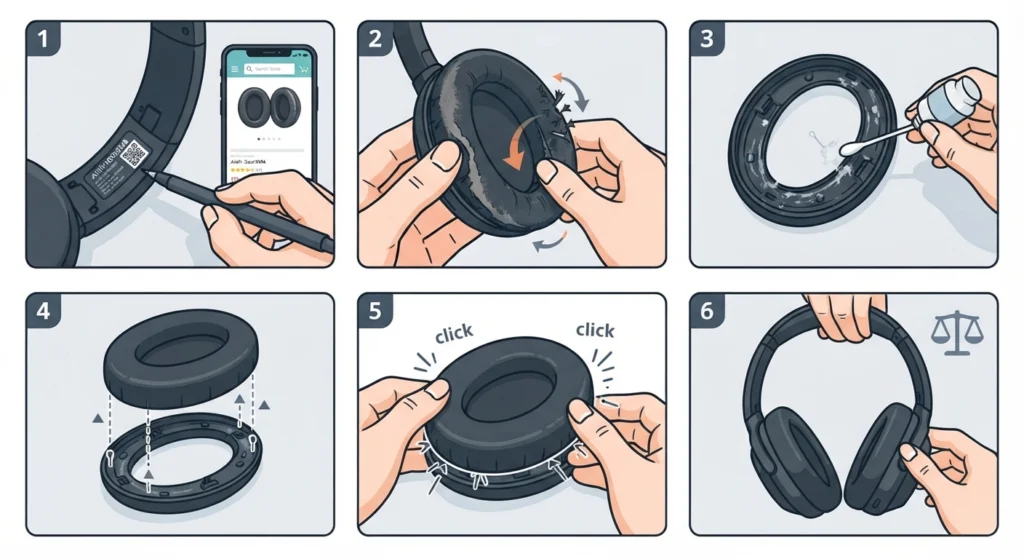
- Step 1: Find the exact model number of the headphones to order matching replacement pads.
- Step 2: Remove the old, peeling pads by unclipping or twisting them off the ear cup frame.
- Step 3: Clean the bare ear cup frame of any leftover glue, foam residue, or dust.
- Step 4: Align the new pad’s clips or grooves with the ear cup frame.
- Step 5: Press evenly around the edge until the new pad clicks or locks fully into place.
- Step 6: Test both ear cups for a secure, balanced fit before regular use.
Pro Tip: Ordering pads directly from the headphone manufacturer usually gives a better acoustic seal than generic third-party pads, since the shape is built for that exact driver placement.
Tips to Prevent Ear Pads from Peeling Again
- Wipe ear pads down with a dry microfiber cloth after each use to remove sweat and skin oil buildup.
- Store headphones in a case or stand away from direct sunlight and heat sources, since UV exposure speeds up material breakdown.
- Rotate between two pairs of headphones if used for long daily sessions, giving pads time to air out between uses.
- Choose replacement pads made from memory foam with breathable fabric covers, which tend to peel slower than protein leather.
- Avoid leaving headphones in hot cars or near heaters, as heat is one of the fastest ways to break down pad material.
Once the physical repair is done, it is also worth checking that the audio itself sounds right. Many people use this moment to review their setup, and adjusting audio output settings on Windows 11 can help fine-tune sound quality after replacing or patching ear pads.
Common Problems When Fixing Peeling Ear Pads
Glue Does Not Hold on Leatherette Material
This usually happens when the surface still has oil or dust on it. Cleaning the area with rubbing alcohol and letting it fully dry before applying glue solves this in most cases.
Replacement Pads Do Not Fit Snugly
A loose fit is often a sign the pad size does not match the headphone model exactly. Double-checking the model number before ordering prevents this issue.
Sound Feels Muffled After Replacing Pads
Thicker foam or a different pad material can change how sound reaches the ear. If audio feels off after a pad swap, resetting audio settings can help restore the expected sound balance.
New Pads Peel Faster Than the Originals
This is common with low-quality third-party pads. Sticking to pads made from breathable fabric or memory foam tends to hold up longer than cheap synthetic leather.
Frequently Asked Questions
Why do headphone ear pads peel over time?
Ear pads peel mainly due to prolonged contact with sweat, skin oils, and heat, which slowly break down synthetic leather or protein leather coatings.
Can peeling ear pads be fixed without buying new ones?
Yes, light peeling can often be repaired using fabric glue or covered with a stretch pad cover, both of which extend the life of the original pads.
How long does a fabric glue repair last on ear pads?
A proper fabric glue repair typically lasts several months with regular use, though it depends on how often the headphones are worn and stored.
Are silicone ear pad covers as comfortable as original pads?
Silicone covers feel slightly different at first, but most users adjust within a few days and find them comfortable for both short and long listening sessions.
How often should ear pads be replaced?
Most ear pads last between six months and two years, depending on daily usage, storage habits, and the material quality of the pad itself.
Do all headphone brands sell replacement ear pads?
Most major headphone brands offer official replacement pads, and many third-party sellers also produce compatible options for popular models.
Can peeling ear pads affect sound quality?
Yes, peeling pads can break the seal around the ear, which often leads to weaker bass response and sound leakage.
Is it safe to use household glue on ear pads?
Household glue can work in a pinch, but fabric or leather-specific adhesive holds up better and avoids stiffening the material.
What is the fastest way to fix peeling ear pads?
Stretch pad covers are the quickest fix, taking only a few minutes to install without any drying or curing time.
Do ear pad replacements require any tools?
Most replacements only require hands to unclip and reattach the pads, though small scissors can help trim any loose material beforehand.