
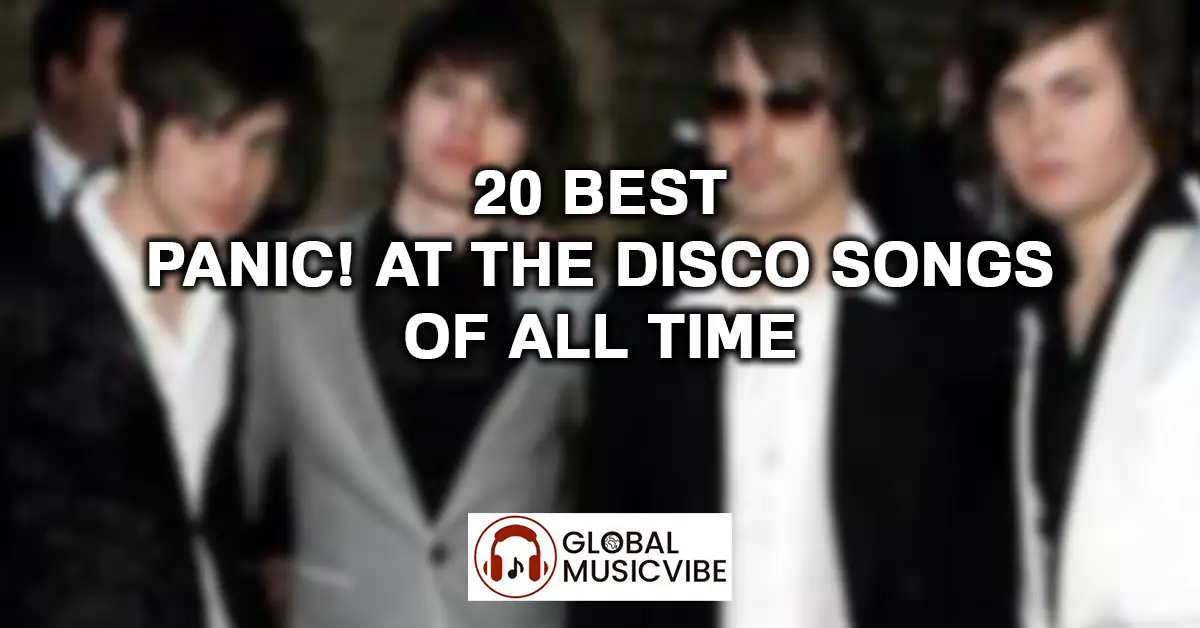
Finding the best Panic! At The Disco songs means tracing one of the strangest, most theatrical careers in modern rock — a project that started as baroque pop chaos and ended as arena-filling pop spectacle. Brendon Urie built Panic! At The Disco from a Las Vegas bedroom act into a genre-hopping juggernaut, and the catalog below reflects every phase of that transformation. Fans looking for deeper cuts to add to a playlist should check the full songs archive for more artist roundups like this one.
I Write Sins Not Tragedies
Released in 2005 from the debut album “A Fever You Can’t Sweat Out,” this track remains the definitive Panic! At The Disco calling card. The wedding-crashing narrative, paired with a baroque pop arrangement built on strings and a snapping backbeat, sounded like nothing else on rock radio at the time. Ryan Ross’s lyricism leaned hard into literary wordplay, and the “haven’t you people ever heard of closing the goddamn door” hook became one of the most quoted lines of mid-2000s emo-pop. It peaked inside the Billboard Hot 100 top ten and still anchors nearly every live setlist.
Death of a Bachelor
The title track from the 2016 album of the same name fused Sinatra-style big-band horns with modern trap-influenced drum programming, a combination that should not have worked as well as it did. Urie’s vocal performance here is the real headline, stretching into a falsetto that channels old-school crooners while the mix stays crisp and radio-ready. Producer Jake Sinclair helped shape an arrangement that feels cinematic without losing pop accessibility. The song’s swagger set the tone for the entire “Death of a Bachelor” era, which marked Panic!’s full pivot into a Urie solo vehicle.
High Hopes
By 2018, Panic! At The Disco had fully embraced maximalist pop production, and “High Hopes” is the clearest example of that shift paying off commercially. The song’s marching horn section and stomping percussion were engineered for stadium singalongs, and that instinct proved correct — it became one of the band’s biggest crossover hits and spent well over a year on the Hot 100. Streaming numbers on Spotify climbed into the billions, turning it into a genuine generational anthem. Live performance energy on this one is unmatched, with the bridge practically demanding audience participation.
Say Amen (Saturday Night)
Also from “Pray for the Wicked,” this track leans into gospel-tinged vocal layering against a hard-hitting electronic pop backbone. The tension between the sacred imagery in the lyrics and the confessional, almost desperate delivery gives the song real emotional weight beneath its shiny production. Urie’s vocal range gets a serious workout here, climbing into falsetto territory during the chorus without ever sounding strained. On headphones, the layered backing vocals and percussive claps reveal just how dense the mix actually is.
Hey Look Ma, I Made It
This 2018 single doubles as commentary on fame and ambition, wrapped in one of the catchiest choruses of the “Pray for the Wicked” record. The production leans into big synth stabs and a driving four-on-the-floor rhythm that practically begs to be blasted in the car. Lyrically, it plays like a victory lap, referencing Urie’s rise from small Vegas venues to headlining arenas. The song’s self-aware humor keeps it from tipping into arrogance, which is part of why it connected with longtime fans as well as newcomers.
Victorious
Opening the “Death of a Bachelor” album, “Victorious” sets the tone with an unapologetically maximalist arrangement — layered synths, gang vocals, and a chorus built for festival crowds. Jake Sinclair’s production keeps every element loud without letting the mix collapse into mush, a genuine mastering achievement given how many parts are stacked into the track. The lyrics function as pure celebration, short on narrative but long on adrenaline. In a live setting, this song’s opening blast of energy makes it a frequent set-opener.
LA Devotee
A deeper cut from “Death of a Bachelor,” this track captures the seedy glamour of Los Angeles through a lens of walking bass, funk-inflected guitar, and Urie’s smooth, almost lounge-singer delivery. The arrangement draws obvious influence from vintage soul and jazz phrasing, filtered through modern pop production values. Lyrically, it reads as both an homage to and a critique of the city’s mythology, name-checking its highways and neon signage. Fans who discovered Panic! through “High Hopes” often cite this one as an underrated favorite once they dig into the back catalog.
Emperor’s New Clothes
This 2015 single leans into darker, heavier territory than most of the “Death of a Bachelor” tracklist, built around a driving industrial-tinged rhythm and Urie’s most aggressive vocal delivery on the record. The lyrical concept plays on themes of power, corruption, and self-mythologizing, giving the track a menacing undercurrent absent from the band’s more celebratory singles. Production-wise, the low end hits harder here than almost anywhere else in the catalog, making it a genuine test for any decent pair of speakers. Anyone comparing gear for a serious listening setup might want to check this headphone comparison guide before cranking the bassline.
This Is Gospel
From 2013’s “Too Weird to Live, Too Rare to Die!,” this ballad-turned-anthem showcases one of Urie’s most controlled vocal performances, moving from restrained verses into a soaring, string-backed chorus. The production embraces a more electronic, almost orchestral sound palette than the band’s earlier guitar-driven work, reflecting the lineup and stylistic shakeup happening at the time. Thematically, the song deals with self-destruction and forgiveness, giving it emotional stakes that match its dramatic instrumentation. It remains a fan-favorite deep cut that showcases the band’s mid-career reinvention.
Miss Jackson
Featuring Migos-affiliated crooner Lolo, this 2013 single blends staccato guitar riffs with a hip-hop-adjacent vocal cadence, an early sign of the genre-blending that would define Panic!’s later work. The track’s tightly wound verses and explosive chorus create a push-pull dynamic that keeps the arrangement from ever feeling static. Urie’s vocal phrasing here draws on funk and R&B influences more than the band’s emo-pop roots, hinting at the direction future albums would take. It became a modest chart hit and a consistent live staple thanks to its high-energy, danceable groove.
The Ballad of Mona Lisa
Taken from 2011’s “Vices & Virtues,” this track marked something of a return to the band’s theatrical, baroque-pop origins after the more stripped-down “Pretty. Odd.” era. Waltz-like time signatures and a dramatic vocal build give it a stage-musical quality that fits its narrative lyrics about longing and unattainable love. The mixing balances live-sounding drums against layered vocal harmonies, creating a warm, almost vintage texture. It’s a strong entry point for listeners who prefer the band’s more narrative-driven songwriting over its later pop maximalism.
Nine in the Afternoon
Lead single from 2008’s “Pretty. Odd.,” this track represented a dramatic stylistic pivot away from the debut’s dark cabaret sound toward sunny, Beatles-influenced psychedelic pop. Bright horn arrangements and jangly guitar work replace the strings and synths of earlier material, and the shift divided longtime fans while winning new ones. The songwriting draws clear inspiration from late-1960s British pop, right down to the vocal harmonies stacked throughout the bridge. It remains a favorite for listeners who prefer Panic!’s more melodic, less bombastic period.
Northern Downpour
Also from “Pretty. Odd.,” this understated ballad stands as one of the band’s most emotionally direct tracks, built around acoustic guitar, gentle percussion, and a vocal performance that avoids the theatrics found elsewhere in the catalog. The lyrics deal with grief and nostalgia with unusual sincerity, and the arrangement’s restraint gives those words room to land. Production stays intimate throughout, favoring warmth over polish, which suits the song’s reflective tone. It has become something of a quiet fan-community touchstone, frequently cited in tribute posts and memorial playlists.
Don’t Threaten Me with a Good Time
This “Death of a Bachelor” single fuses classic rock riffing with a full horn section, resulting in one of the record’s most aggressively fun arrangements. The guitar line samples Rolling Stones-style swagger while the brass punches keep the energy relentlessly high from the first bar. Urie’s vocal delivery matches the chaos of the instrumentation, sliding between rapid-fire verses and a shouted, anthemic chorus. It’s a strong pick for anyone building a road-trip playlist, and testing it against a solid pair of earbuds reveals just how much detail sits in that horn mix.
Girls/Girls/Boys
From “Too Weird to Live, Too Rare to Die!,” this track pairs a shimmering, synth-heavy production with lyrics addressing bisexuality and fluid attraction, a rarity in mainstream rock at the time of release. The arrangement builds gradually, layering vocal harmonies and pulsing electronic elements until the chorus arrives with real emotional payoff. Critics noted the song’s cultural significance alongside its craft, and it has aged into one of the band’s most personally resonant tracks. The production choices here reflect the more electronic direction the band would fully embrace on later records.
Golden Days
Closing out “Death of a Bachelor,” this track slows the tempo and leans into nostalgic, hazy production that mirrors its lyrical subject matter — memory, aging, and holding onto meaningful relationships. Warm synth pads and a steady, understated rhythm section give the song a sense of settling rather than climaxing, an unusual choice for an album closer. Urie’s vocal performance stays relatively restrained compared to the record’s louder singles, letting the melody carry the emotional weight instead. It works as a palate cleanser after the album’s more bombastic tracks.
Roaring 20s
Opening “Pray for the Wicked,” this track leans into vintage jazz-age imagery filtered through contemporary pop production, complete with tap-dance-style percussion accents and horn stabs. The concept ties into the album’s overall theatrical framing, with Urie adopting a showman persona throughout the record. Lyrically, the song embraces excess and spectacle, matching the maximalist instrumentation underneath it. It set an ambitious tone for an album that would go on to debut at number one on the Billboard 200.
The Greatest Show
This 2017 cover, recorded for “The Greatest Showman: Reimagined,” reworks the film’s opening number with Urie’s theatrical vocal range front and center. The arrangement stays fairly faithful to the original Broadway-style production while adding a slightly more contemporary pop polish to the mix. Given Urie’s background in musical theater vocal training, the song fits his delivery almost too naturally, turning a movie tie-in into a genuinely compelling listen. It introduced Panic! to audiences who might never have found the band through traditional rock radio.
Crazy=Genius
A deep cut from “Death of a Bachelor,” this track experiments with rapid tempo shifts and unconventional song structure, cramming multiple distinct sections into under three minutes. The frenetic energy mirrors the lyrical subject matter, which touches on obsession and creative mania. Horns, strings, and electronic elements all compete for space in the mix, yet the mastering keeps things from feeling cluttered. It’s a favorite among fans who appreciate the band’s more experimental, structurally ambitious songwriting.
Build God, Then We’ll Talk
Pulled from the 2005 debut, this early track showcases the band’s original baroque-pop sound at its most unfiltered, with string arrangements, rapid tempo changes, and dense, literary lyricism throughout. Ryan Ross’s songwriting here favors abstract, almost stream-of-consciousness imagery over straightforward narrative, giving the track a puzzle-like quality that rewards repeat listens. The production, helmed by Matt Squire, layers acoustic and electronic elements in a way that still sounds distinctive two decades later. It remains a defining example of the sound that first set Panic! apart from its scene peers.
Frequently Asked Questions
What is Panic! At The Disco’s most popular song?
“High Hopes” holds that title by a wide margin, having spent over a year on the Billboard Hot 100 and accumulating billions of streams since its 2018 release. Its stadium-ready horn section and singalong chorus made it a genuine crossover hit far beyond the band’s existing fanbase.
Is Panic! At The Disco still an active band?
Panic! At The Disco announced its dissolution in early 2023, with Brendon Urie confirming the project would end after the “Viva Las Vengeance” album cycle. Urie has since moved toward other creative projects, closing out nearly two decades of the Panic! name.
Which Panic! At The Disco album is considered the best?
Opinions split heavily between “A Fever You Can’t Sweat Out” for its baroque-pop originality and “Death of a Bachelor” for its polished, genre-blending pop maturity. Both albums represent distinct creative peaks, making the “best” answer largely a matter of which era of the band resonates most.
Did Panic! At The Disco write their own songs?
In the early lineup, Ryan Ross handled the bulk of songwriting duties alongside Spencer Smith, with Urie stepping into that role after Ross and Jon Walker departed in 2009. From “Vices & Virtues” onward, Urie became the primary creative force behind the band’s songwriting and production direction.
What genre is Panic! At The Disco?
The band’s sound has shifted dramatically across its catalog, starting in baroque pop and emo-influenced rock before moving through psychedelic pop, alternative rock, and eventually synth-driven pop and show-tune-inspired arrangements. That genre fluidity is part of what makes the discography such a rewarding listen from start to finish.