
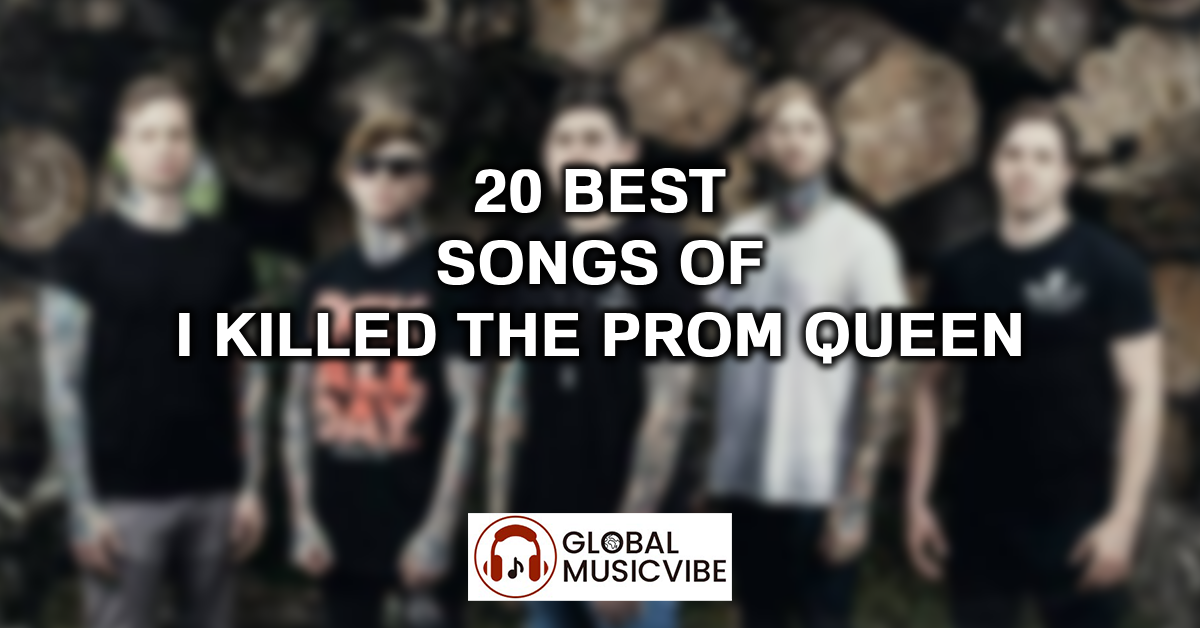
If you grew up on the jagged breakdowns and gang-vocal choruses of Australian metalcore, the best I Killed the Prom Queen songs probably already live somewhere in your muscle memory — that snapped-neck riff, that scream-into-clean-vocal pivot, that moment the whole room throws elbows. Formed in Adelaide back in 2000, I Killed the Prom Queen (often shortened to IKTPQ) spent three studio albums proving that melodic metalcore didn’t have to sacrifice brutality for hooks, and vice versa. I’ve spun these records more times than I can count, on everything from cheap earbuds on a night bus to a proper home rig, and the songs below are the ones that still hit exactly as hard as they did the first time. Before we dive in, if you’re building out a broader listening queue, our full songs archive is worth a browse for more deep dives like this one.
Say Goodbye
Released as the lead single from Music for the Recently Deceased on February 28, 2007, “Say Goodbye” is arguably the song most people picture when they hear the band’s name. Ed Butcher’s vocal take on the studio version is a masterclass in contrast — throat-shredding verses giving way to a genuinely melodic, almost anthemic chorus. Produced by Fredrik Nordström and Patrik J. Sten at the legendary Studio Fredman in Gothenburg, the track has that unmistakable early-2000s Scandinavian metal sheen: tight low end, crunchy but clear guitar tone, and drums that punch without drowning out the melody. On headphones, the breakdown around the midpoint still makes my chest tighten a little.
Your Shirt Would Look Better with a Columbian Neck-Tie
Few metalcore songs commit to a title this unhinged and then back it up musically, but this Music for the Recently Deceased cut does exactly that. The riff work leans into thrash-adjacent picking patterns before collapsing into one of the record’s nastiest breakdowns. Lyrically it’s pure aggression, no metaphorical padding, and that directness is part of why it became a live staple. Hearing this one in a pit versus hearing it through a good pair of over-ears at home are genuinely two different experiences — if you’re curious how much detail you’re missing at home, our headphone comparison guide is a solid place to start.
Like Nails to a Casket
This track closes out the “proper” tracklist of Music for the Recently Deceased with a sense of finality that suits its title. Fredrik Nordström’s production gives the guitars a scooped-but-punchy tone that was hugely influential on the wave of Australian metalcore bands that followed. The interplay between Kevin Cameron’s riffing and the rhythm section here is tighter than people give it credit for — it’s a song built on groove as much as aggression.
Bet It All on Black
There’s a swagger to “Bet It All on Black” that separates it from the record’s more straightforwardly violent moments. The gang vocals in the back half feel almost celebratory, which is a neat trick for a band this heavy to pull off. It’s one of those songs that translates surprisingly well to a car stereo, where the low-mid crunch of the guitars fills the cabin in a way earbuds just can’t replicate.
Headfirst from a Hangman’s Noose
Dark imagery, faster tempo, and one of the more technically demanding drum performances on Music for the Recently Deceased — this song rewards close listening. The transitions between double-kick sections and the slower, sludgier breakdown are handled with a confidence that belies how young the band still was in 2006. Metal Blade Records, who released the album in North America, clearly saw this kind of songwriting range as a selling point.
When Goodbye Means Forever
The title track of the band’s 2003 debut album, produced by Dan Jones, is where the IKTPQ sound was first really codified: melodic metalcore with hardcore’s rawness still intact. This is a rougher, less polished recording than anything from Beloved, and that grit is part of its charm — you can hear the Adelaide warehouse-show energy baked into the mix. The album this song headlines debuted at number one on the Adelaide charts and cracked the national AIR top ten, a genuinely rare feat for an unsigned Australian metal act at the time.
To Kill Tomorrow
Also from When Goodbye Means Forever, “To Kill Tomorrow” leans harder into the hardcore side of the band’s sound than the melodic metalcore they’d later be known for. The riffs are choppier, more percussive, closer in spirit to Poison the Well and Hatebreed — both acknowledged influences on the band’s early years. It’s a short, blunt-force song, and honestly, that’s exactly what it needs to be.
Upon a Rivers Sky
There’s a moodier, almost atmospheric quality to this deep cut that hints at where the band’s songwriting would eventually go on Beloved. The guitar melodies stretch out a bit more than the rest of the debut allows, giving the track room to breathe between the heavier passages. It’s the kind of song longtime fans bring up when someone claims the band only ever wrote breakdown-first tracks.
Death Certificate for a Beauty Queen
This one earns its dramatic title with equally dramatic dynamics — quiet-loud shifts, screamed verses that erupt into full-band chaos, and a chorus melody that sticks with you longer than you’d expect from a song this abrasive. It’s a fan-favorite deep cut precisely because it shows off the band’s range within a single three-minute runtime.
My Best Wishes
Closing out the When Goodbye Means Forever era material, “My Best Wishes” carries a surprising amount of melancholy for a band this aggressive. The vocal phrasing here feels more deliberate, less purely cathartic, which makes it stand out on repeat listens. If you’ve only heard the band’s later, more polished work, this track is a good reminder of how much emotional range was already present in 2003.
Beginning of the End
Opening Beloved (2014), this track signals immediately that IKTPQ had leveled up sonically. Produced once again by Fredrik Nordström at Studio Fredman, the mix here is noticeably more modern — clearer separation between guitar layers, punchier low end, vocals that sit forward without losing aggression. It’s a statement-of-intent opener, and it works.
To the Wolves
Released as a single on December 3, 2013, ahead of Beloved‘s February 2014 release, “To the Wolves” is where the band’s melodic instincts and heavier riffing finally feel completely fused. The chorus is enormous, built for festival crowds, and the breakdown that follows never feels tacked on. Meanwhile, the lyricism leans into themes of betrayal and self-reliance that run through much of the album.
Bright Enough
As the third single from Beloved, released July 22, 2014, “Bright Enough” leans further into cleaner, more accessible songwriting without abandoning the band’s core aggression. Three separate music videos were produced across the album’s singles cycle, and this one got its own visual treatment — a sign of how much label investment Epitaph was putting behind the record. On a good pair of earbuds during a commute, the clean vocal hooks here genuinely pop.
Calvert Street
This standout features Björn Strid of Soilwork on guest vocals, released as a single on October 28, 2014, and it’s one of the most ambitious collaborations in the band’s catalog. Strid’s melodic death metal pedigree adds a layer of vocal texture that pushes the song somewhere between metalcore and melodic death metal. In contrast to the more straightforward tracks on the record, this one rewards a close, attentive listen to catch every vocal handoff.
Kjærlighet
The Norwegian-titled “Kjærlighet” (meaning “love”) is one of Beloved‘s more atmospheric moments, trading some of the album’s aggression for texture and space. It’s a deep cut that rarely gets discussed outside dedicated fan circles, but it demonstrates a songwriting maturity the earlier albums only hinted at.
Brevity
True to its name, “Brevity” is short and purposeful, functioning almost like a palate cleanser within Beloved‘s tracklist. It doesn’t overstay its welcome, and that restraint is refreshing on an album that otherwise leans maximalist.
The Beaten Path
A grittier, riff-forward cut from Beloved, “The Beaten Path” leans back toward the band’s rawer earlier material while still benefiting from Nordström’s cleaner modern production. The rhythm section shines here, with a groove-heavy midsection that live audiences responded to immediately on the subsequent tour.
Nightmares
“Nightmares” is one of Beloved‘s heavier, more relentless tracks, built around a driving tempo and minimal let-up. It’s less about melody and more about sustained pressure, and it works as a reminder that even on their most “accessible” record, the band never fully abandoned pure aggression.
Memento Vivere
The very first single teased from Beloved, released back on August 21, 2012 — well over a year before the album itself dropped — “Memento Vivere” gave fans their first real signal of the band’s post-reformation direction. The title, Latin for “remember to live,” pairs with lyrics that feel more reflective than the band’s earlier catalog, a sign of the personal growth baked into this reunion-era material.
No One Will Save Us
Featuring Jonathan Vigil of The Ghost Inside, this collaboration is one of Beloved‘s emotional high points. Vigil’s melodic delivery blends with the band’s established sound in a way that feels organic rather than tacked on, and the lyrical themes of isolation and self-determination hit differently knowing The Ghost Inside’s own history. It’s a song that rewards a proper close listen on quality gear — genuinely worth testing against our earbuds comparison if you want to catch every layered vocal in the mix.
Frequently Asked Questions
What is I Killed the Prom Queen’s most popular song?
“Say Goodbye,” from 2006’s Music for the Recently Deceased, is generally considered the band’s signature track and remains their most streamed and most requested live song.
How many studio albums did I Killed the Prom Queen release?
The band released three studio albums: When Goodbye Means Forever… (2003), Music for the Recently Deceased (2006), and Beloved (2014).
Is I Killed the Prom Queen still active?
The band went through multiple breakups and reformations over the years, with founding members reuniting again in 2025 to celebrate the band’s history and early catalog.
What genre does I Killed the Prom Queen play?
They’re widely classified as melodic metalcore, blending hardcore aggression with more melodic, sometimes clean-sung songwriting, particularly on later material like Beloved.
Who produced Beloved and Music for the Recently Deceased?
Both albums were produced by Fredrik Nordström at Studio Fredman in Gothenburg, Sweden, giving them a sonic throughline despite being released eight years apart.