
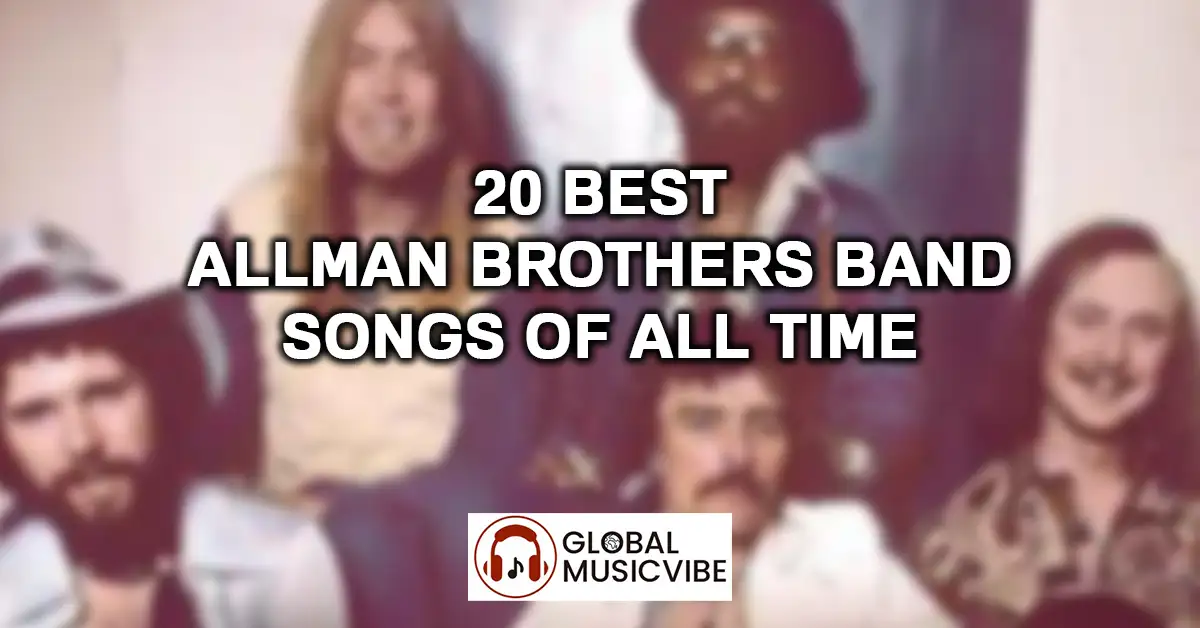
The Allman Brothers Band songs catalog stands as one of the deepest wells in American rock history, built on twin-guitar interplay, Hammond organ swells, and a rhythm section that could shift from a slow blues shuffle into a full-tilt jazz jam without losing a beat. Formed in Jacksonville in 1969 around Duane and Gregg Allman, the band fused blues, country, and improvisational jazz into something that still sounds vital on headphones today. This list works through the essential tracks, from the signature live epics to the quieter studio moments that reveal just how much songwriting depth sat underneath all that guitar fire. For anyone chasing the full detail in these mixes, a solid pair of over-ear cans makes a real difference, and this headphone comparison guide is worth a look before diving in.
Whipping Post: The Slow-Burn Epic That Defined a Sound
Opening the self-titled debut album in 1969, “Whipping Post” starts as a tense, odd-meter blues figure before Gregg Allman’s vocal drags the listener into genuine anguish. The studio version runs a tight five minutes, but the arrangement was built for expansion from day one, with Duane Allman and Dickey Betts trading lines that leave room to breathe and build. That potential exploded on 1971’s “At Fillmore East,” where the song stretched past twenty minutes and became the definitive statement of the band’s improvisational reach. On a good pair of headphones, the way Berry Oakley’s bass locks with Butch Trucks and Jaimoe’s dual drums is the real story here, more than the famous guitar solos.
Statesboro Blues: Duane Allman’s Slide Guitar Calling Card
Originally a Blind Willie McTell tune from the 1920s, “Statesboro Blues” became the definitive showcase for Duane Allman’s open-tuned slide work once the band reworked it for live shows and released the version on “At Fillmore East” in 1971. The tone alone, thick, vocal, and dripping with sustain, influenced a generation of slide players who came after him. Gregg Allman’s vocal delivery leans hard into the blues tradition without losing the band’s own rock energy, and the horn-less arrangement leaves total space for that guitar tone to dominate the mix. It remains one of the most covered and studied performances in the band’s entire discography.
Midnight Rider: The Outlaw Anthem Everyone Knows
Written by Gregg Allman with roadie Robert “Kim” Payne, “Midnight Rider” appeared on 1970’s “Idlewild South” and quickly became the band’s most recognizable studio single outside of the jam-heavy live cuts. The lyric captures a restless, on-the-run narrator, and the arrangement keeps things lean, built around a rolling bassline and understated guitar fills rather than extended soloing. Gregg later re-recorded a stripped-down solo version for his 1973 album “Laid Back,” which arguably became even more famous through film and television placements. In the car or on a long drive, the song’s steady tempo and road-worn imagery still land exactly as intended.
Ramblin’ Man: The Biggest Hit Single of the Catalog
Written and sung by Dickey Betts rather than Gregg Allman, “Ramblin’ Man” appeared on 1973’s “Brothers and Sisters” and became the band’s highest-charting single, built on a country-rock chord progression that was a deliberate departure from the blues-heavy earlier records. The twin-guitar harmony line near the end, played by Betts and Les Dudek, is one of the most instantly identifiable riffs in Southern rock. Where earlier songs leaned on Duane’s slide tone, this track proves how much melodic songwriting talent existed elsewhere in the band. Meanwhile, the production has a brighter, more radio-friendly sheen than the raw blues records that came before it.
Melissa: Gregg Allman’s Most Personal Ballad
Written years before it was recorded, “Melissa” finally landed on 1972’s “Eat a Peach” and stands as one of Gregg Allman’s most tender pieces of songwriting, built around a simple, circular acoustic figure and a vocal melody that never overreaches. Duane Allman reportedly considered it one of his favorite songs the band ever recorded, and it was played at his funeral just months after the album sessions wrapped. On headphones, the interplay between the acoustic guitar and the subtle organ pad underneath is easy to miss on lesser speakers but adds real warmth to the mix. It remains a quiet counterpoint to the extended jams the band is best known for.
Jessica: The Instrumental That Became a Signature
Dickey Betts wrote “Jessica” as an instrumental challenge to himself, reportedly inspired by watching his young daughter crawl around the room and by admiration for Django Reinhardt’s two-fingered guitar technique. Released on “Brothers and Sisters” in 1973, the track’s bright, major-key melody and rolling piano from Chuck Leavell give it a completely different emotional register than the band’s blues material. It later earned a Grammy Hall of Fame induction and found a second life as the theme music for the British motoring show “Top Gear.” Live performance energy pushed the song even further, with extended versions becoming a staple of the band’s later touring sets.
Blue Sky: Dickey Betts’ Sunniest Songwriting Moment
Also from “Eat a Peach” in 1972, “Blue Sky” is a Dickey Betts composition sung by Betts himself, marking one of the rare lead vocal turns for the guitarist within the band’s catalog. The song was reportedly written about his then-girlfriend, and the arrangement matches the subject matter with a relaxed, major-key groove built for open-road listening. Notably, this is one of the last songs Duane Allman ever recorded before his death in October 1971, and his slide work here carries a lightness that contrasts with the heavier blues material elsewhere on the record. In contrast to “Whipping Post,” there is no tension to resolve, just pure melodic ease.
Soulshine: The Warren Haynes-Written Spiritual
Written by Warren Haynes and included on 1994’s “Where It All Begins,” “Soulshine” arrived during the band’s 1990s lineup, well after Duane’s death and years after the classic-era records. Gregg Allman’s weathered vocal delivery gives the gospel-tinged lyric real emotional weight, and the song later became even more closely associated with Haynes’ other band, Gov’t Mule. The arrangement leans on warm Hammond organ swells and a steady, mid-tempo groove rather than extended improvisation, making it one of the more accessible entry points for new listeners. It is a useful reminder that the band’s songwriting bench remained strong decades after the original lineup changed.
One Way Out: The Blues Cover Turned Live Staple
A reworking of a blues standard associated with Sonny Boy Williamson II and Elmore James, “One Way Out” became a fixture of the band’s live shows and appeared on the expanded “Eat a Peach” and “At Fillmore East” releases. The arrangement is built for momentum, with Betts and Duane trading slide and standard guitar lines over a driving shuffle rhythm that rarely lets up. Gregg’s vocal performance here is more urgent than mournful, matching the song’s narrative of a man caught in a compromising situation. It remains one of the most requested songs at tribute shows and reunion performances even now.
Dreams: The Debut Album’s Slow-Burning Centerpiece
From the self-titled 1969 debut, “Dreams” showcases Duane Allman’s slide guitar over a slow 6/8 groove, with Gregg Allman’s vocal floating above a bed of organ and cymbal work from the band’s dual-drummer setup. The song’s structure gives space for extended soloing without ever losing its hypnotic, almost meditative core, a template the band would return to often. It has been cited by numerous guitarists as an early example of how expressive slide playing could be within a rock context rather than strictly blues. On a late-night listen, the song’s patience rewards close attention in a way the band’s more upbeat material does not.
Southbound: The Boogie Cut with Bite
Written by Dickey Betts for 1973’s “Brothers and Sisters,” “Southbound” trades the album’s more polished country-rock leanings for a straight-ahead, piano-driven boogie built around Chuck Leavell’s rollicking keyboard work. The lyric leans into travel and restlessness, themes that run throughout the band’s catalog, but the arrangement here is looser and more good-natured than the heavier blues tracks. Betts’ guitar solo mid-song is a masterclass in economy, building tension through repetition rather than speed. It is a track that translates especially well to live performance energy, where the band regularly stretched it well past its studio runtime.
Stormy Monday: The Band’s Blues Pedigree on Full Display
A cover of T-Bone Walker’s blues standard, the “At Fillmore East” version of “Stormy Monday” from 1971 slows the tempo down and lets Duane Allman and Dickey Betts stretch out with restrained, jazz-inflected phrasing rather than pure blues shredding. Gregg’s vocal performance is understated, letting the arrangement’s dynamics do most of the emotional work as the band builds from a hushed opening into a fuller ensemble section. The extended instrumental passage reveals just how much jazz vocabulary informed the band’s approach to blues material, a distinction that set them apart from more straightforward blues-rock acts of the era.
Ain’t Wastin’ Time No More: Grief Turned Into Resolve
Written by Gregg Allman in the aftermath of Duane Allman’s death, “Ain’t Wastin’ Time No More” opens 1972’s “Eat a Peach” with a message of moving forward despite loss, delivered over a driving, horn-inflected arrangement. The lyric directly processes grief without wallowing in it, a tone that mirrors how the surviving band members chose to continue rather than disband. Betts’ slide guitar work fills the role Duane had occupied, a deliberate and difficult choice that gives the track added historical weight. It stands as one of the most emotionally direct songs in the entire catalog.
Les Brers in A Minor: The Jazz-Leaning Instrumental Showcase
Another Dickey Betts composition from “Eat a Peach” in 1972, “Les Brers in A Minor” is a sprawling instrumental built on a minor-key riff that gives way to extended improvisation from the full band, closer in spirit to modal jazz than conventional rock. The title is a loose, phonetic play on “the brothers,” a nod to the band’s internal camaraderie during a difficult period following Duane’s passing. Berry Oakley’s basswork is especially prominent here, anchoring the shifting time signatures while the guitars weave in and out of the central theme. It remains a favorite among musicians who study the band’s arranging choices closely.
Black Hearted Woman: An Underrated Debut Album Deep Cut
Also from the 1969 debut, “Black Hearted Woman” opens with an odd-time guitar figure before settling into a driving groove that showcases the original lineup’s chemistry before the band had fully found its signature sound. Gregg Allman’s vocal carries genuine bitterness in the lyric, and the interplay between Duane and Dickey Betts already hints at the twin-lead approach that would define later hits. It rarely gets the attention of the band’s more famous tracks, but for listeners exploring the catalog in order, it is an essential entry point into the early sound.
Trouble No More: The Muddy Waters Cover That Started It All
A cover of Muddy Waters’ “Trouble No More,” this debut-album track gave the young band a chance to plant its flag firmly in electric Chicago blues before branching into more original territory. Duane Allman’s slide tone here is rawer and less refined than on later, more famous recordings, which gives the track a documentary-like quality about where the band’s sound actually began. Gregg’s vocal is direct and unadorned, and the tempo moves with a confident swagger that belies how new the band was at the time of recording.
You Don’t Love Me: The Extended Jam Vehicle
Originally a Willie Cobbs blues number, “You Don’t Love Me” became one of the band’s most elastic live vehicles, expanded on “At Fillmore East” into a showcase for Duane Allman’s melodic improvisation and quote-heavy soloing, including nods to other well-known melodies woven into the jam. The rhythm section locks into a tight, repetitive groove that gives the guitarists room to explore without ever losing the song’s forward pull. It is a strong example of how the band could take a relatively simple blues structure and turn it into something far more ambitious on stage than the source material ever suggested.
Seven Turns: The 1990s Comeback Statement
The title track from 1990’s “Seven Turns” marked a genuine creative rebirth for the band, with new guitarist Warren Haynes joining Dickey Betts to reestablish the twin-lead sound that had defined the classic era. Betts wrote the song with a reflective, almost spiritual lyric about resilience and renewal, themes that mirrored the band’s own return after a mid-1980s hiatus. The production has a cleaner, more modern sheen than the raw 1970s recordings, but the core songwriting DNA, melodic slide guitar layered over warm organ, remains unmistakably connected to the earlier catalog.
Little Martha: The Tender Instrumental Farewell
Closing “Eat a Peach” in 1972, “Little Martha” is a gentle acoustic guitar duet between Duane Allman and Dickey Betts, built on a fingerpicked melody Duane reportedly composed shortly before his death. It stands apart from nearly everything else in the catalog for its intimacy, with no drums, bass, or organ, just two guitars in close harmony. The song has since been interpreted as an unintentional farewell, and its brief, under-two-minute runtime only adds to its emotional impact. Browsing the band’s full catalog by era makes it clear how rare this kind of stripped-down moment really is; a wider look through this song roundup archive shows how differently other artists have handled closing tracks.
Revival: The Gospel-Rock Opener with a Positive Message
Opening 1970’s “Idlewild South” with a instantly recognizable descending guitar riff, “Revival” (often subtitled “Love Is Everywhere”) stands out for its upbeat, almost gospel-rock message at a point in the catalog otherwise dominated by blues melancholy. Dickey Betts wrote the track, and the arrangement leans on tight vocal harmonies layered over a bouncy rhythm section groove, a noticeably different texture from the extended jams the band built its reputation on. It shows the range already present early in the band’s career, proving the songwriting could move well beyond straight blues-rock without losing its identity. Live performance energy pushed the song into an even bigger crowd moment on tour, with audiences quickly latching onto its sing-along chorus.
Frequently Asked Questions
What is the best Allman Brothers Band song to start with?
“Whipping Post” and “Statesboro Blues,” both from “At Fillmore East,” give new listeners the clearest sense of the band’s live improvisational power, while “Melissa” and “Blue Sky” show the quieter, melodic side of the songwriting.
Which Allman Brothers Band album is considered the essential one?
“At Fillmore East” from 1971 is widely regarded as the band’s definitive statement, capturing the original lineup’s live chemistry, though “Eat a Peach” and “Brothers and Sisters” are close behind for studio songwriting depth.
Did Duane Allman play on all of these songs?
No. Duane Allman died in October 1971, so tracks like “Soulshine,” “Seven Turns,” and other 1990s material feature later lineups, including guitarist Warren Haynes, rather than the original founding members.
Why does live guitar tone matter so much for this band’s catalog?
Slide guitar tone and dynamic range are central to how these arrangements were built, which is why gear choice matters for close listening; comparing a few options through this earbud comparison guide can help before revisiting the extended live cuts.
What makes “Jessica” different from the rest of the catalog?
As a purely instrumental composition with a bright, major-key melody, “Jessica” stands apart from the band’s blues-rooted material and has reached audiences well outside traditional rock fans through its use as television theme music.