
Ear pressure caused by active noise cancelling is one of the most common complaints among headphone and earbud users. That strange stuffed, pressurized, or slightly dizzy feeling is not a sign of damage – it is a well-documented side effect of how ANC technology works. The good news is there are clear, straightforward ways to fix it fast.
Quick Summary
- ANC creates an anti-noise wave that some ears interpret as pressure
- Turning off ANC or switching to Transparency Mode is the fastest fix
- Adjusting fit and taking breaks helps prevent the sensation from returning
- Some devices let you reduce ANC intensity – use that setting first
- Bone conduction or open-back headphones are the best long-term alternative
Step-by-Step: How to Fix Ear Pressure from Active Noise Cancelling
Fix 1: Turn Off ANC or Switch to Transparency Mode
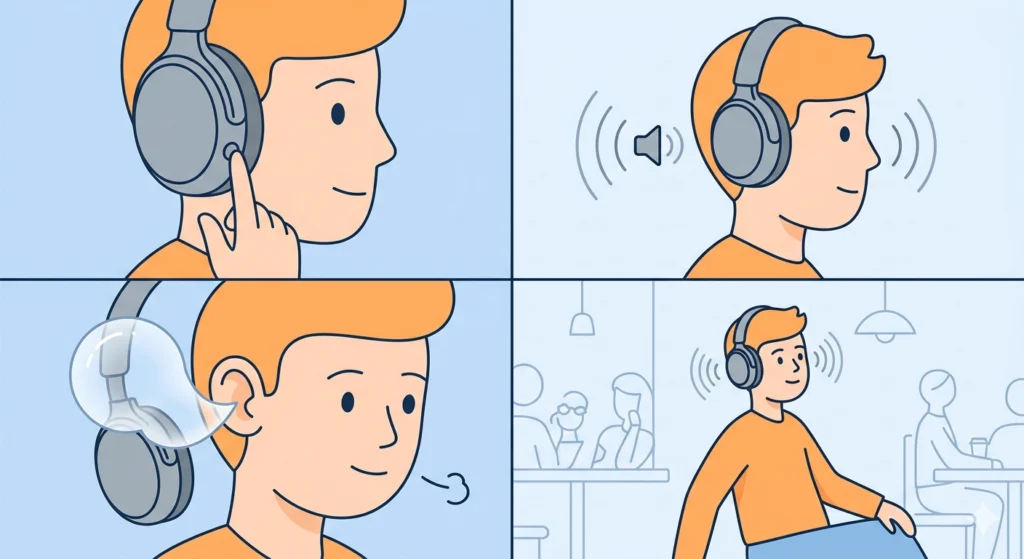
The most immediate fix is disabling ANC entirely. Most headphones and earbuds have a dedicated button or app toggle for this. Transparency Mode is a great middle ground – it lets in enough ambient sound to balance the air pressure around the ear canal without losing all the noise isolation.
- Step 1: Press the ANC button on the headphone or earbud (usually a single or long press)
- Step 2: Cycle through modes until Transparency or Ambient Mode is active
- Step 3: If the pressure feeling eases within 30 seconds, ANC was the direct cause
- Step 4: Keep Transparency Mode on in low-noise environments where full ANC is not needed
This works best when the discomfort is mild to moderate. For most people, simply toggling between ANC and Transparency Mode throughout the day is enough to eliminate the problem entirely.
Fix 2: Reduce ANC Intensity in the App
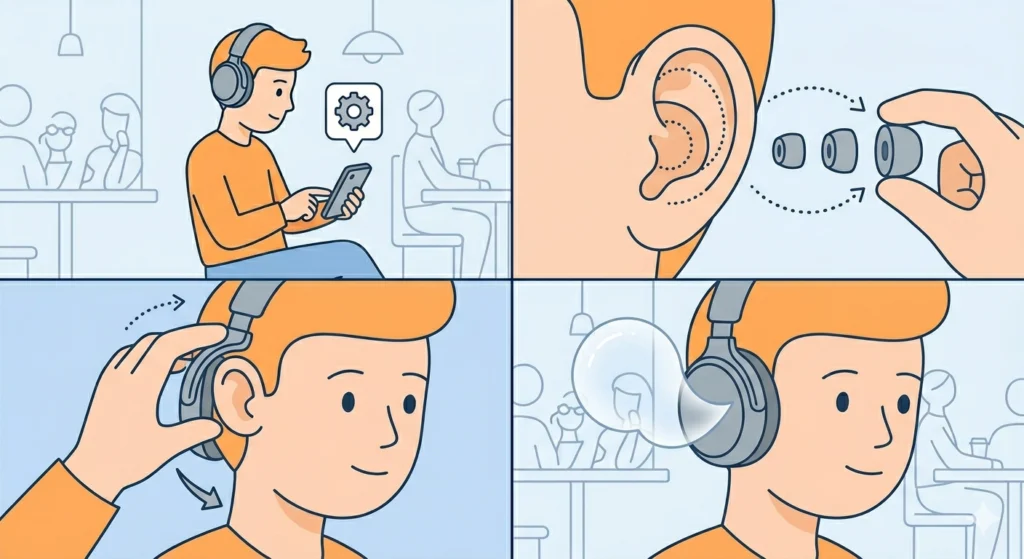
Many premium headphones – including models from Sony, Bose, Apple, and Jabra – have companion apps that let users dial back the ANC strength. Full-power ANC is overkill in a quiet office or at home. Reducing it to 50-70% still provides solid noise blocking without the overwhelming pressure effect.
- Step 1: Open the companion app for the headphones (e.g., Sony Headphones Connect, Bose Music, Jabra Sound+)
- Step 2: Navigate to the Noise Cancelling or ANC settings
- Step 3: Lower the ANC level slider – start by reducing it by 30-40%
- Step 4: Test for a few minutes and adjust further if needed
The key is finding the lowest ANC setting that still blocks out unwanted noise. Most people find that a medium ANC level eliminates pressure entirely while still keeping distractions at bay.
Pro-Tip: If the headphones support adaptive or automatic ANC, enable that mode instead of a fixed level. Adaptive ANC constantly adjusts based on the surrounding environment, which naturally reduces the pressure effect in quieter settings.
Fix 3: Refit the Earbuds or Headphones
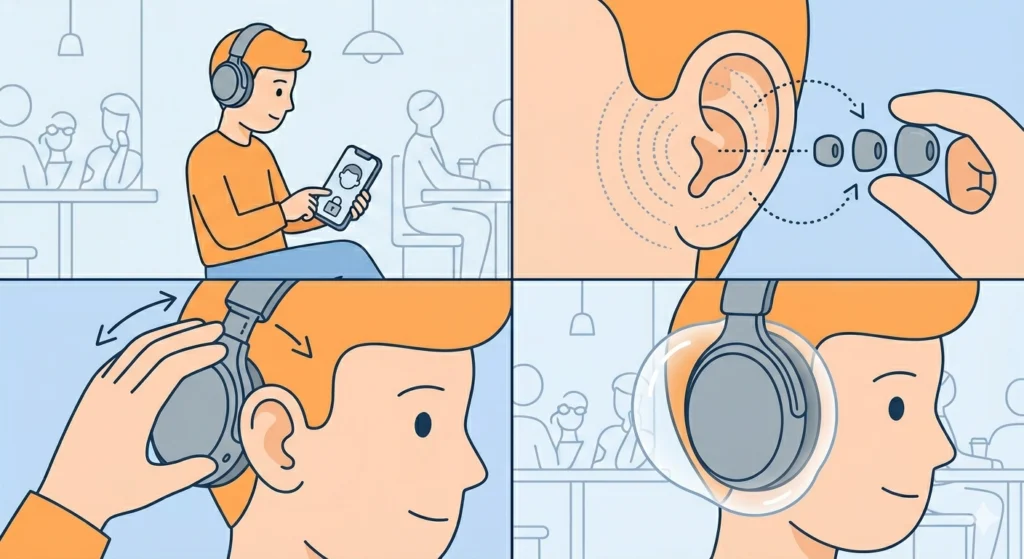
A poor fit is often the hidden cause of ANC-related pressure. When earbuds create an overly tight seal in the ear canal, the ANC system has less room to work naturally – which amplifies the pressure sensation. Headphone ear cups that press too firmly against the skull can have a similar effect.
- Step 1: Remove the earbuds completely and let the ears rest for 60 seconds
- Step 2: Reinsert the earbuds at a slightly shallower depth than before
- Step 3: Try a different ear tip size – often going one size smaller relieves the seal pressure
- Step 4: For over-ear headphones, loosen the headband adjustment slightly and reposition the ear cups so they sit more naturally around the ear
Foam ear tips tend to create a gentler seal than silicone, and many users report significantly less pressure discomfort after switching. This is one of the easiest and cheapest fixes available.
Fix 4: Take Regular ANC Breaks
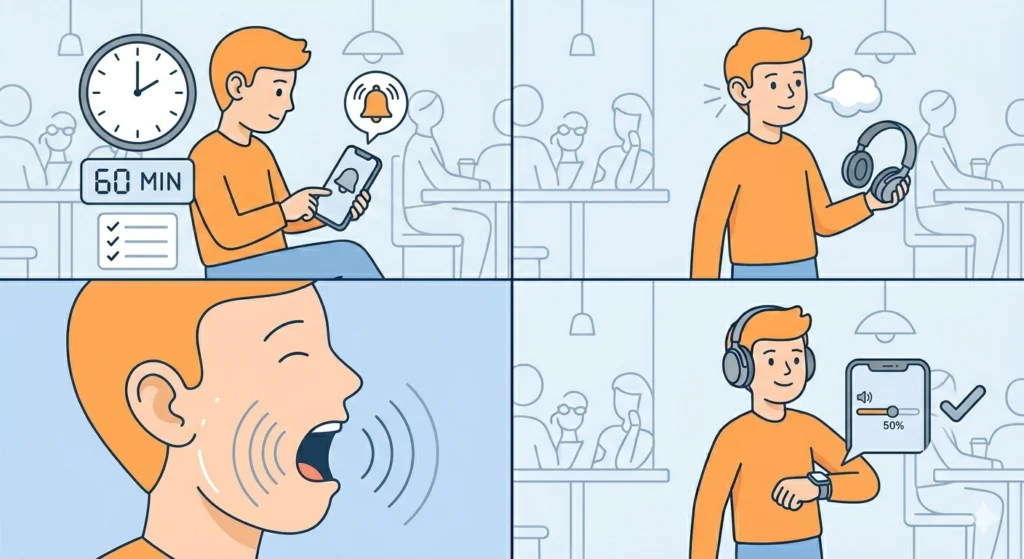
Continuous exposure to ANC is hard on the ears over long sessions. Taking short breaks every 60 to 90 minutes lets the ears recalibrate and relieves any built-up pressure. Think of it the same way as giving the eyes a break from a screen.
- Step 1: Set a reminder for every 60-90 minutes of headphone use
- Step 2: Remove the headphones or earbuds completely for 5-10 minutes
- Step 3: Do a gentle jaw movement or yawn to naturally equalize ear pressure
- Step 4: Resume listening with ANC at a reduced level if possible
This works best as a preventative measure. Once the habit is built, the pressure sensation becomes much rarer even during full ANC use.
Pro-Tip: Yawning or swallowing opens the Eustachian tube, which is the same mechanism the body uses to equalize pressure during altitude changes. Doing this after removing the headphones actively speeds up the pressure relief.
Fix 5: Switch to Open-Back or Bone Conduction Headphones
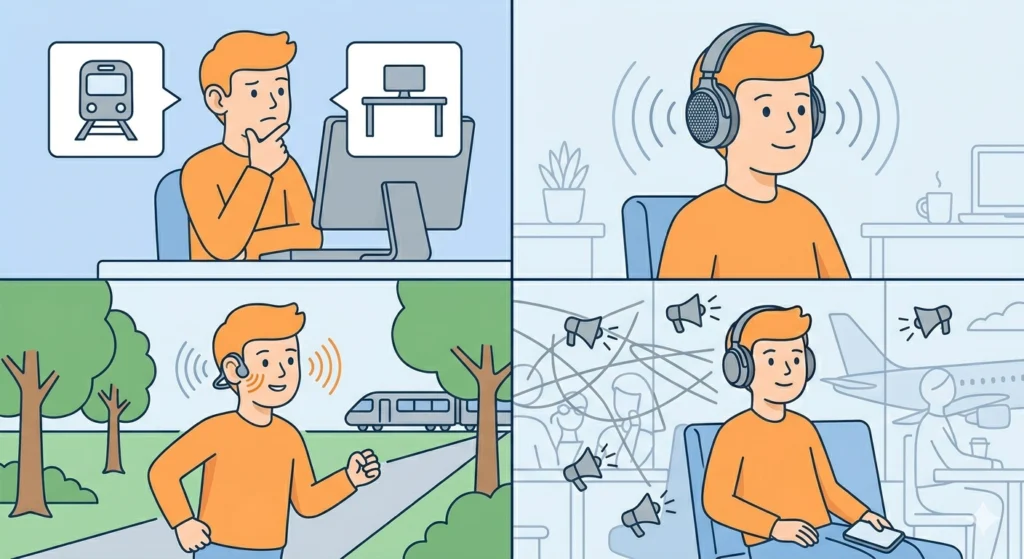
If ANC pressure is a persistent issue regardless of settings or fit adjustments, the solution may simply be switching to a headphone style that does not create a sealed environment. Open-back headphones allow air to flow freely through the ear cups, eliminating the pressure effect entirely. Bone conduction headphones bypass the ear canal completely.
- Step 1: Identify whether the primary use case is commuting or working in a quiet space
- Step 2: For quiet environments, consider open-back headphones like the Sennheiser HD 599 or similar
- Step 3: For active use or commuting where situational awareness matters, look into bone conduction options like Shokz
- Step 4: Reserve ANC headphones specifically for loud environments like flights or busy offices where the noise isolation is genuinely needed
Tips to Prevent ANC Ear Pressure
- Always start with ANC at a lower setting and increase only when the environment demands it
- Keep ear tips clean – buildup can alter the seal and worsen pressure
- Avoid using ANC during rapid altitude changes such as flying without equalizing ears first
- Replace worn-out ear tips regularly since a degraded seal can make ANC work harder and feel more intrusive
- If using wireless earbuds, make sure the Bluetooth connection is stable – some users report pressure-like discomfort linked to audio artifacts from a weak signal. If audio dropouts are a recurring issue, it may be worth reviewing how the device is paired for optimal stereo performance
Common Problems and Troubleshooting
Problem 1: Pressure Returns Even with ANC Off
If the ear pressure persists after disabling ANC, the issue is likely the physical seal of the ear tips rather than the ANC system itself. Try different ear tip materials – switching from silicone to memory foam usually resolves this. If the issue continues, check for any wax buildup in the ear canal that might be responding to the seal.
Problem 2: ANC App Settings Are Not Saving
Some headphone companion apps require a firmware update to retain custom ANC levels. Check for updates in the app. On Windows 11, if audio settings are not responding as expected after changing ANC modes, it may be worth resetting the audio settings to clear any conflicts between the device driver and the app.
Problem 3: One Ear Feels More Pressure Than the Other
Asymmetric pressure usually points to an uneven fit. The earbud on the high-pressure side is likely seated deeper or creating a tighter seal. Reinsert that side using a smaller ear tip or a shallower angle. For over-ear headphones, check that the ear cup is centered properly over the ear rather than pressing against the ear canal opening.
Problem 4: Pressure Causes Mild Dizziness
Some people are more sensitive to the ANC anti-noise wave and experience a mild spatial disorientation or dizziness. This is a known effect sometimes called ‘eardrum suck.’ The fix is to reduce ANC strength immediately and allow a few minutes without headphones. If dizziness persists beyond 20 minutes after removing the headphones, consult a doctor to rule out any inner ear sensitivity.
Frequently Asked Questions
Why does active noise cancelling feel like pressure in the ears?
ANC works by producing an inverted sound wave that cancels out ambient noise. The ear sometimes interprets this anti-noise signal as a physical change in air pressure, similar to what happens during altitude changes in a plane or elevator. This is not actual pressure – it is a neural response to the unusual sound environment ANC creates.
Is ANC ear pressure harmful or dangerous?
For the vast majority of users, ANC-related ear pressure is uncomfortable but not harmful. It does not damage the eardrum or inner ear. However, people with existing ear conditions such as Eustachian tube dysfunction or chronic ear infections should consult a doctor before using ANC headphones regularly.
Does ANC ear pressure go away over time?
Many users report that sensitivity to ANC pressure decreases after a few weeks of regular use as the brain adapts to the sensation. However, some people remain sensitive indefinitely. For those users, using ANC at a lower intensity or switching to Transparency Mode in calm environments is the more practical long-term approach.
Which headphones have the least ear pressure from ANC?
Headphones with adjustable ANC levels tend to cause less discomfort because they allow dialing back the intensity. Models commonly noted for a gentler ANC experience include the Sony WH-1000XM5, Jabra Evolve2 85, and Apple AirPods Pro with Adaptive Transparency. Open-ear and bone conduction options have zero ANC pressure by design.
Can the wrong ear tip size cause ANC pressure?
Absolutely. An ear tip that is too large creates a very tight seal, which amplifies the pressure sensation. An ear tip that is too small may cause the ANC microphones to work harder to compensate, which can also increase the perceived pressure. The correct size is one that forms a comfortable seal without pushing deep into the canal.
Does Transparency Mode completely fix the ear pressure issue?
For most users, yes. Transparency Mode allows ambient sound into the audio feed, which effectively neutralizes the ‘sealed from the world’ sensation that contributes to ANC pressure. It does not eliminate noise isolation as dramatically as full ANC, but it dramatically reduces or eliminates the pressure discomfort for the majority of people.
Why does ANC feel worse on planes or at altitude?
At altitude, the cabin is already slightly pressurized differently from ground level. Adding ANC on top of this creates a compounding pressure effect that many people find quite uncomfortable. The fix is to switch to Transparency Mode during takeoff and landing, and to yawn or swallow regularly to equalize naturally.
Can ANC cause headaches?
Yes, in some users. The constant low-frequency anti-noise signal produced by ANC can contribute to tension headaches during extended listening sessions, especially at high ANC levels. Reducing the ANC intensity, taking breaks, and ensuring a proper fit without excessive clamping force are the main ways to address this.
Is it better to use ANC or passive noise isolation to avoid pressure?
Passive noise isolation – which works through physical blocking of sound using dense ear cup padding or well-fitted ear tips – does not create any artificial sound waves and therefore does not cause ANC-related pressure. For pressure-sensitive users, in-ear monitors or over-ear headphones with thick passive isolation are a much more comfortable alternative.
What should be done if the ANC pressure does not stop even after following all the steps?
If the pressure persists after adjusting fit, reducing ANC intensity, and taking breaks, the best next step is to stop using ANC headphones temporarily and switch to a passive or open-back option. If the discomfort continues even without the headphones, it is worth visiting a doctor or audiologist to check for any underlying ear condition unrelated to the headphones.