

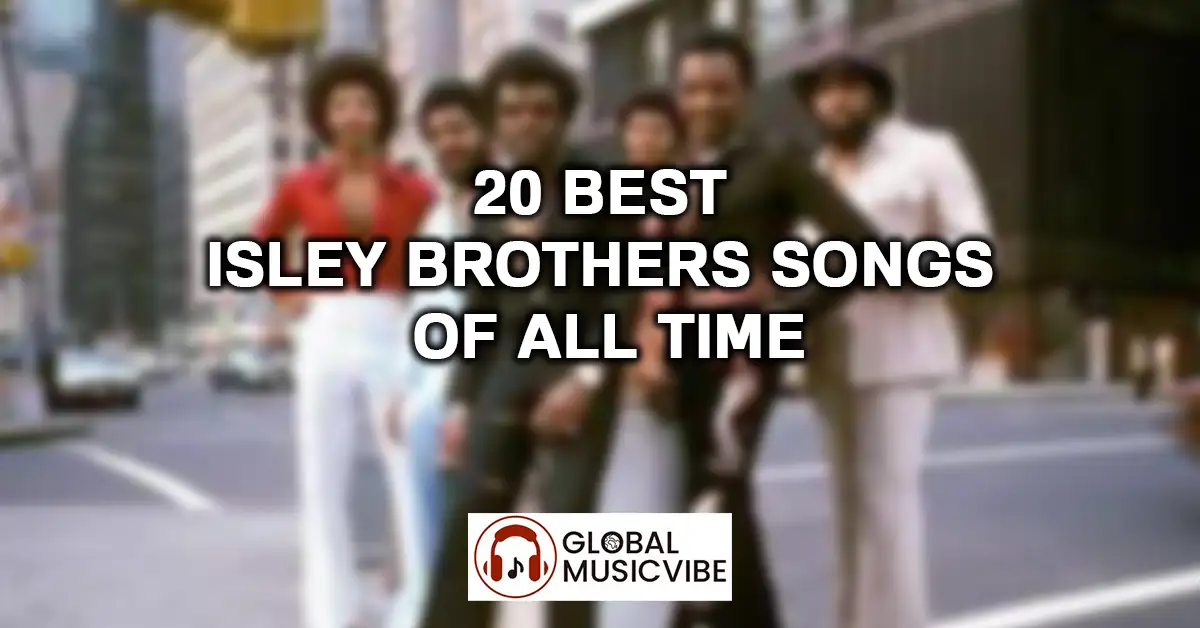
The Isley Brothers aren’t just another R&B group—they’re a musical dynasty that’s shaped American music for over six decades. From their doo-wop beginnings in the late 1950s to their funk-rock evolution in the 1970s and smooth soul resurgence in the 1980s, Ronald, Rudolph, O’Kelly, and later Ernie and Marvin Isley created a catalog that transcends generations. Their ability to reinvent themselves while maintaining artistic integrity is unmatched, and their influence echoes through hip-hop samples, R&B vocals, and rock guitar solos today. This collection celebrates their greatest achievements—songs that defined eras, topped charts, and continue to move listeners. Whether you’re rediscovering classics or exploring their catalog for the first time, these tracks showcase why the Isley Brothers remain essential listening.
Shout (Parts 1 & 2)
Released in 1959 on RCA Victor, “Shout” transformed the Isley Brothers from gospel-influenced vocalists into rock and roll pioneers with one explosive recording session. The song’s call-and-response structure, borrowed directly from their church upbringing in Cincinnati, created an interactive experience that turned every performance into a participatory event. What makes this track revolutionary is its dynamic range—the way it builds from whispered intensity to full-throated celebration, with Ronald Isley’s lead vocals commanding the emotional journey while his brothers provide the rhythmic foundation that makes you want to move. The production, though primitive by modern standards, captures raw energy that studio polish often diminishes, and the song’s influence on rock music is undeniable, later covered by everyone from Joey Dee and the Starliters to The Beatles during their early club days.
Twist and Shout
Originally recorded by the Top Notes in 1961, the Isley Brothers’ version from 1962 became the definitive interpretation that The Beatles would later make famous to a different audience. The Isleys injected Latin-influenced rhythms and gospel fervor into the simple chord progression, creating a track that worked equally well on pop, R&B, and rock radio formats. Ronald’s gritty, passionate vocal delivery—complete with those signature howls and shouts—transformed what could have been a novelty dance record into something visceral and exciting. The arrangement features prominent horns and a driving backbeat that captures the early 1960s’ optimistic energy, and listening on quality headphones reveals the subtle call-and-response interplay between Ronald’s lead and the brothers’ background vocals that gives the recording its infectious momentum.
This Old Heart of Mine (Is Weak for You)
The Isley Brothers’ 1966 collaboration with Motown’s Holland-Dozier-Holland songwriting team resulted in this sophisticated pop-soul masterpiece that showcased their versatility beyond raw energy. The production features the classic Motown Sound—lush strings, precisely arranged horns, and the Funk Brothers’ impeccable rhythm section—providing a polished backdrop for Ronald’s tender vocal performance. What elevates this track is its emotional maturity; the lyrics explore romantic vulnerability with poetic depth, and the melody’s ascending hook during the chorus creates an almost physical sensation of heartache and longing. The song reached number 12 on the Billboard Hot 100 and demonstrated that the Isleys could excel within Motown’s structured production approach while maintaining their distinctive vocal identity, though they’d soon leave the label to reclaim creative control.
It’s Your Thing
This 1969 declaration of independence became the Isley Brothers’ signature song and their first release on their own T-Neck Records label, reaching number two on the Billboard Hot 100 and earning a Grammy Award. The funk-driven arrangement features a bass line that’s been sampled countless times in hip-hop, a guitar riff that predates funk-rock fusion by several years, and a rhythmic pocket so deep it fundamentally changed R&B’s direction toward more aggressive, guitar-oriented production. Ronald’s vocal delivery radiates confidence and sexual autonomy, while the lyrics’ message about personal freedom resonated with the civil rights era’s emphasis on self-determination and individual expression. The recording quality showcases the brothers’ understanding of production—each instrument occupies its sonic space perfectly, and the mix punches through any speaker system with authority that still sounds contemporary decades later.
That Lady (Part 1 & 2)
Originally recorded in 1964, the Isleys reimagined “That Lady” in 1973 with younger brothers Ernie on guitar and Marvin on bass, creating a rock-funk hybrid that defined their 3+3 era. Ernie Isley’s guitar work throughout this track is genuinely extraordinary—his solos combine Hendrix-influenced distortion with melodic phrasing that serves the song rather than overwhelming it, and his tone remains a benchmark for rock guitarists studying analog warmth and sustain. The extended arrangement spans over five minutes in its album version, allowing the band to stretch out instrumentally while Ronald’s vocals provide a soulful anchor that prevents the track from becoming mere jam-band indulgence. The song reached number six on the Billboard Hot 100 and introduced the Isley Brothers to rock audiences who might have overlooked their earlier work, while the production values showcase why investing in proper studio equipment matters—every element, from the cowbell to the background vocals, sits perfectly in the mix.
Fight the Power (Part 1 & 2)
Released in 1975 during a period of social and economic upheaval, “Fight the Power” became a funk anthem that addressed systemic inequality with muscular grooves and defiant lyrics. The production features layers of guitars, horns, and percussion creating a dense, aggressive sound that influenced everyone from Prince to Public Enemy, who would later title their own protest song after this track. Ernie Isley’s wah-wah guitar riffs provide the melodic hooks, while the rhythm section locks into a groove so tight it feels mechanistic yet entirely human, demonstrating the creative possibilities when checking out quality audio gear that captures dynamic range accurately. The song topped the R&B charts and crossed over to number four on the pop charts, proving that politically conscious music could achieve commercial success without compromising its message or sonic intensity.
For the Love of You (Part 1 & 2)
This 1975 ballad from “The Heat Is On” album showcases the Isleys’ ability to create deeply romantic music without sacrificing their sophisticated musical arrangements or production values. The track opens with Ernie’s clean-toned guitar melody that’s become one of R&B’s most recognizable instrumental passages, setting an intimate mood that Ronald’s tender vocal performance enhances with every phrase. The string arrangement complements rather than dominates, providing lush harmonic support that elevates the emotional content while the rhythm section maintains a subtle groove that keeps the song from becoming overly sentimental. In the car or through good speakers, you’ll notice how the mixing balances warmth and clarity—Ronald’s voice sits forward enough to convey intimacy while the instrumental elements create spatial depth that demonstrates excellent engineering choices by Malcolm Cecil at Media Sound in New York.
Between the Sheets
Released in 1983, this smooth, sensual slow jam became one of the decade’s most influential R&B recordings, later sampled by The Notorious B.I.G. for “Big Poppa” and countless other hip-hop artists. The production epitomizes early 1980s R&B sophistication—synthesizers, drum machines, and live instruments blend seamlessly to create a sound that feels both modern and timeless. Ronald’s vocal performance here is masterful in its restraint; he understands that seduction requires subtlety, and his phrasing leaves space for the instrumentation to breathe while conveying desire through tone and timing rather than volume. The bassline deserves special recognition for its melodic movement and rhythmic complexity, and when you listen on headphones, you’ll appreciate the stereo imaging that places different elements across the soundstage, creating an immersive listening experience that rewards attention to detail.
Harvest for the World
This 1976 socially conscious anthem demonstrates the Isley Brothers’ commitment to addressing global issues through music without resorting to preachy rhetoric or sacrificing musical quality. The song’s message about resource inequality and environmental stewardship remains relevant today, while the production combines gospel-influenced vocals, sophisticated horn arrangements, and a melody that’s both memorable and musically substantial. The chorus features multiple vocal harmonies that showcase the brothers’ roots in church singing, and the dynamic build from verses to chorus creates emotional momentum that reinforces the lyrics’ call for collective action. The track reached number nine on the R&B charts and demonstrated that the Isleys could address serious themes while creating music that works equally well as artistic statement and radio-friendly single.
Footsteps in the Dark (Parts 1 & 2)
From their 1977 album “Go for Your Guns,” this moody, atmospheric track showcased the Isleys’ experimental side and would later provide the foundation for Ice Cube’s “It Was a Good Day,” introducing the group to younger audiences decades after its release. The production creates a nocturnal ambiance through understated instrumentation—clean guitar tones, subtle percussion, and synthesizer textures that suggest mystery and introspection. Ronald’s vocal approach here differs from his more assertive performances; he inhabits the song’s reflective mood with a delivery that feels like internal monologue rather than performance, and the background vocals add ethereal layers that enhance the track’s dreamlike quality. The arrangement demonstrates restraint and sophisticated musical judgment, with each element serving the overall atmosphere rather than competing for attention.
Who’s That Lady
The earlier 1964 version of “That Lady” deserves recognition as a distinct recording that captured the Isleys’ pre-rock evolution while showcasing Ronald’s developing vocal style and the group’s understanding of arrangement dynamics. This original version features a more traditional R&B arrangement with prominent horns and a moderate tempo that emphasizes melody over groove, allowing Ronald’s vocal performance to carry the emotional weight without the instrumental pyrotechnics that would define the 1973 remake. The production values reflect early 1960s recording techniques, with mono mixing that places everything center-stage rather than spreading elements across the stereo field, and there’s a directness to the performance that the later version’s sophistication sometimes obscures. Comparing both versions provides insight into how artists evolve and how production trends shape the same composition’s different interpretations.
Summer Breeze
The Isley Brothers’ 1974 cover of Seals and Crofts’ soft-rock hit transformed the song into a funk-soul groove that demonstrates their interpretive genius and arrangement skills. Where the original floats on acoustic guitars and harmonies, the Isleys grounded their version in Ernie’s electric guitar and a rhythm section that pushes the tempo while maintaining the song’s relaxed, summery feel. Ronald’s vocal interpretation adds soul and grit to the melody, making the lyrics feel more lived-in and authentic, while the background vocals provide harmonic richness that differs from but equals the original’s appeal. The guitar solo section extends the composition and showcases Ernie’s melodic sensibility and tone, and the production captures every instrument with clarity that makes this ideal for testing quality audio equipment’s ability to reproduce complex mixes.
Voyage to Atlantis
This 1977 ballad represents the Isleys at their most musically ambitious, combining progressive rock influences with their R&B foundation to create something genuinely unique. The song’s extended instrumental introduction establishes a mystical, exploratory mood through synthesizer textures and Ernie’s guitar work, which references both Jeff Beck’s jazz-rock experimentation and Carlos Santana’s Latin-influenced phrasing. Ronald’s vocal entry nearly two minutes into the track rewards patience with a melody and performance that justify the atmospheric buildup, and his phrasing demonstrates technical sophistication in breath control and dynamic variation. The arrangement takes risks with its length and structure, trusting listeners to follow the musical journey rather than demanding immediate gratification, and the production by the Isley Brothers themselves showcases their understanding of sonic space and emotional pacing.
Live It Up (Part 1 & 2)
Released in 1974, this celebratory funk track captures the Isleys’ ability to create party music with substance and musical complexity beyond simple dancefloor functionality. The arrangement layers multiple guitar parts, horn sections, and percussion elements to create a dense, energetic sound that maintains clarity despite its complexity—evidence of excellent mixing and mastering that keeps every element distinct and purposeful. The groove locks into a pocket that compels physical movement while the melody provides memorable hooks that work outside the club environment, demonstrating songwriting that transcends genre limitations. Ronald’s vocal performance radiates joy and energy that’s infectious without feeling forced, and the call-and-response sections invite participation that makes this a live performance favorite that translates well to recorded format.
Work to Do
Originally recorded by the Average White Band, the Isley Brothers’ 1972 version claims ownership through arrangement choices and performance energy that makes their interpretation definitive for many listeners. The funk groove hits harder in the Isleys’ hands, with a bass line and drum pocket that showcase their rhythm section’s precision and pocket, while the horn charts punch through the mix with authority that moves air in your listening space when played through proper speakers. Ronald’s vocal delivery adds urgency and grit that the original lacks, making the song’s romantic message feel more immediate and authentic, and the background vocals provide textural depth that rewards repeated listening. The production quality captures the band’s live energy while maintaining studio polish that prevents the recording from feeling raw or unfinished.
Pop That Thang
This 1972 funk single showcases the Isley Brothers’ embrace of contemporary trends while maintaining their distinctive identity and musical values. The arrangement features a simple but effective riff that drives the entire track, demonstrating that memorable hooks don’t require complexity, just rhythmic integrity and melodic appeal that sticks in memory after first listen. The production emphasizes the bottom end—bass and drums dominate the mix in ways that anticipate hip-hop’s sonic priorities by over a decade—while Ronald’s vocal sits on top with clarity and presence that cuts through the dense instrumentation. The song reached number nine on the R&B charts and demonstrated the Isleys’ commercial instincts and ability to create radio-friendly singles without compromising their artistic standards or musical sophistication.
Contagious
Released in 2001 and featuring R. Kelly and Chanté Moore, “Contagious” proved the Isley Brothers remained relevant and creatively vital in their sixth decade of recording. The song’s narrative structure—telling a story of infidelity through multiple vocal perspectives—creates dramatic tension that maintains interest across its five-minute running time, while the production blends contemporary R&B’s smooth sophistication with enough of the Isleys’ classic sound to feel like continuation rather than reinvention. Ronald Isley’s vocal performance, delivered in his “Mr. Biggs” persona, shows his voice aged into something deeper and more textured without losing power or control, and his interplay with R. Kelly demonstrates mutual respect between generations. The track reached number one on the R&B charts and number nineteen on the Billboard Hot 100, introducing the Isley Brothers to listeners born decades after their classic period while reminding longtime fans that great artists evolve rather than repeat.
Nobody but Me
This 1962 single showcases the Isley Brothers during their transition from doo-wop-influenced R&B to more assertive, rock-influenced sounds that would define their later work. The arrangement features prominent piano, driving percussion, and Ronald’s increasingly confident lead vocals that command attention through personality and technical skill. The production captures the rawness of early 1960s recording—minimal overdubs, straightforward mixing, and performances that feel captured live in the studio rather than assembled through modern editing techniques. While not their biggest commercial success, “Nobody but Me” demonstrates artistic growth and willingness to experiment with arrangements and production approaches that distinguished them from contemporaries content with formula repetition.
The Pride (Part 1 & 2)
From their 1977 album “Go All the Way,” this ambitious track combines social commentary with musical complexity that showcases the Isleys’ maturation as composers and arrangers beyond their reputation as interpreters. The funk-rock foundation supports lyrics addressing self-determination and community empowerment, while the arrangement moves through multiple sections that maintain coherence despite stylistic variation. Ernie’s guitar work throughout demonstrates his growth as a soloist who understands when to step forward and when to support, and the horn arrangements add punctuation and melodic counterpoint without overwhelming the vocal or rhythm section. The production balances clarity and warmth, capturing the band’s performance energy while maintaining studio precision that separates professional recordings from amateur efforts, making this ideal for evaluating audio equipment’s ability to reproduce complex musical information accurately.
Busted
This 1975 deep cut from “The Heat Is On” album deserves recognition for its inventive arrangement and willingness to experiment with unconventional song structures and production techniques. The track features synthesizer textures that were cutting-edge for mid-1970s R&B, combined with traditional funk instrumentation in ways that create sonic interest without feeling gimmicky or dated. Ronald’s vocal performance adapts to the song’s shifting dynamics, moving from intimate verses to powerful choruses with technical ease that demonstrates decades of professional experience and natural ability. The mix showcases excellent stereo imaging with different elements panned across the soundstage in ways that create spatial depth and immersive listening when experienced through quality headphones or properly positioned speakers, rewarding attention to sonic detail that casual listening might miss.
Frequently Asked Questions
What makes the Isley Brothers’ longevity so remarkable in music history?
The Isley Brothers’ sixty-plus year career spans from the doo-wop era through funk, rock, disco, and contemporary R&B, demonstrating unprecedented adaptability and artistic evolution. Unlike many groups that achieve success in one style and repeat that formula, the Isleys continuously reinvented their sound while maintaining core elements—Ronald’s distinctive vocals, sophisticated arrangements, and commitment to quality—that kept their identity intact across decades. Their influence extends beyond R&B into rock guitar through Ernie Isley’s playing and hip-hop through countless samples, making them one of few groups whose music resonates across multiple generations and genres simultaneously.
Which Isley Brothers albums are essential for new listeners?
“3+3” (1973) represents their commercial and creative peak, featuring “That Lady” and showcasing the classic lineup with Ernie and Marvin. “The Heat Is On” (1975) demonstrates their funk mastery with “Fight the Power” and “For the Love of You,” while “Go for Your Guns” (1977) shows their experimental range. For earlier work, “Shout!” (1959) and “Twist & Shout” (1962) capture their raw energy, and “Eternal” (2001) proves their later-career vitality. These five albums provide comprehensive introduction to their stylistic range and consistent quality across different eras.
How did the Isley Brothers influence rock music despite being classified as R&B?
The Isleys embraced electric guitar as a lead instrument in R&B before most peers, with Ernie Isley’s playing directly influenced by Jimi Hendrix (who actually toured with the Isleys early in his career). Their 1970s recordings feature extended instrumental sections, distorted guitar tones, and rock song structures while maintaining R&B’s rhythmic foundation and vocal traditions. This fusion influenced everyone from Prince to Lenny Kravitz, and their willingness to incorporate rock elements legitimized genre-blending for R&B artists who followed, essentially creating funk-rock as a commercially viable category.
Why are Isley Brothers songs sampled so frequently in hip-hop?
The Isleys’ 1970s recordings feature groove-oriented arrangements with prominent basslines, distinctive guitar riffs, and drum patterns that translate perfectly to hip-hop production. Songs like “Between the Sheets,” “Footsteps in the Dark,” and “It’s Your Thing” provide ready-made musical foundations that hip-hop producers recognized as timeless and emotionally resonant. Additionally, the Isleys’ sonic sophistication—excellent recording quality, balanced mixing, and clear instrumental separation—makes their music technically ideal for sampling, and their emotional range allows these samples to support various lyrical themes from celebration to introspection.
What role did owning T-Neck Records play in their artistic development?
Establishing T-Neck Records gave the Isley Brothers complete creative control over their music, allowing them to experiment without label executives demanding commercial compromises or imposing outside producers. This independence enabled the stylistic evolution from traditional R&B to funk-rock fusion, permitted extended song structures that radio might otherwise reject, and let them nurture Ernie and Marvin’s development as musicians rather than hiring session players. The financial benefits also accrued directly to the group rather than enriching record executives, demonstrating business acumen that complemented their artistic vision and provided economic sustainability throughout their career.