

Which country is the setting for the play Hamlet? The answer is Denmark, where William Shakespeare set one of literature’s most famous tragedies. This masterpiece unfolds in the royal castle of Elsinore, a real location that has captivated audiences for over four centuries with its tale of revenge, madness, and political intrigue.
Denmark: The Backdrop of Shakespeare’s Masterpiece
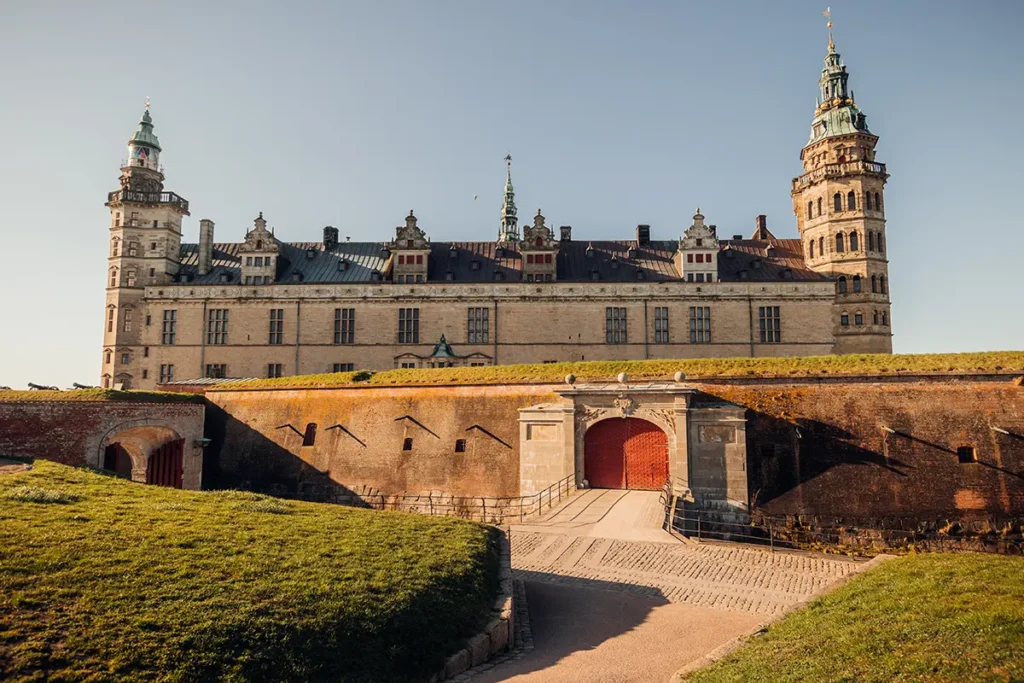
Shakespeare chose Denmark as the setting for Hamlet, specifically centering the action around Elsinore Castle, known in Danish as Kronborg Castle. This strategic location on the northeastern tip of Zealand overlooks the narrow strait between Denmark and Sweden, making it a powerful symbol of royal authority and political tension. The playwright’s decision to set his tragedy in this Scandinavian kingdom was not arbitrary but rooted in historical sources and the cultural fascination of Elizabethan England with Nordic tales.
Historical Context of Hamlet’s Danish Setting
The story of Hamlet originates from medieval Scandinavian legend, specifically from the Historia Danica written by Danish historian Saxo Grammaticus in the late 12th century. Shakespeare adapted this earlier tale, transforming the legendary Prince Amleth into the philosophical Prince Hamlet we know today. The Danish setting provided Shakespeare with an exotic yet historically grounded location that allowed English audiences to engage with themes of power, corruption, and revenge from a comfortable distance.
Elsinore Castle: From Fiction to Reality
Kronborg Castle, the real-world inspiration for Elsinore, was built in the 1420s and significantly expanded in the 1570s by King Frederick II of Denmark. This Renaissance fortress served as a toll station controlling the sound between Denmark and Sweden, generating substantial revenue for the Danish crown. Shakespeare likely learned about this impressive castle through traveling actors and merchants who had visited or heard tales of its grandeur. Today, Kronborg Castle is a UNESCO World Heritage Site and remains one of Denmark’s most visited attractions, with thousands of Shakespeare enthusiasts making pilgrimages to see Hamlet’s legendary home.
Why Shakespeare Chose Denmark for Hamlet
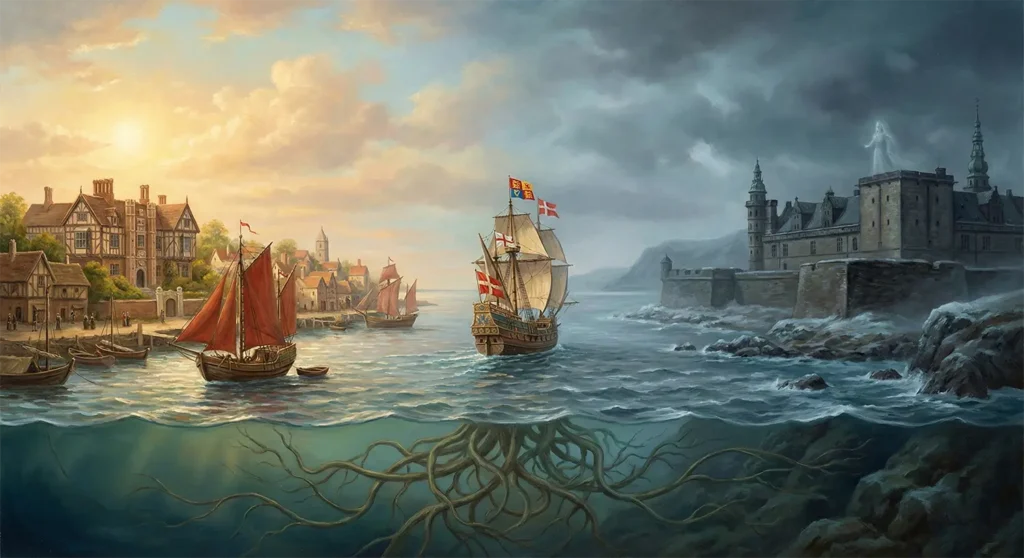
Several factors influenced Shakespeare’s choice of Denmark as the setting. First, there was considerable cultural exchange between England and Denmark during the late 16th century, particularly after the marriage of King James VI of Scotland (later James I of England) to Anne of Denmark in 1589. This royal connection made Danish settings fashionable and familiar to English audiences. Second, the Nordic setting allowed Shakespeare to explore darker themes of murder, revenge, and supernatural visitations without directly commenting on English politics, which could have been dangerous during the reign of Elizabeth I.
The Political Climate of Shakespeare’s Denmark
In Hamlet, Shakespeare presents Denmark as a sophisticated but morally compromised kingdom. The play opens with the famous line “Who’s there?” spoken by guards on the battlements of Elsinore, immediately establishing an atmosphere of uncertainty and danger. The Danish court is depicted as a place of surveillance, deception, and political maneuvering, where Prince Hamlet must navigate treacherous waters following his father’s murder and his mother’s hasty remarriage to his uncle Claudius. This portrayal reflects Renaissance anxieties about succession, legitimacy, and the corrupting influence of power.
Geographical and Cultural Significance
Denmark’s geographical position as a gateway between the Baltic Sea and the North Sea made it a strategically important nation in Shakespeare’s time. The country controlled vital trade routes and wielded considerable influence in Northern European politics. By setting Hamlet in Denmark, Shakespeare tapped into contemporary awareness of this power dynamic while creating a fictional royal court that felt both believable and sufficiently distant from London to allow for creative freedom.
The Atmosphere of Elsinore in the Play
Shakespeare’s Elsinore is characterized by its cold, dark atmosphere, with much of the action taking place at night or in shadowy chambers. The castle becomes almost a character itself, with its battlements where the ghost appears, its great hall where players perform, and its graveyard where Hamlet contemplates mortality. This atmospheric setting reinforces the play’s themes of death, decay, and moral darkness. The famous phrase “something is rotten in the state of Denmark” perfectly encapsulates how the setting serves as a metaphor for political and moral corruption.
Denmark in Performance and Adaptation
Throughout centuries of theatrical production, Denmark has remained the consistent setting for Hamlet, though directors have interpreted it in countless ways. Some productions emphasize the medieval Nordic elements, while others present a more Renaissance European court. Modern adaptations have occasionally transplanted the story to different locations or time periods, but the Danish connection remains central to the play’s identity. For those interested in exploring more about theatrical traditions and cultural performances, you can visit our comprehensive guides section.
Visiting Kronborg Castle Today
Modern visitors to Kronborg Castle can explore the very spaces that inspired Shakespeare’s vision of Elsinore. The castle hosts annual Shakespeare festivals, and actors regularly perform scenes from Hamlet in its courtyard and chambers. The castle’s maritime museum and royal apartments offer insights into Renaissance Danish life, while special Hamlet tours guide visitors through locations referenced in the play. This living connection between literature and place makes Kronborg Castle a unique destination where fiction and history intertwine.
The Impact of Setting on Hamlet’s Themes
The Danish setting profoundly influences Hamlet’s exploration of revenge, madness, and mortality. The northern European location, with its long dark winters and proximity to the sea, creates an environment that mirrors the play’s psychological depth and existential questioning. The court’s isolation on the edge of the known world intensifies the claustrophobic atmosphere where Hamlet feels trapped between his duty to avenge his father and his philosophical reluctance to act. Denmark becomes more than just a location; it embodies the play’s meditation on death, destiny, and the human condition.
Literary and Historical Accuracy
While Shakespeare took considerable creative liberties with Danish history and geography, he grounded his play in enough authentic detail to make it convincing. References to Wittenberg University, where Hamlet studied, and Norway’s political tensions with Denmark reflect real historical elements. However, Shakespeare was writing drama, not documentary, and his Denmark serves the story’s emotional and thematic needs rather than strict historical accuracy. The playwright blended medieval legend with Renaissance court culture to create a timeless setting that transcends its specific geographical location.
Denmark’s Cultural Response to Hamlet
The Danish people have embraced their connection to Hamlet, despite the play’s somewhat unflattering portrayal of political corruption in their country. Kronborg Castle proudly celebrates its association with the play, and Danish tourism benefits significantly from Shakespeare’s choice of setting. The phrase “to be or not to be” has been translated into Danish countless times, and Hamlet remains one of the most frequently performed plays in Danish theaters. This cultural adoption demonstrates how a work of fiction can become interwoven with a nation’s identity and heritage.
Educational Significance of Hamlet’s Setting
Understanding that Denmark is the setting for Hamlet enriches students’ appreciation of the play’s context and meaning. The geographical and political realities of Renaissance Denmark inform the plot’s conflicts and character motivations. Educational programs at Kronborg Castle and in schools worldwide use the Danish setting to teach about Elizabethan theater, European history, and cross-cultural literary exchange. The setting also provides opportunities to discuss how Shakespeare adapted source materials and why playwrights choose particular locations for their stories.
Frequently Asked Questions
Is Elsinore Castle a real place in Denmark?
Yes, Elsinore is the English name for Helsingør, a Danish city located about 45 kilometers north of Copenhagen. The castle referenced in Hamlet is based on Kronborg Castle, a real Renaissance fortress that still stands today and is open to visitors. The castle was completed in its current form in 1585, about 15 years before Shakespeare wrote Hamlet.
Did Shakespeare ever visit Denmark?
There is no historical evidence that William Shakespeare ever traveled to Denmark. He likely learned about Kronborg Castle and Danish culture through accounts from traveling merchants, actors, and sailors who had visited the region, as well as from written sources available in London during the late 16th century.
Why is Denmark important to the plot of Hamlet?
Denmark’s setting is crucial because it establishes the political context of the play, including tensions with Norway and the importance of Elsinore Castle as a strategic military location. The setting also provides the exotic yet believable backdrop that allows Shakespeare to explore themes of political corruption, succession, and revenge without directly commenting on English politics.
What does “something is rotten in the state of Denmark” mean?
This famous line from Hamlet, spoken by Marcellus in Act 1, Scene 4, suggests that serious corruption exists within Denmark’s political system. It has become a proverbial expression used to indicate that something is fundamentally wrong with a situation or organization, extending far beyond its original Danish context.
Can you watch Hamlet performed at Kronborg Castle?
Yes, Kronborg Castle regularly hosts performances of Hamlet, particularly during the summer months. The castle has been hosting Shakespeare productions since 1816, and attending a performance of Hamlet at the actual location that inspired the play offers a unique theatrical experience combining literature, history, and performance.
What language was Hamlet originally written in?
Hamlet was written in English by William Shakespeare around 1600. Although the play is set in Denmark, Shakespeare wrote in his native English for London audiences. The play has since been translated into virtually every major language, including Danish, and is performed worldwide.