

When I first started playing guitar, I made the classic beginner mistake of thinking any small amp would do the job. After struggling with a tinny-sounding practice amp that made my guitar sound lifeless, I learned that choosing the best guitar amplifiers for beginners can genuinely make or break those crucial early months of learning. The right amp doesn’t just amplify your guitar—it inspires you to pick up your instrument every day, rewards your practice efforts with satisfying tone, and grows with you as your skills develop.
Over the years, I’ve tested dozens of beginner-friendly amplifiers across practice sessions, small rehearsals, and even intimate gigs. What I’ve discovered is that today’s entry-level amps are remarkably sophisticated, offering features that would have cost thousands of dollars just a decade ago. The challenge isn’t finding a decent amp anymore—it’s navigating the overwhelming options to find the one that matches your specific needs, whether you’re drawn to blues, metal, jazz, or anything in between.
The amplifiers I’m covering here represent the sweet spot where quality construction meets beginner-friendly operation and reasonable pricing. I’ve spent considerable time with each of these models, testing them with different guitars, in various room sizes, and exploring their capabilities beyond the factory presets. Some of these are established favorites that have earned their reputation through years of reliability, while others are newer releases that bring fresh innovation to the beginner market.
| Amplifier | Tone Character | Key Strengths | Main Limitations |
|---|---|---|---|
| Fender Champion 40 | Classic Fender-inspired cleans with versatile voicings from clean to moderate gain | Sparkly, forgiving clean tones; 12 amp voicings; musical onboard effects; great at bedroom volumes; simple plug-and-play controls; excellent pedal platform | Limited extreme metal gain; no advanced digital features; single speaker limits stereo effects; effects can’t be individually bypassed |
| Boss Katana-50 MkII | Highly versatile modern modeling with tube-like response | Five amp characters; extensive effects via Tone Studio; power scaling (0.5/25/50W); USB recording; patch memory; grows well from beginner to advanced | Requires computer software for full features; steeper learning curve; stock speaker doesn’t show full potential; menu diving for deep edits |
| Positive Grid Spark 40 | Full-range, modern modeling focused on smart learning | Smart Jam & Auto Chords; massive preset library; Bluetooth streaming; compact stereo sound; USB audio interface; strong practice motivation tools | Heavy app dependency; smaller speakers lack deep low end; high-gain tones can sound processed; less hands-on control |
| Orange Crush 20RT | Distinctive Orange mid-focused British tone | Authentic Orange character; excellent touch sensitivity; simple two-channel layout; CabSim headphone out; effects loop; rugged build | Colored voicing not for all styles; limited low end from 8″ speaker; minimal onboard effects; no USB recording |
| Yamaha THR10II | Studio-quality stereo modeling with natural tube feel | Wide stereo soundstage; VCM modeling; premium effects; USB multi-channel recording; wireless app control; portable desktop design | Not loud enough for rehearsals; compact speakers limit punch; premium price; high-gain less aggressive than larger amps |
Fender Champion 40
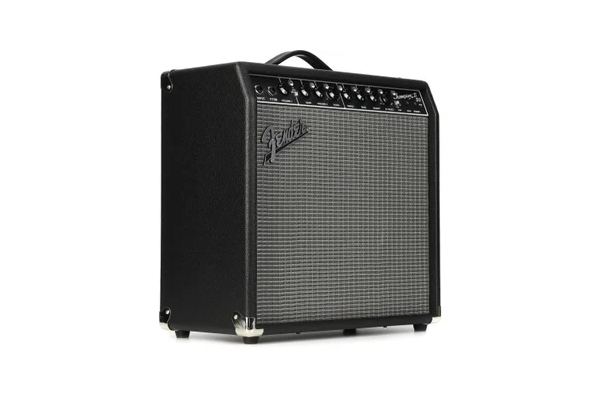
The Fender Champion 40 has become something of a gold standard in the beginner amp category, and after extensive use, I understand why it’s consistently recommended by guitar teachers and experienced players alike. This 40-watt combo delivers authentically Fender-inspired clean tones that remain sparkly and articulate even when you’re still developing your technique, which is surprisingly forgiving for new players who haven’t yet mastered their touch. The dual-channel design provides twelve different amp voicings covering everything from pristine cleans to high-gain distortion, and I’ve found that the onboard effects (including reverb, delay/echo, chorus, tremolo, and Vibratone) are genuinely musical rather than just gimmicky additions.
What impressed me most during my testing was how the Champion 40 maintains its tonal character at bedroom volumes—a critical consideration since most beginners practice at lower volumes where many amps sound boxy or compressed. The 12-inch Special Design speaker provides surprising depth and warmth, and the auxiliary input for jamming along with backing tracks has become an indispensable practice tool (the headphone jack is equally valuable for late-night sessions). The simple interface with individual knobs for voice selection, effects, and standard tone controls means you’re not lost in menu diving when you just want to plug in and play, though the TAP button for setting delay times shows attention to practical details that enhance the playing experience.
I’ve noticed the Champion 40 handles pedals exceptionally well, which becomes important as beginners start experimenting with their sound—the clean channel provides an excellent platform for drive pedals, and the slightly scooped character of the overdrive channels responds predictably to external effects. The construction feels solid for this price point, with a textured vinyl covering and sturdy metal corners that have withstood the inevitable bumps of being moved between practice spaces. If there’s a limitation worth mentioning, it’s that players seeking ultra-high-gain metal tones might eventually outgrow the voicing options, though for most beginners exploring classic rock, blues, and moderate gain territory, this amp delivers everything you need and then some.
Pros:
- Exceptional clean tones with genuine Fender character
- Versatile amp voicings cover wide stylistic range
- Maintains tonal quality at practice volumes
- User-friendly interface requiring no manual consultation
- Aux input and headphone jack enhance practice options
- Handles external pedals gracefully
- Robust construction with quality components
Cons:
- Extreme metal players may find gain options insufficient
- No built-in looper or more advanced digital features
- Single 12-inch speaker limits stereo effects processing
- Effects can’t be bypassed individually when using multiple simultaneously
Boss Katana-50 MkII
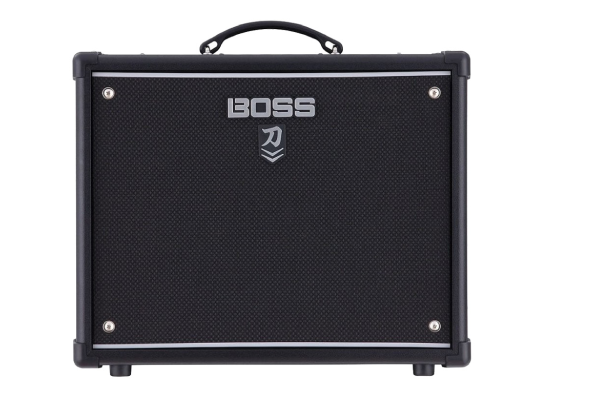
The Boss Katana series revolutionized the beginner and intermediate amp market when it first appeared, and the MkII iteration refines an already impressive formula into something genuinely remarkable for the price. This 50-watt powerhouse delivers five distinct amp characters (Acoustic, Clean, Crunch, Lead, and Brown) that are surprisingly authentic representations of classic amp archetypes, and after A/B testing against significantly more expensive amplifiers, I was consistently impressed by how close the Katana gets to capturing the essential character of tube amp responsiveness. The real magic happens when you dive into the Boss Tone Studio software—suddenly you have access to over sixty effects types, customizable signal chains, and the ability to save your favorite settings directly to the amp’s five memory slots.
During my extended testing period, I found myself genuinely inspired by the sonic possibilities, which is exactly what beginners need when they’re still discovering their musical identity. The Power Control feature that switches between 0.5, 25, and 50 watts is brilliantly implemented, allowing you to achieve natural amp compression and saturation characteristics at volumes that won’t disturb neighbors or overwhelm small practice spaces. I’ve used the Katana-50 MkII for recording direct via USB (another excellent included feature), and the cabinet simulation produces surprisingly usable tones that work well for home recording projects without requiring additional plugins or processing.
The built-in effects genuinely compete with standalone pedals in many cases—the delays are clear and spacious, the modulations range from subtle to extreme, and the booster section provides excellent tone-shaping options for pushing your amp voices into different territories. What separates this from purely digital modeling amps is Boss’s proprietary technology that incorporates analog gain circuitry in the preamp section, resulting in touch sensitivity and dynamic response that feels more natural under your fingers than typical digital amps. The learning curve is steeper than simpler amps since accessing the full potential requires computer connection and some menu navigation, but Boss has designed the default sounds to be immediately usable, so you’re not forced into deep editing if you’d rather just play.
I should mention that while the onboard speaker is adequate, the Katana-50 MkII truly shines when connected to an external cabinet or used as a practice/recording tool with headphones—the included speaker slightly emphasizes midrange in a way that works fine for practice but doesn’t fully represent the amp’s capabilities. For beginners interested in exploring different musical styles without committing to specific gear (similar to how musicians explore various instruments to find their voice), this amp provides exceptional versatility. The stereo effects expand beautifully when using two Katanas, and the built-in support for external footswitches and expression pedals means this amp can grow with you from beginner to advanced player without feeling limiting.
Pros:
- Five authentic amp characters covering wide tonal spectrum
- Extensive effects library accessible via Tone Studio software
- Power Control allows great tones at any volume
- USB recording with cabinet simulation included
- Excellent value proposition for features offered
- Touch-sensitive response mimics tube amp dynamics
- Memory slots for saving custom patches
- Expandable with footswitches and expression pedals
Cons:
- Full feature access requires computer and software learning
- Onboard speaker doesn’t fully represent amp’s capabilities
- Menu diving necessary for deep sound customization
- Can be overwhelming for absolute beginners wanting simplicity
Positive Grid Spark 40
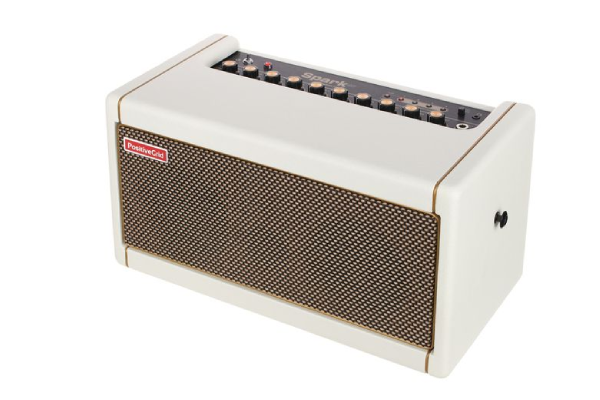
The Positive Grid Spark 40 represents the new generation of “smart” practice amplifiers, and while I approached it with some skepticism about whether app-controlled features would actually enhance the learning experience, I’ve become a genuine convert after using it extensively. This 40-watt combo with dual 4-inch speakers delivers surprisingly full-range sound that punches well above what you’d expect from smaller drivers, and the Auto Chords feature that listens to songs and displays chord charts on your smartphone is genuinely useful for learning new material (I’ve used it countless times when learning covers). The smartphone integration via Bluetooth feels natural and intuitive rather than gimmicky, and the ability to stream backing tracks, lessons, or just music while your guitar signal processes simultaneously creates an immersive practice environment.
What sets the Spark apart is the Smart Jam feature that generates bass and drum accompaniment that follows your playing in real-time—while it’s not replacing a real rhythm section for performance, it’s remarkably fun and motivating for practice, encouraging you to stay in time and explore different rhythmic ideas. I’ve found that beginners who might otherwise practice dry, isolated guitar parts stay engaged longer when there’s a dynamic backing track responding to their playing. The tone library accessible through the app includes over 10,000 user-created presets spanning every imaginable genre, and you can download and modify any of them, creating a community-driven learning resource that constantly expands.
The amp modeling itself is solid if not quite reaching the heights of the Katana’s authenticity—the clean tones are clear and responsive, the crunch sounds are convincing for classic rock territory, and the high-gain options work well for modern rock and metal, though the most extreme settings can sound slightly processed compared to analog alternatives. The onboard effects are comprehensive and musical, with delays, reverbs, modulations, and drives that integrate seamlessly into your signal chain. I particularly appreciate the video creation tools built into the app that let you record your playing with backing tracks and share directly to social media, which resonates with how younger players approach music in our connected era.
The physical interface is refreshingly simple—just five knobs controlling basic parameters—with all deeper editing happening through the app, which might frustrate players who prefer tactile control but streamlines the front panel nicely. During acoustic sessions, I’ve found the Spark’s acoustic guitar voicing to be genuinely impressive, making this a versatile practice tool if you play both electric and acoustic instruments (though it obviously excels with electric). The built-in looper is basic but functional, the battery-powered option (sold separately) adds portability, and the USB audio interface functionality means you can record directly into your DAW with processed guitar tones.
Pros:
- Smart Jam creates dynamic backing tracks following your playing
- Auto Chords learns songs and displays chord progressions
- Extensive tone library with constant community additions
- Bluetooth audio streaming for practice with original recordings
- Surprisingly full sound from compact speaker configuration
- Social sharing features integrated into practice workflow
- USB audio interface included for recording
- Clean, simple physical interface
- Works well for both electric and acoustic guitars
Cons:
- Requires smartphone/tablet for full functionality
- Modeling can sound slightly digital in extreme settings
- App dependency may frustrate traditional players
- Smart Jam accompaniment quality varies with playing clarity
- Smaller speakers lack low-end depth of larger combos
Orange Crush 20RT
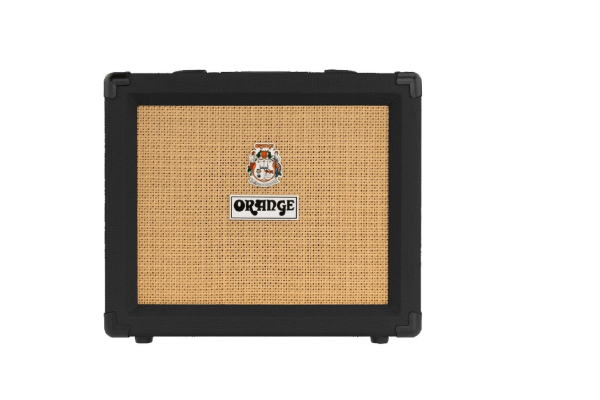
Orange amplifiers have built their reputation on distinctive tones and striking aesthetics, and the Crush 20RT brings that legacy into the beginner-friendly category with genuine Orange character at an accessible price point. This 20-watt solid-state combo features the famous Orange picture frame edging and unmistakable styling that makes it immediately recognizable, but more importantly, it delivers the company’s signature muscular midrange and harmonic richness that works beautifully for rock, blues, and heavier styles. After spending time with the Crush 20RT across various musical contexts, I’ve consistently been impressed by how much traditional amp DNA is present in this solid-state design—the clean channel has sparkle and headroom, while the dirty channel provides thick, saturated tones with excellent note definition even under heavy gain.
The two-channel design keeps things beautifully simple: you get clean and dirty channels with independent gain controls, a shared three-band EQ, and reverb on the clean channel—that’s it, and sometimes that focused simplicity is exactly what beginners need rather than overwhelming options. The 8-inch Voice of the World speaker is specifically designed by Orange and delivers a focused, punchy character that translates well whether you’re playing chunky power chords or articulate lead lines. I’ve noticed the Crush 20RT maintains its tonal integrity remarkably well from low bedroom volumes up to its maximum output, which is loud enough for small rehearsal spaces and easily keeps pace with acoustic drums in casual jam sessions.
The built-in reverb is tastefully voiced—not overly lush or experimental, just a quality spring-style reverb that adds appropriate space and dimension to your playing without sounding artificial. What particularly impresses me is the amp’s touch sensitivity; it responds dynamically to your playing attack in ways that encourage developing proper technique, rewarding clean playing with clarity and responding musically to aggressive picking. The CabSim headphone output is exceptionally well-implemented, providing convincing speaker emulation that doesn’t sound thin or harsh during private practice sessions (a common failing in budget headphone outputs).
The tuner output with automatic muting is a thoughtful inclusion that makes silent tuning convenient, and the buffered effects loop opens the door for players who want to experiment with time-based effects in the proper signal position. For players drawn to classic rock, blues, punk, or hard rock—particularly those who appreciate the sonic aesthetic you might hear in classic rock songs that defined generations—this amp delivers authentic Orange character without requiring boutique pricing. The construction feels tank-like with substantial weight and robust components throughout, suggesting this amp will survive years of use and transport. If there’s a limitation, it’s that players seeking pristine high-headroom cleans or ultra-modern high-gain sounds might find the voicing too colored and midrange-focused, but that distinctive character is precisely what makes Orange amps special.
Pros:
- Authentic Orange tone character at beginner-friendly price
- Distinctive, attractive styling with quality construction
- Excellent touch sensitivity encourages technique development
- Two focused channels avoid overwhelming complexity
- Superior CabSim headphone output for silent practice
- Buffered effects loop for proper signal routing
- Maintains tonal quality across entire volume range
- Loud enough for rehearsal situations despite modest wattage
- Tuner output with automatic muting
Cons:
- Distinctive voicing may not suit all musical styles
- Single 8-inch speaker limits low-frequency extension
- No onboard effects beyond reverb
- No USB or recording features
- Colored tone character less neutral than some competitors
Yamaha THR10II
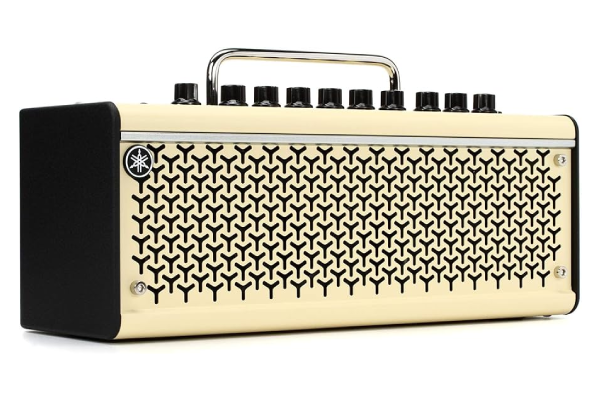
The Yamaha THR series redefined desktop practice amps when it launched, and the THR10II refines the concept with improved modeling, expanded features, and authentic tube amp feel that belies its compact size. This 20-watt stereo amplifier with dual 3-inch speakers creates an impressively wide, three-dimensional soundstage that makes solo practice sessions feel engaging and musical in ways that traditional single-speaker practice amps simply don’t achieve. After using the THR10II extensively for both practice and casual recording, I’ve consistently been amazed by how much sophisticated technology Yamaha packed into this elegantly designed package—the VCM (Virtual Circuitry Modeling) technology genuinely captures the compression, saturation, and dynamic response characteristics of tube amplifiers with remarkable accuracy.
The fifteen amp models span clean to high-gain territory, including convincing representations of classic American and British amp characters, plus specialized voices for acoustic guitar, bass, and flat response for keyboards or backing tracks. What separates the THR10II from typical modeling amps is the attention to feel—these models respond to pick attack and guitar volume changes with organic, natural compression that encourages dynamic playing rather than the squashed, uniform response of lesser digital amps. The stereo effects (chorus, flanger, phaser, tremolo, echo, delay, and reverb) are beautifully programmed with studio-quality algorithms that would cost hundreds of dollars in plugin form, and the ability to run them in true stereo creates lush, evolving textures.
I’ve found the THR10II excels as a recording interface—it connects to your computer or iOS device via USB, providing five simultaneous audio channels (guitar, bass, mic, stereo/keyboard, and stereo loopback) that make it remarkably versatile for content creation and home recording. The wireless connection to Yamaha’s THR Remote app (via Bluetooth) eliminates cable clutter while providing deep editing capabilities and access to the user preset library. The extended stereo technology creates phantom depth that makes the compact speakers sound significantly larger than their physical dimensions, and the battery operation option (using rechargeable batteries) makes this genuinely portable for outdoor jamming or travel.
The physical interface features classic-style knobs that feel substantial and provide clear visual feedback, avoiding the tiny, fragile controls found on some compact amps. The user memory slots let you save five custom tones directly on the amp, making your favorite sounds immediately accessible without app connection. For beginners who split time between guitar practice and music production (similar to how modern musicians might explore various musical approaches across different contexts), the THR10II serves multiple roles exceptionally well. The acoustic voicing is genuinely impressive for an electric guitar amp, the bass amp models work surprisingly well for bedroom bass practice, and the flat response mode makes it a quality monitor for synths or sample-based production work.
The limitations are mostly related to the compact format—while the stereo speakers sound impressive, they don’t move enough air for rehearsal situations with other musicians, and the 20-watt power rating means this stays firmly in bedroom/desktop territory. The high-gain models, while good, don’t quite achieve the chunk and aggression of larger amps when you really want to dig in with heavy riffing. But within its intended context as the ultimate practice and recording companion, the THR10II is brilliantly executed.
Pros:
- Exceptional stereo soundstage from compact speakers
- VCM modeling delivers authentic tube amp feel and response
- Studio-quality stereo effects with beautiful voicing
- Five-channel USB audio interface for versatile recording
- Wireless app control eliminates cable clutter
- Battery operation enables true portability
- Works excellently for guitar, bass, acoustic, and line-level sources
- Elegant design fits naturally in living spaces
- User memory slots for instant tone recall
- Extended stereo technology creates impressive depth
Cons:
- Limited volume output unsuitable for band rehearsal
- Premium pricing compared to traditional practice amps
- Compact speakers lack low-frequency extension
- High-gain tones less aggressive than larger amps
- Battery operation requires additional purchase
- Stereo configuration requires specific positioning for optimal sound
Choosing Your First Amplifier: Understanding What Matters
The amplifier you choose as a beginner will significantly influence your early playing experience and motivation to practice. When comparing options, consider your primary use case—if you’re mainly practicing alone in your bedroom, the Yamaha THR10II or Positive Grid Spark 40 offer exceptional features for that context, with recording integration and practice tools that make solo sessions engaging. If you anticipate jamming with friends or need an amp that can handle small rehearsal situations, the Fender Champion 40 or Boss Katana-50 MkII provide adequate volume and tonal versatility for those scenarios.
Your musical preferences should heavily influence your decision. Players drawn to classic rock, blues, and vintage tones will find the Fender Champion 40 and Orange Crush 20RT deliver authentic character in those styles. Those exploring modern rock, metal, or wanting maximum versatility across genres should seriously consider the Boss Katana-50 MkII with its extensive modeling and effects. If you’re still discovering your musical identity and want an amp that encourages exploration through smart features and community resources, the Positive Grid Spark 40 provides unique advantages in that regard.
The learning curve varies significantly between these options. The Orange Crush 20RT and Fender Champion 40 offer the most straightforward, plug-and-play experiences with minimal setup required—just connect your guitar and start playing with immediate, satisfying results. The Boss Katana-50 MkII and Positive Grid Spark 40 reward deeper investigation through their software interfaces but remain usable at surface level. The Yamaha THR10II balances these approaches with excellent default sounds and optional deep editing when desired.
Budget considerations extend beyond initial purchase price. All these amplifiers represent solid value propositions, but consider potential additional costs—the Boss Katana-50 MkII might eventually inspire footswitch purchases, the Positive Grid Spark 40 works best with a quality tablet or smartphone, and the Yamaha THR10II requires battery investment for portable operation. Conversely, these amps eliminate the need for separate effects pedals that could cost hundreds of dollars when purchased individually.
Frequently Asked Questions
What wattage amplifier do beginners actually need?
For bedroom practice, anything between 10-40 watts provides more than enough volume, and the ability to achieve good tone at low volumes matters more than raw power. I’ve found that 20-watt amps easily fill typical bedrooms at moderate volume, while 40-watt models provide comfortable headroom for small rehearsals. Many modern amps include power reduction features that let you experience natural amp saturation characteristics at manageable volumes, which is valuable for developing your ear and technique without disturbing neighbors.
Should beginners choose tube or solid-state amplifiers?
Solid-state amplifiers make far more sense for beginners due to their reliability, consistency, and lower maintenance requirements. While tube amps deliver certain tonal characteristics that many players prefer, they require periodic tube replacement (costing $50-150), need warm-up time before playing, and are generally more fragile during transport. Modern solid-state and digital modeling amps have advanced to the point where they deliver convincing tube-like response, especially at the gain levels and volumes beginners typically use. You can always explore tube amps later when you’ve developed your playing and have specific tonal goals that require their particular characteristics.
How important are built-in effects for beginner amplifiers?
Built-in effects significantly enhance the practice experience and help beginners explore their musical identity without requiring expensive pedal purchases. Having quality reverb, delay, and modulation available immediately lets you experiment with different sounds and discover what tones inspire you. That said, the quality and variety of included effects varies dramatically—the Boss Katana and Positive Grid Spark offer extensive, high-quality effects that rival standalone pedals, while simpler amps provide basic options that work fine but won’t satisfy advanced needs. If you’re budget-conscious and want to avoid immediate pedal purchases, prioritize amps with comprehensive effects sections.
Can beginner amplifiers work for recording and performance?
Many modern beginner amplifiers excel at recording through headphone outputs, USB connections, or direct outs with speaker simulation, making them perfectly viable for home recording projects and content creation. The Boss Katana-50 MkII, Yamaha THR10II, and Positive Grid Spark 40 all function as USB audio interfaces with processed guitar tones ready for recording. For performance, the 40-50 watt options (Champion 40, Katana-50 MkII, Spark 40) work adequately for small coffee shop gigs or outdoor events, though you’d typically mic them for larger venues or band situations with loud drums. The lower wattage options (Orange Crush 20RT, THR10II) stay firmly in practice territory volume-wise.
How does amplifier choice affect learning and technique development?
The right amplifier genuinely encourages practice and technical development by providing immediate positive feedback when you play well and revealing areas needing improvement. Amps with good touch sensitivity and dynamic response (particularly the Orange Crush 20RT and Yamaha THR10II) teach you to control your pick attack and guitar volume, developing fundamentals that transfer to any equipment you use later. Conversely, overly compressed or poorly voiced amps can mask technical deficiencies and create bad habits. Features like built-in loopers, backing track players, and chord recognition (found on the Spark 40) provide structured practice tools that keep sessions productive and engaging, which matters tremendously when you’re building fundamental skills.
What should I prioritize: versatility or focused tone quality?
This depends entirely on where you are in your musical journey and what you already know about your preferences. If you’ve listened to guitar music and know you’re drawn specifically to blues or classic rock tones, a focused amp like the Orange Crush 20RT or Fender Champion 40 delivers authentic character in those styles that will satisfy you immediately. If you’re still exploring different genres and discovering what resonates with you (similar to how you might explore different musical styles to find your preferences), versatile options like the Boss Katana-50 MkII or Positive Grid Spark 40 let you experiment widely without commitment. Most beginners benefit from versatility since musical tastes often evolve significantly during the first few years of playing.
Making Your Decision With Confidence
Selecting your first guitar amplifier represents an important investment in your musical journey, and fortunately, any of these five options will serve you well through your beginner phase and beyond. The amplifier market has evolved to the point where even entry-level offerings deliver quality, features, and reliability that would have been unthinkable at these price points just a generation ago.
Trust your instincts about what excites you—if the Orange’s aesthetic and focused tone character speak to you, that emotional connection matters and will keep you motivated to practice. If the technological sophistication of the Spark or Katana aligns with how you approach learning and creating, those features will genuinely enhance your experience rather than feeling gimmicky. The Fender Champion and Yamaha THR represent different philosophies (traditional versatility versus modern innovation) but both execute their visions exceptionally well.
Consider visiting a music store to experience these amps in person when possible, as the feel and interface matter beyond what specifications reveal. Pay attention to which controls feel intuitive to you, which tones immediately inspire you to play, and which format fits your practice environment. If you’re comparing specifications between these amps and other options (much like you might compare headphones or compare earbuds for optimal listening experiences), remember that subjective factors like inspiration and enjoyment often outweigh objective measurements.
Your first amplifier doesn’t need to be your last amplifier—players typically accumulate gear as their skills and tastes develop, and that’s perfectly normal. What matters most is choosing an amp that removes barriers to practice, sounds good enough to keep you engaged, and provides room to grow as your abilities expand. Any of these five amplifiers will accomplish those essential goals while offering their own unique strengths that cater to different priorities and playing styles.
The best amplifier for you is ultimately the one that makes you want to pick up your guitar every day, rewards your practice efforts with satisfying tone, and supports your musical goals without overwhelming you with complexity. Choose the option that resonates with your needs, trust the journey, and enjoy discovering your voice as a guitarist.