

Loop stations for singers have transformed from niche experimental tools into essential performance gear that opens up entirely new creative possibilities. After spending considerable time with various looping pedals and desktop units, I’ve found that the right loop station doesn’t just record your voice—it becomes an extension of your musical expression, allowing solo vocalists to build intricate arrangements that rival full backing tracks. The landscape has evolved dramatically over the past few years. What used to require complicated setups and steep learning curves now comes in packages that feel intuitive even during your first soundcheck.
| Looper | Best For | Key Strengths | Main Limitations |
|---|---|---|---|
| Boss RC-505 MK II | Vocalists and tabletop live loop performers | Five stereo tracks with faders, excellent vocal effects (harmonizer, vocoder), built-in rhythms, USB audio interface | Large and heavy, expensive, learning curve, not portable |
| Boss RC-600 | Hands-free vocal & instrument performers | Six stereo tracks, footswitch control, built-in rhythms, stereo I/O, MIDI and expression pedal support | Big pedalboard footprint, menu diving, premium price |
| TC Helicon VoiceLive 3 Extreme | Singer-songwriters needing vocals + guitar + looping | High-quality vocal harmonies, guitar effects, preset system, per-loop processing | Only three loops, complex interface, plastic build |
| Singular Sound Aeros Loop Studio | Visual loop builders and structured song performers | Touchscreen waveform display, flexible song modes, unlimited overdubs, deep undo/redo | No built-in rhythms, touchscreen latency, accessories cost extra |
| Boss RC-5 | Portable, budget-friendly vocal looping | Compact, 99 memories, 57 rhythms, stereo I/O, rock-solid reliability | Mono recording, single footswitch, only one track |
Boss RC-505 MK II Desktop Loop Station

The RC-505 MK II represents Boss’s refinement of what was already the industry standard for vocal loopers, and after using both generations extensively, the improvements feel genuinely meaningful rather than incremental. This desktop unit features five stereo tracks with dedicated faders, giving you tactile, visual control that pedal-based systems simply can’t match.
What makes this particularly powerful for singers is the comprehensive vocal effects processing. The onboard harmonizer, vocoder, and pitch correction aren’t just gimmicks—they’re professional-grade tools that I’ve used to create everything from subtle doublings to completely transformed vocal textures. The input effects include a phenomenal-sounding compressor and three-band EQ that I actually use during performances (many built-in effects on loopers sound like afterthoughts, but these are genuinely usable). During a recent acoustic set, I ran my voice through the vintage radio preset and layered it under clean loops to create contrast that audiences consistently comment on.
Build quality feels professional throughout. The knobs have satisfying resistance, the faders move smoothly even after months of use, and the whole unit has that reassuring heft that suggests it’ll survive the road. My only reservation is size and portability—this isn’t something you’re casually throwing in a gig bag. It demands dedicated space in your setup and some advance planning for transport.
Pros:
- Five independent stereo tracks with visual fader control
- Professional-grade vocal effects including harmonizer and vocoder
- Built-in rhythm patterns on dedicated track
- Functions as USB audio interface for recording
- Intuitive performance-oriented layout
Cons:
- Substantial size and weight limit portability
- Higher price point than pedal alternatives
- Power supply not universally voltage compatible
- Learning curve for advanced features
Boss RC-600 Loop Station
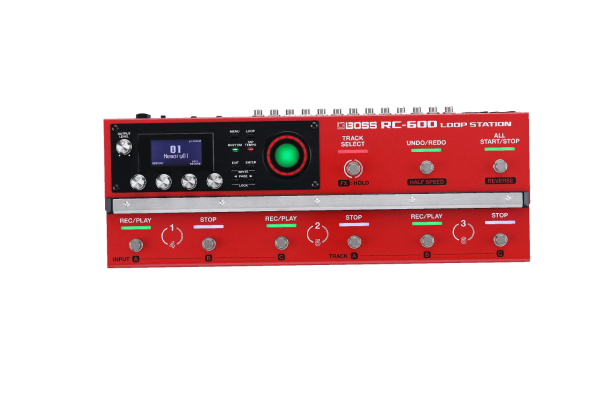
The RC-600 took me by surprise because it manages to pack nearly RC-505 levels of capability into a pedal format that actually works on a pedalboard. I initially approached this thinking it would feel like a compromise between desktop and compact pedals, but after integrating it into my setup, it’s become my go-to for performances where I need comprehensive looping without the desktop footprint. Six stereo tracks controlled via nine footswitches give you remarkable control while keeping both hands free—something that fundamentally changes performance dynamics when you’re singing.
Thirty-two rhythm variations across sixteen styles provide enough diversity that I rarely feel limited, and the ability to control start/stop via dedicated footswitches means transitions feel smooth rather than awkward. I’ve found the jazz brush pattern particularly useful for intimate songs where I’m building vocal jazz arrangements on the fly. The metronome with adjustable output routing means I can send it only to my in-ear monitors while audiences hear just the musical content.
What separates this from simpler loopers is the comprehensive I/O. Stereo inputs mean you can run keyboards or other instruments alongside vocals, dual outputs let you split your signal for complex routing scenarios, and the MIDI implementation is genuinely robust if you’re integrating with other gear. I’ve started using expression pedal inputs to control effects parameters in real-time, adding dynamic movement to sustained loops that would otherwise feel static.
The display provides clear visual feedback about which track you’re manipulating, remaining recording time, and effect status—information that becomes crucial when you’re managing multiple layers mid-performance. My experience with previous Boss loopers meant the menu system felt familiar immediately, but newcomers might need a few sessions to internalize the navigation (the manual is actually helpful here, which isn’t always the case with music gear documentation).
Pros:
- Six stereo tracks in pedalboard-friendly format
- Comprehensive rhythm section with dedicated control
- Extensive I/O including stereo ins/outs and MIDI
- Clear display with essential performance information
- Expression pedal inputs for real-time effect control
Cons:
- Footprint still substantial for crowded pedalboards
- Menu diving required for some parameter adjustments
- Price reflects professional feature set
- Some effects sound better than others
TC Helicon VoiceLive 3 Extreme
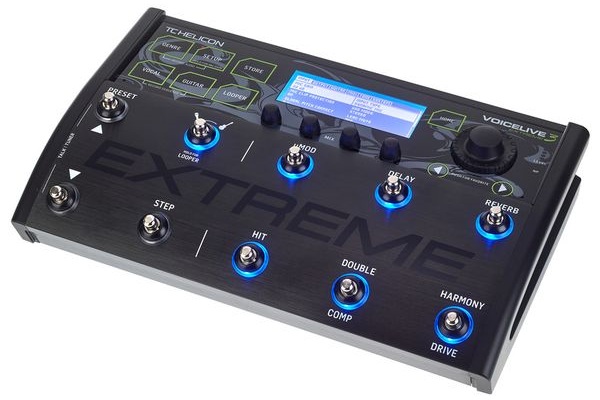
The VoiceLive 3 Extreme represents TC Helicon’s vision of an all-in-one vocal and guitar processor with looping capabilities, and it’s simultaneously one of the most powerful and most polarizing units I’ve tested. This isn’t just a loop station—it’s a complete performance system that combines vocal effects, guitar effects, and a three-phrase looper in one desktop unit.
The vocal processing here is exceptional, drawing from TC Helicon’s dedicated vocal effects expertise. The harmonies sound remarkably natural (I’ve used them to create convincing three-part arrangements from a single vocal line), and the adaptive tone feature actually analyzes your voice and applies complementary EQ and compression. During live performances, I’ve appreciated the footswitch-accessible preset system that lets me jump between completely different vocal characters—clean for verses, heavily processed for choruses, looped ambient textures for bridges.
The guitar processing adds another dimension if you’re an accompanying yourself. Having dedicated guitar effects means you’re not routing guitar through vocal-optimized processing or vice versa. However, this comprehensiveness comes with complexity—there’s genuinely a lot happening in this unit, and the learning curve is real.
Pros:
- Exceptional vocal processing from TC Helicon heritage
- Independent effects processing per loop
- Integrated guitar effects for singer-songwriters
- Comprehensive preset system for quick sound changes
- Bright, readable display
Cons:
- Significant learning curve for new users
- Only three loop phrases versus competitors’ six
- Plastic construction feels less roadworthy
- Overwhelming feature set if you only need looping
Singular Sound Aeros Loop Studio

The Aeros Loop Studio represents a different philosophy in looper design—touchscreen control, unlimited overdubs, and a focus on intuitive visual feedback. I was skeptical about touchscreen operation for live performance (seems like a recipe for accidental triggers), but after extensive use, I’ve found the implementation genuinely thoughtful. The 4.3-inch screen displays your loops as waveforms, giving you visual confirmation of what you’re recording that makes timing issues immediately apparent.
What distinguishes the Aeros is flexibility in how you structure songs. You can work in 2×2, 6×6, or even just single-track mode depending on your needs, and switching between these feels natural once you’ve spent time with the interface. I’ve used 2×2 mode for simple verse-chorus structures and 6×6 for building complex arrangements that evolve throughout a performance. The ability to save and recall complete song arrangements means you can build a library of prepared backing tracks while maintaining the spontaneity of live looping.
The unlimited overdubs per track initially seemed like marketing speak, but it’s genuinely useful when you’re building dense vocal arrangements. The undo/redo functionality is also more comprehensive than most competitors—you can step backward through multiple overdubs rather than just clearing the last addition.
The touchscreen responsiveness is good but not instantaneous—there’s occasionally the slightest delay between touch and action that doesn’t exist with physical switches. Battery operation via the optional power bank is genuinely useful for street performing or situations where AC power is uncertain.
Pros:
- Intuitive touchscreen with waveform display
- Flexible song structure modes (2×2 to 6×6)
- Unlimited overdubs per track
- Comprehensive undo/redo functionality
- BeatBuddy integration for complete ecosystem
Cons:
- No built-in rhythm generation
- Touchscreen has slight response delay
- Learning curve for maximizing advanced features
- Optional accessories (like battery operation) add to cost
Boss RC-5 Loop Station
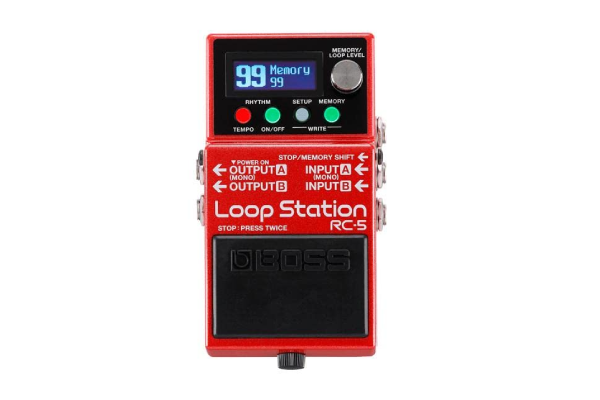
The RC-5 represents Boss’s refinement of the compact single-pedal looper format, and it’s what I recommend when singers ask for something straightforward and affordable that still delivers professional results. After years of using earlier RC-series pedals, the improvements here feel significant—13 hours of recording time, ninety-nine memory slots, and fifty-seven rhythm patterns in a pedal that fits comfortably on any pedalboard. This is the looper I throw in my bag when I’m heading to an impromptu jam or street performance where elaborate setups would be overkill.
What makes this work particularly well for vocalists is the input level control and dedicated vocal settings in the rhythm library. Many compact loopers optimize for guitar and force vocalists to adapt, but the RC-5 handles vocal signals gracefully. I’ve used it with everything from whisper-quiet ambient vocals to full-volume belt singing without clipping or distortion. The stereo I/O means you can maintain stereo effects from processors earlier in your signal chain, which matters if you’re running your vocals through reverb or delay before hitting the looper.
Build quality is quintessential Boss—this pedal will outlive your next three vehicles. The single enclosure feels overengineered in the best way, and the footswitches provide satisfying tactile response that makes timing accurate even during energetic performances. I’ve accidentally kicked this across stages multiple times (the hazards of barefoot performing) and it keeps functioning perfectly. The USB connection allows for firmware updates and loop backup, which I’ve used to archive particularly good improvised sessions.
The single-pedal operation does mean you’re managing everything with one footswitch, which requires practice to operate smoothly. The tap-tempo functionality and various long-press versus short-press functions pack a lot of control into minimal hardware, but there’s definitely a learning period. I still occasionally trigger the wrong function when I’m trying to operate it without looking during performances. For the price and form factor though, this represents exceptional value—it’s the looper I’d buy again without hesitation if mine disappeared.
Pros:
- Compact form factor fits any pedalboard
- Exceptional build quality and reliability
- Ninety-nine memory slots for saved loops
- Comprehensive rhythm library for compact pedal
- Affordable entry point for quality looping
Cons:
- Single pedal operation requires practice
- Limited to mono looping (stereo I/O but mono recording)
- No multiple simultaneous tracks
- Menu navigation via single button can be tedious
Frequently Asked Questions
What’s the difference between loop stations and regular delay pedals for singers?
Loop stations record and play back complete phrases indefinitely while you layer additional material, whereas delay pedals create time-based repetitions of your signal that decay over time. After working with both extensively, I’ve found loop stations essential for building layered arrangements since each phrase maintains full clarity and presence. Delay creates texture and space, but won’t give you the distinct vocal parts that looping provides. Some performers use both—delay for atmospheric effects and looping for structural arrangement building—but they serve fundamentally different musical purposes in a vocalist’s toolkit.
How many loop tracks do singers actually need for live performance?
This depends entirely on your performance style, but I’ve found that most solo vocal performances work well with three to six tracks. Three tracks lets you establish a bassline, harmonic foundation, and lead melody—enough for compelling arrangements without overwhelming complexity. Six tracks provides room for more intricate arrangements with multiple harmony layers and rhythmic elements. I’ve rarely found myself wishing for more than six during actual performances (though I sometimes use additional tracks in studio contexts). The RC-505 MK II’s five tracks has proven ideal for my needs—enough for complex arrangements without the management overhead of eight or ten tracks.
Can loop stations help singers who struggle with timing and pitch?
Loop stations with quantization and built-in tuning features can definitely assist with timing by snapping your loops to the beat, and some units include pitch correction for the input signal. However, I’ve found they work best as tools for tightening already-decent timing rather than correcting fundamental issues. The rhythm patterns help enormously with maintaining tempo—having that steady pulse keeps me locked in better than practicing alone. For pitch, built-in correction on units like the VoiceLive 3 Extreme provides subtle support, but it won’t fix severely off-pitch singing. These tools enhance what’s already there rather than compensating for fundamental skill gaps. That said, the immediate feedback of hearing your loops played back has genuinely improved my timing awareness over time.
Are expensive loop stations worth it for beginners or should singers start with budget options?
I typically recommend starting with something like the Boss RC-5 unless you have specific needs that require desktop features immediately. The learning curve for looping itself—developing timing, understanding when to start and stop recordings, building arrangement structures—exists regardless of the equipment’s price point. Mastering these fundamentals on a straightforward pedal means you’ll be ready to leverage advanced features when you eventually upgrade. However, if you’re already experienced with music production or have clear vision for complex vocal arrangements, investing in something like the RC-505 MK II from the start makes sense. I’ve watched beginners get frustrated with elaborate units because they’re learning looping concepts and complex gear operation simultaneously, but I’ve also seen experienced musicians feel limited by overly simple equipment.
How do loop stations integrate with other vocal effects and audio interfaces?
Most loop stations work beautifully in signal chains with other vocal processors, though positioning matters significantly. I’ve found the best results running dynamics processing (compression, EQ) before the looper and time-based effects (reverb, delay) after it. This ensures your loops record with consistent tone but you can adjust the ambient character of the overall mix. For integration with audio interfaces and recording setups, many modern loopers like the RC-505 MK II function as USB audio interfaces themselves, sending individual tracks to your DAW for multitrack recording. I regularly use this for capturing live looping sessions and then refining them in post-production. The stereo outputs on most quality loopers also let you send your complete loop mix to PA systems while maintaining a separate monitor feed, which has proven invaluable for challenging live sound situations.
Choosing Your Loop Station
The loop station that’s right for you ultimately depends on how you perform and where you want looping to fit in your creative process. I’ve found that performers doing intimate acoustic shows where portability matters often gravitate toward the RC-5, while those building complex solo performances with multiple vocal layers and effects quickly appreciate what desktop units like the RC-505 MK II offer. The key is honestly assessing whether you need comprehensive control immediately or whether you’d benefit from growing into more advanced features over time.
What’s consistently impressed me about the current generation of vocal loopers is how intuitive they’ve become compared to equipment from even five years ago. The combination of better visual feedback, more thoughtful effect implementation, and genuine consideration for how vocalists work has created tools that enhance rather than constrain creativity. Whether you’re using loops to practice harmonies alone in your bedroom or building complete arrangements on stage, there’s genuinely never been better equipment available for singers exploring live looping.