

Choosing the right high-quality headphones in 2026 has never been more important — or more exciting. Whether you spend your mornings commuting, your afternoons deep in creative work, or your evenings lost in music, the headphones you wear shape every single listening moment. The market has evolved dramatically, with brands pushing the boundaries of noise cancellation, sound clarity, wireless connectivity, and comfort.
At Global Music Vibe, we spent weeks researching, comparing reviews, and analyzing the latest releases to bring you a verified, up-to-date list of the ten best high-quality headphones available right now. Each model on this list has been selected based on real-world performance data, expert reviews, and long-term user feedback — no guesswork, no filler picks.
Why Choosing the Right Headphones Matters
High-quality headphones are no longer a luxury — they are a necessity for anyone who values their listening experience. A well-engineered pair of headphones does more than just play sound; it reproduces music faithfully, protects your ears from harmful noise, and offers hours of comfortable wear.
In 2026, the gap between budget and premium headphones has narrowed in some ways, but the best models still deliver an unmistakable edge in driver quality, noise cancellation precision, battery endurance, and build craftsmanship. Whether you are an audiophile chasing reference-grade transparency or a frequent traveler who needs reliable active noise cancellation, this guide covers every need.
How We Selected These Headphones
Our selection process was built on transparency and verifiable data. We cross-referenced scores and findings from trusted audio publications, assessed manufacturer specifications against real-world performance reports, and prioritized models that have demonstrated consistent excellence over extended use. Each headphone on this list is currently available for purchase, has been released or significantly updated in recent years, and has earned strong marks across multiple independent review sources. We also ensured a healthy variety of form factors, price ranges, and use cases so that this list serves listeners at every level. If you want a deeper dive into audio guides and gear comparisons, explore our guides section for more resources.
1. Sony WH-1000XM6 — The Best Overall High-Quality Headphones
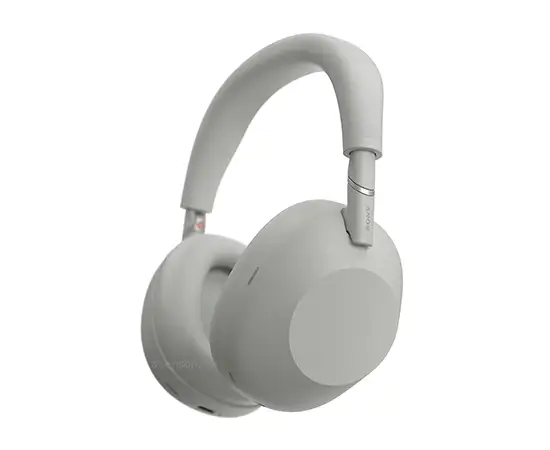
Price: ~$449.99 | Type: Over-Ear Wireless | Battery: Up to 30 hours (ANC on)
The Sony WH-1000XM6, released in May 2025, stands as the undisputed king of wireless noise-cancelling headphones. It features Sony’s next-generation HD Noise Canceling Processor QN3, which processes sound seven times faster than its predecessor. The system leverages twelve microphones — up from eight in the previous model — to analyze and neutralize ambient noise in real time.
Sony developed the sound signature of the WH-1000XM6 in collaboration with Grammy-winning mastering engineers from Sterling Sound, Battery Studios, and Coast Mastering, ensuring that every frequency is reproduced with studio-level precision. The headphones support LDAC for high-resolution wireless audio, Bluetooth LE Audio, and a ten-band equalizer for full customization. At 254 grams, they remain impressively lightweight for an over-ear model, and the 30-hour battery life with ANC enabled makes them a reliable travel companion. The WH-1000XM6 is the strongest all-around package in this price range.
2. Bose QuietComfort Ultra Headphones (2nd Gen) — The Best for Noise Cancellation
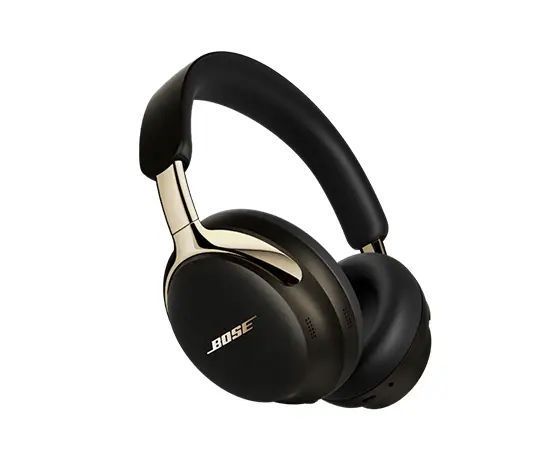
Price: ~$399–$449 | Type: Over-Ear Wireless | Battery: Up to 30 hours (ANC on)
Bose has long been synonymous with noise cancellation, and the QuietComfort Ultra 2nd Generation reinforces that reputation with next-gen ActiveSense technology that smooths out noise spikes more effectively than ever before. Released in 2025, this updated model adds USB-C lossless audio support, Bluetooth 5.4, and an upgraded on-head detection system that automatically powers the headphones up and down as you put them on or take them off.
Bose Immersive Audio spatializes your sound, placing it in front of you for a more natural, speaker-like experience. A brand-new Cinema Mode spatializes video content for a movie-theater feel. CustomTune technology analyzes the shape of your ears and adapts the sound signature accordingly. At roughly 264 grams, these headphones remain exceptionally comfortable for all-day wear, and the plush protein leather cushions and evenly distributed headband pressure are a testament to Bose’s engineering attention to detail.
3. Bowers & Wilkins Px7 S3 — The Best for Sound Quality
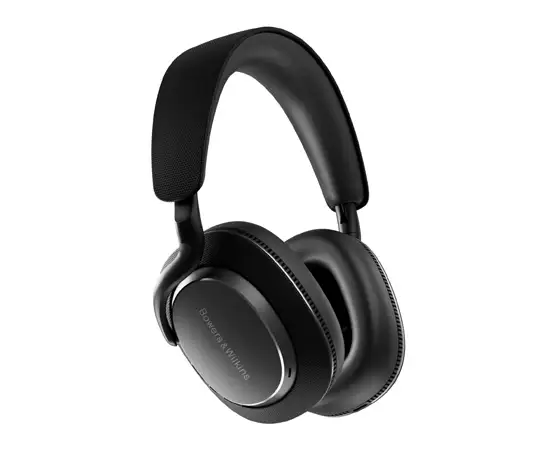
Price: ~$449 | Type: Over-Ear Wireless | Battery: 30 hours (ANC on)
The Bowers & Wilkins Px7 S3 is the model to choose if pure audio fidelity is your top priority. Released in mid-2025, it features redesigned 40mm paper drivers with a completely new chassis, voice coil, magnet, and suspension — all engineered to deliver what reviewers consistently describe as some of the most refined and detailed sound in the wireless headphone category.
The Px7 S3 supports aptX Lossless for true high-resolution Bluetooth streaming, along with a five-band equalizer and B&W’s TrueSound mode. Bluetooth 5.3 ensures a rock-solid connection, and 30 hours of battery life with ANC on is more than sufficient for extended listening. The build quality is exceptional, combining cloth, leather, and metal accents in a design that feels genuinely premium. Spatial audio and Auracast support are planned via future firmware updates, making this a headphone that will only improve over time.
4. Sennheiser HDB 630 — The Best for Audiophiles on the Go
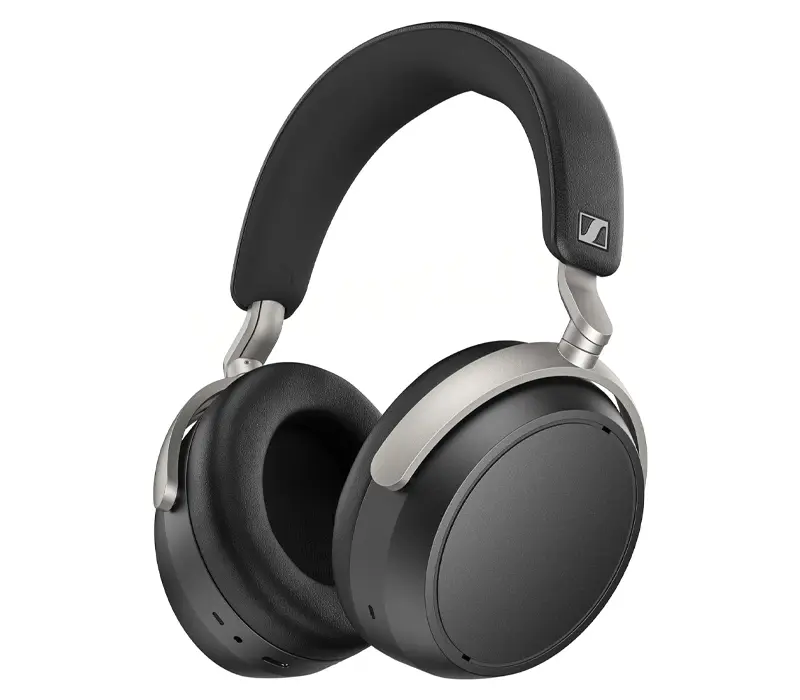
Price: ~$499 | Type: Over-Ear Wireless | Battery: 60 hours
Launched in October 2025, the Sennheiser HDB 630 marks the brand’s first wireless entry into its legendary HD 6XX headphone lineage. It is built around Sennheiser’s own 42mm transducer, manufactured at the company’s facility in Tullamore, Ireland, with additional damping materials to reduce backwave reflections inherent to closed-back designs.
What truly sets the HDB 630 apart is its included BTD 700 USB-C dongle, which upgrades any compatible device — including iPhones — into a high-resolution aptX Adaptive transmitter. The headphones also feature a proper five-band parametric equalizer, crossfeed processing, and support for up to 24-bit/96kHz audio via USB-C. With an industry-leading 60-hour battery life and adaptive noise cancellation, the HDB 630 is purpose-built for listeners who refuse to compromise on sound quality, even while on the move.
5. Apple AirPods Max (USB-C) — The Best for Apple Users
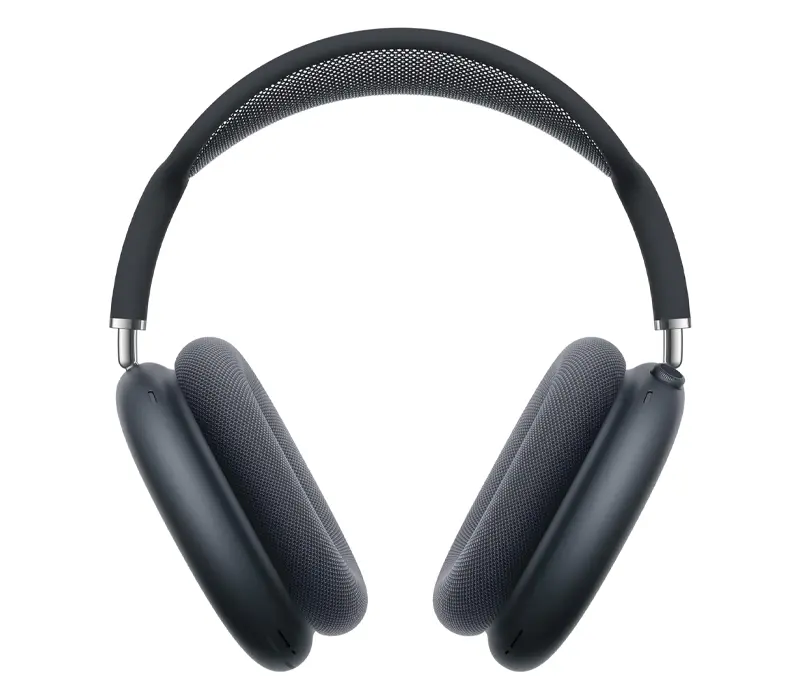
Price: ~$549 | Type: Over-Ear Wireless | Battery: Up to 20 hours
The Apple AirPods Max remains a premium choice for anyone deeply embedded in the Apple ecosystem. Updated in 2024 with a USB-C port and further enhanced through a March 2025 software update that unlocked 24-bit, 48kHz Apple Lossless audio and ultra-low-latency audio streaming over USB-C, the AirPods Max offers excellent active noise cancellation powered by Apple’s H1 chip.
Personalized Spatial Audio with head tracking delivers an immersive listening experience that adapts to the movement of your head. The aluminum ear cups and stainless steel headband give these headphones a distinctly premium feel and build quality. While the 20-hour battery life lags behind competitors, the seamless integration with iPhone, iPad, Mac, and Apple TV makes the AirPods Max unmatched for users within the Apple world.
6. Sennheiser MOMENTUM 4 Wireless — The Best Value High-Quality Headphones
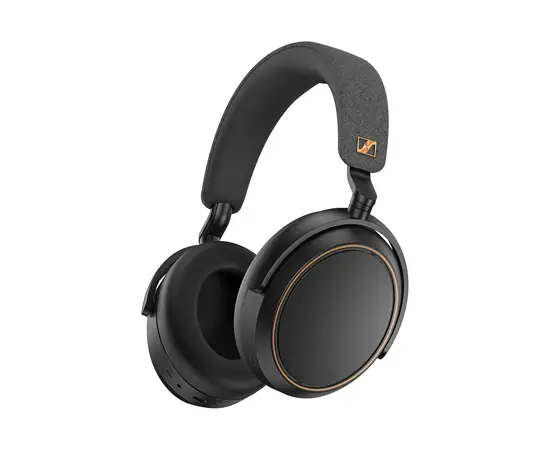
Price: ~$200–$250 (street price) | Type: Over-Ear Wireless | Battery: 60 hours
The Sennheiser MOMENTUM 4 Wireless punches well above its current street price, making it one of the smartest buys in the high-quality headphones category. Originally launched at $349.95, it can now regularly be found for significantly less, placing it at a remarkable value compared to Sony, Bose, and Apple competitors. The headphones feature Sennheiser’s proprietary 42mm audiophile-inspired transducer system, Adaptive Noise Cancelling, and aptX Adaptive codec support for high-quality wireless streaming.
The 60-hour battery life is class-leading and means you could go an entire work week without reaching for a charger. The Sennheiser Smart Control app offers sound zone customization, an integrated equalizer, and a Sound Check feature that helps personalize your listening profile. For listeners who want excellent sound without breaking the bank, the MOMENTUM 4 is an outstanding choice.
7. Technics EAH-AZ100 — The Best Premium Wireless Earbuds
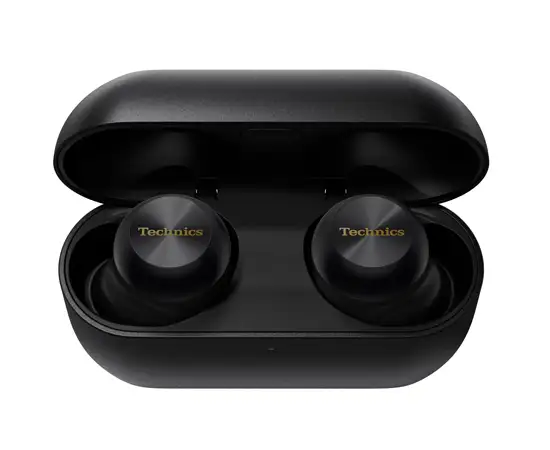
Price: ~$299 | Type: True Wireless Earbuds | Battery: ~10 hours (ANC on), 28 hours with case
While most entries on this list are over-ear models, the Technics EAH-AZ100 earns its place as the finest true wireless earbuds available in 2026. Released in January 2025, these flagship earbuds are built around Technics’ proprietary 10mm Magnetic Fluid Driver technology — originally developed for the premium wired EAH-TZ700 in-ear monitors. The magnetic fluid inside the driver stabilizes the diaphragm, reduces distortion, and enables accurate bass extension, all while keeping the overall sound remarkably clear and detailed.
The AZ100 features adaptive noise cancellation that automatically optimizes to your environment, Dolby Atmos with head tracking for spatial audio, and multipoint connectivity to three devices simultaneously. The earbuds are 10 percent smaller and 16 percent lighter than their predecessor, and support LDAC for high-resolution wireless audio. For anyone who prefers in-ear comfort without sacrificing audiophile-grade performance, the EAH-AZ100 is the clear frontrunner.
8. Focal Bathys MG — The Best Audiophile Wireless Headphones
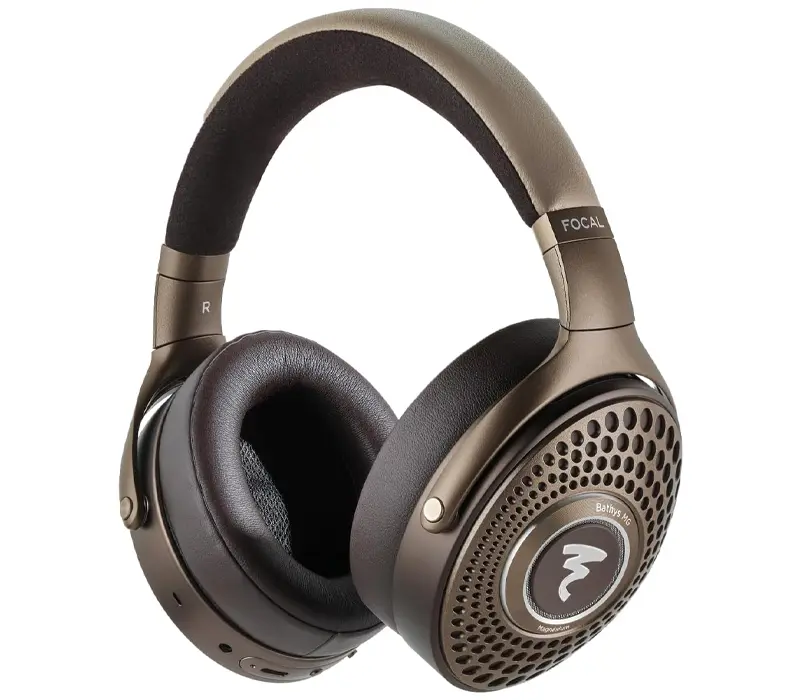
Price: ~$1,299–$1,499 | Type: Over-Ear Wireless | Battery: 30 hours (Bluetooth), 42 hours (USB DAC)
The Focal Bathys MG represents the pinnacle of what wireless headphones can achieve in terms of pure sound reproduction. Released in May 2025, this headphone uses the same magnesium M-shaped dome driver found in Focal’s acclaimed Clear MG wired headphones — manufactured entirely in Focal’s workshops in France. The result is a wireless headphone that genuinely competes with wired audiophile models in terms of transparency, detail retrieval, and dynamic range. The USB-DAC mode allows the Bathys MG to accept digital input at up to 24-bit/192kHz resolution, turning it into a standalone high-resolution audio converter.
Active noise cancellation, multipoint Bluetooth connectivity, and a genuinely luxurious build featuring aluminum, magnesium yokes, genuine leather, and memory foam earpads round out the package. This is a statement headphone for those who demand the very best sound from a portable, wireless design. For those interested in converting audio files for offline listening, our MP3 converter tool can be a helpful addition to your workflow.
9. Cambridge Audio Melomania P100 — The Best Mid-Range Wireless Headphones
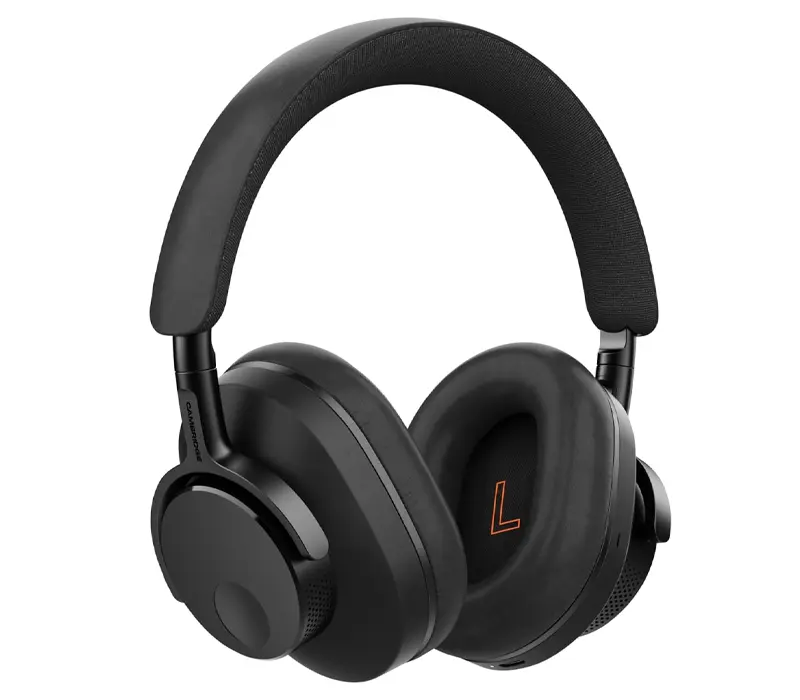
Price: ~$249–$299 | Type: Over-Ear Wireless | Battery: Up to 100 hours
Cambridge Audio’s Melomania P100 has quietly become one of the most impressive wireless headphones available at its price point. With support for high-resolution audio formats and an extraordinarily long battery life of up to 100 hours, it offers an unmatched combination of listening endurance and audio quality for the mid-range segment.
The headphones deliver crisp, detailed sound with a wide soundstage that benefits from Cambridge Audio’s decades of expertise in hi-fi engineering. Active noise cancellation is effective without coloring the audio signature, and the lightweight, comfortable design allows for extended wear without fatigue. For listeners who want a refined audio experience and worry-free battery life without stepping into the premium price bracket, the Melomania P100 is an exceptional pick.
10. Sennheiser HD 800 S — The Best Wired Reference Headphones

Price: ~$1,299 | Type: Over-Ear Wired | Impedance: 300 Ohms
For audiophiles who prioritize absolute sound accuracy above all else, the Sennheiser HD 800 S remains one of the finest reference-grade headphones ever produced. This open-back, wired headphone features Sennheiser’s proprietary 56mm dynamic transducers with an innovative ring radiator design that minimizes internal reflections and produces an exceptionally wide and accurate soundstage.
The frequency response extends from 4Hz to 51kHz, capturing detail that most listeners have never heard in their recordings. Sennheiser engineered the HD 800 S with a slight treble adjustment compared to the original HD 800 to reduce sibilance while preserving the extraordinary detail retrieval. While this headphone requires a quality headphone amplifier to reach its full potential, the listening experience it delivers — spacious, transparent, and incredibly detailed — is without equal in its class. The HD 800 S is the benchmark for anyone serious about reference listening at home.
Comparison: Key Specs at a Glance
To help you make a faster decision, here is a quick breakdown of what each headphone does best. The Sony WH-1000XM6 leads in noise cancellation and all-around performance. The Bose QuietComfort Ultra 2nd Gen excels in ANC consistency and comfort. The B&W Px7 S3 takes the crown for wireless sound quality. The Sennheiser HDB 630 is the go-to for audiophiles who need wireless convenience.
The Apple AirPods Max is unbeatable within the Apple ecosystem. The Sennheiser MOMENTUM 4 offers the best dollar-for-dollar value. The Technics EAH-AZ100 is the finest true wireless earbud available. The Focal Bathys MG pushes wireless audio into audiophile territory. The Cambridge Audio Melomania P100 delivers remarkable battery life and clean sound at a mid-range price. And the Sennheiser HD 800 S remains the gold standard for wired, reference-quality listening.
Still trying to decide between two or more models? Let us do the heavy lifting for you. Use our free headphone comparison tool to place any of these models side by side and compare specs, battery life, noise cancellation performance, and price — all in one place. It is the fastest way to find the perfect pair for your needs.
Tips for Buying High-Quality Headphones
Consider Your Primary Use Case
Before spending on headphones, think about where and how you will use them most. Commuters and travelers benefit most from strong active noise cancellation and long battery life. Home listeners and audiophiles may prioritize sound accuracy and driver quality over portability. Gamers need low latency and clear microphone performance. Identifying your primary use case will narrow down your options significantly and help you avoid paying for features you will never use.
Understand the Role of Codecs
Bluetooth audio codecs determine how much data is transmitted between your device and your headphones. SBC and AAC are universal but offer limited audio quality. LDAC and aptX Adaptive support high-resolution wireless streaming and will noticeably improve sound quality on compatible devices. If you own an Android phone and care about wireless audio fidelity, look for headphones that support at least one of these higher-quality codecs.
Do Not Overlook Comfort
No headphone — no matter how exceptional its sound — is worth owning if it causes discomfort after thirty minutes of wear. Pay close attention to earcup size, headband padding, weight, and clamping force. Many manufacturers now offer replaceable ear pads, which extend the usable life of your headphones and allow you to customize comfort over time.
Frequently Asked Questions
What are the best high-quality headphones for noise cancellation in 2026?
The Sony WH-1000XM6 and Bose QuietComfort Ultra 2nd Gen are the two strongest performers for active noise cancellation. The Sony WH-1000XM6 uses twelve microphones and a next-generation processor to block environmental noise with exceptional precision. The Bose QuietComfort Ultra 2nd Gen features ActiveSense technology that smooths noise spikes and delivers consistently quiet listening across all environments. Both are excellent choices depending on whether you prioritize overall versatility or pure noise-cancelling performance.
Are wireless headphones as good as wired headphones for sound quality?
In recent years, the gap has narrowed significantly. Models like the Focal Bathys MG and Sennheiser HDB 630 deliver wireless sound that rivals many wired headphones in the same price range. However, for reference-grade listening at home, wired headphones like the Sennheiser HD 800 S still hold a meaningful edge in transparency, detail, and dynamic range. If absolute sound accuracy is your goal and portability is not a concern, wired remains the gold standard.
What should I look for when buying high-quality headphones?
Focus on four key areas: sound quality, noise cancellation effectiveness, comfort and build quality, and battery life or connectivity. Sound quality is determined by driver technology, frequency response, and codec support. Noise cancellation is measured by how effectively the headphones reduce ambient sound across different frequency ranges. Comfort depends on earcup size, padding, weight, and headband design. Battery life matters most for wireless models, and longer runtimes reduce the need for frequent charging.
Which high-quality headphones offer the longest battery life?
The Sennheiser MOMENTUM 4 Wireless and Sennheiser HDB 630 both deliver up to 60 hours of battery life, which is the longest among the models on this list. The Cambridge Audio Melomania P100 claims up to 100 hours, making it the endurance champion in the mid-range segment. For most users, 30 hours of battery life — offered by the Sony WH-1000XM6, Bose QuietComfort Ultra 2nd Gen, and B&W Px7 S3 — is more than sufficient for a full week of daily use.
Is it worth spending over $1,000 on headphones?
For audiophiles who listen to music as a primary hobby and demand the highest level of sound reproduction, premium headphones in the $1,000-plus range can deliver a genuinely transformative experience. The Focal Bathys MG and Sennheiser HD 800 S both justify their price through exceptional driver engineering, premium materials, and reference-quality audio. However, for most listeners, headphones in the $300–$500 range — such as the Sony WH-1000XM6 or B&W Px7 S3 — offer outstanding performance that will satisfy the vast majority of use cases without the premium price tag.