
Finding the right guitar amplifiers under $500 can transform your playing experience without emptying your wallet. The evolution in amplifier technology—particularly in modeling and digital processing—means today’s affordable amps can deliver tones that previously required gear costing several thousand dollars.
What makes this price range particularly exciting is the diversity available. You’re no longer forced to choose between a decent practice amp or a stage-worthy rig; modern designs blur these lines beautifully. Whether you’re exploring different musical genres or just starting your journey with guitar, understanding what these amplifiers can actually deliver in real-world scenarios matters far more than memorizing specification sheets.
| Amplifier | Tone & Performance | Key Features | Main Drawbacks |
|---|---|---|---|
| Boss Katana 50 MkII | Highly versatile with five amp characters from clean to high-gain; very responsive to playing dynamics; strong tones even at low volumes | Power scaling (0.5/25/50W), extensive onboard effects, Boss Tone Studio software, patch memory, solid build, loud enough for gigs | Single speaker limits bass at high volume, software needed for deep control, high-gain not truly “metal-grade,” menu diving required |
| Fender Champion 50XL | Excellent Fender-style cleans with great touch sensitivity; strong clean headroom; non-Fender voices less convincing | 12 amp voices, Celestion 12″ speaker, intuitive knob-based interface, onboard effects, TAP tempo, aux in & headphones | Tone changes at very low volume, effects lack depth, limited recording connectivity, weaker non-Fender models |
| Orange Crush 35RT | Thick British midrange with classic Orange character; great crunch and rock tones; strong band mix presence | True two channels with independent EQ, spring reverb, built-in tuner, buffered effects loop, rugged build | Voicing favors classic rock, limited clean headroom, no recording outputs, less suited for modern metal |
| Yamaha THR30II Wireless | Impressively realistic modeling at low volumes; wide stereo soundstage; great cleans, crunch, and acoustic tones | Stereo speakers, Bluetooth & wireless recording, rechargeable battery, THR Remote app, USB interface, portable, multimedia speaker mode | Not stage-ready, expensive for size, small speakers lack physical punch, wireless features need mobile devices |
| Positive Grid Spark 40 | Full, room-filling sound; good modeling tones; excels as a learning and practice tool | Smart Jam, Auto Chords, tone matching, 50k+ presets, four-speaker system, USB recording, Bluetooth streaming, built-in looper | Heavy app dependency, uneven preset quality, gimmicky features at times, tone not best-in-class, updates tied to app |
Boss Katana 50 MkII
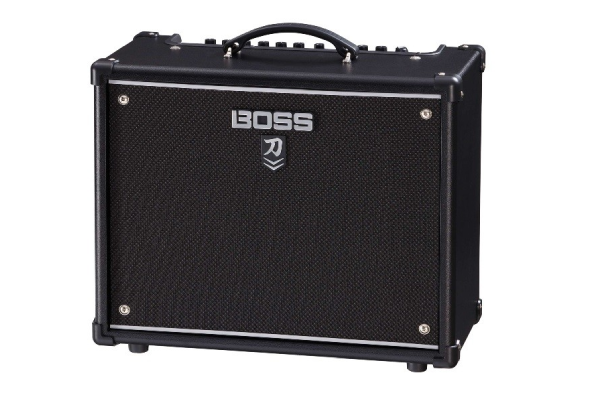
The Boss Katana 50 MkII has become something of a legend in the budget amp world, and after extensive time with one, I completely understand why. This 50-watt combo manages to feel like multiple amplifiers in one enclosure, offering five distinct amp characters that range from sparkling clean to high-gain saturation. What impressed me most during initial testing wasn’t just the tonal variety—it was how responsive the amp felt under my fingers, maintaining that crucial dynamic relationship between playing intensity and output that separates good amps from mediocre ones.
The onboard effects deserve special mention because they’re genuinely usable, not just marketing checkbox features. I found myself particularly drawn to the delay and reverb options during late-night playing sessions, creating atmospheric textures that felt surprisingly three-dimensional for a single 12-inch speaker. The power scaling feature allows switching between 0.5, 25, and 50 watts, which proved invaluable when moving between apartment practice and band rehearsals. At bedroom volumes, this amp maintains tonal integrity that many competitors simply can’t match—there’s no thin, fizzy character that plagues some solid-state designs when attenuated.
The Boss Tone Studio software integration opens another dimension entirely. While I initially approached this with skepticism (having been disappointed by clunky amp software before), I discovered it genuinely expanded the amp’s versatility. You can dive deep into effect chains, adjust EQ curves, and save custom patches that recall instantly. One limitation worth noting: the single 12-inch speaker, while surprisingly capable, does show its constraints when pushing high volumes with bass-heavy settings. The cabinet breathes hard, and you lose some low-end definition compared to larger configurations.
Pros:
- Exceptional tonal variety across five amp types with genuinely distinct characters
- Power scaling maintains tone quality at bedroom volumes
- Comprehensive onboard effects that rival standalone pedals
- Boss Tone Studio software dramatically expands customization options
- Solid build quality with reliable Boss construction standards
- Surprisingly loud for 50 watts, suitable for rehearsals and small gigs
Cons:
- Single speaker limits bass response at higher volumes
- Onboard controls can feel limited without software access
- High-gain tones, while good, don’t quite match dedicated metal amps
- Some menu diving required for deeper parameter adjustments
Fender Champion 50XL
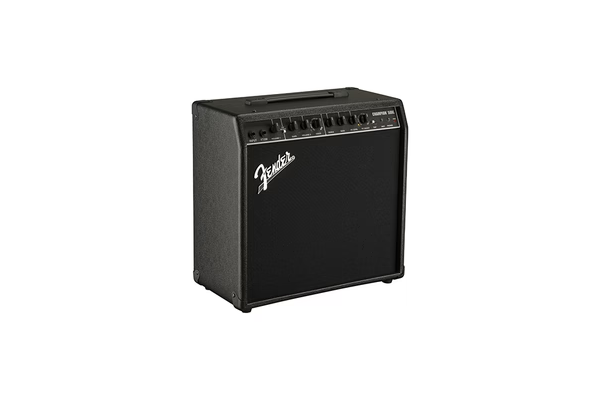
Fender’s Champion 50XL captures something essential about the company’s legendary clean tones while adding modern flexibility that makes it remarkably practical. After spending months with this amp across various playing scenarios, what stands out is how it nails that fundamental Fender character—the glassy, articulate clean sound that’s defined countless recordings. When I first plugged in a Stratocaster, the amp immediately felt familiar, delivering those bell-like tones with the touch sensitivity Fender is known for.
The 12-inch Celestion speaker paired with 50 watts of power provides surprising headroom. I’ve used this amp in situations ranging from acoustic instrument accompaniment to full-band rock rehearsals, and it consistently delivered clean tones with remarkable definition. The amp includes 12 amp voices, though I found myself gravitating toward the Fender-voiced models most frequently—they simply sound more convincing than some of the other emulations. The British-style voices work well enough for variety, but they don’t quite capture the midrange complexity of actual Marshall-style circuits.
What makes the Champion particularly appealing for developing players is its straightforward interface. There’s no computer required, no smartphone app dependency—just knobs and switches that make sense. The onboard effects cover essential territory: reverb, delay/echo, chorus, tremolo, and vibratone. During recording sessions in my home studio, I discovered the auxiliary input and headphone jack were genuinely useful for silent practice or tracking ideas without disturbing anyone. The TAP button for setting delay/tremolo speed seems like a small detail, but it’s one of those thoughtful touches that demonstrates real-world design consideration.
One aspect that took adjustment was the amp’s voicing at lower volumes. Unlike some modeling amps that maintain consistent character across volume levels, the Champion sounds noticeably different when whisper-quiet versus stage volume. This isn’t necessarily negative—vintage Fender amps behave similarly—but it’s worth understanding during your initial exploration.
Pros:
- Authentic Fender clean tones with excellent touch sensitivity
- Simple, intuitive interface requiring no software or apps
- Solid 50-watt power section with good headroom for clean playing
- Quality Celestion speaker that responds well across frequency range
- TAP tempo control for time-based effects adds practical functionality
- Aux input and headphone jack expand practice options
Cons:
- Non-Fender amp voices sound less convincing than the native tones
- Tonal character shifts noticeably at very low volumes
- Effects, while useful, lack the depth of dedicated pedals
- No MIDI or advanced connectivity for recording integration
Orange Crush 35RT
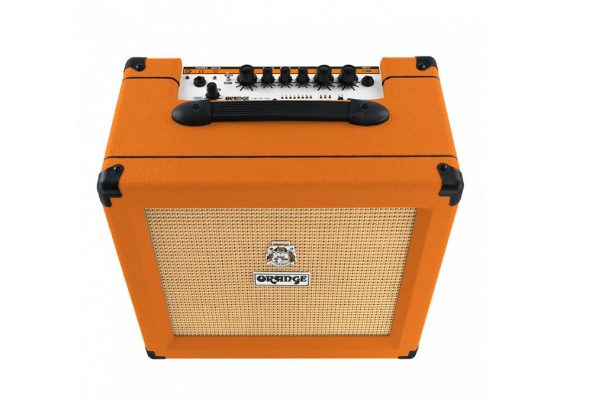
The Orange Crush 35RT punched well above its weight class in ways that genuinely surprised me during extended testing. Orange has a specific tonal reputation in the guitar world—thick, chewy midrange with a British character—and this amp delivers surprising amounts of that DNA at a fraction of what their tube amps cost. The moment I engaged the dirty channel with humbuckers, I encountered that signature Orange grunt, the kind of saturated yet defined distortion that works beautifully for rock and alternative styles.
What sets this amp apart in the crowded sub-$500 market is its genuine two-channel design with separate EQs. Many budget amps offer channel switching but share tone controls, forcing compromises. Here, you can dial in a pristine clean sound on one channel and a completely different voice for overdrive without constant knob-twisting between songs. I found this invaluable during practice sessions working on diverse musical material, switching seamlessly between clean verse sections and distorted choruses.
The onboard spring reverb adds dimension without the digital artifacts that plague some modeling amps. It’s simple—just a single reverb knob—but the implementation sounds natural and musical rather than processed. The built-in tuner might seem like a minor inclusion, but having it always available proved more useful than expected, especially during rehearsals where fumbling for a separate tuner wastes everyone’s time. The footswitchable buffered effects loop deserves mention too; I ran my delay and modulation pedals through it with excellent results, maintaining signal integrity that some pricier amps fail to achieve.
The amp’s voicing leans toward midrange presence, which gives it excellent cut in band situations. Even when competing with bass, drums, and another guitarist, the Crush 35RT maintained clarity without needing excessive volume. However, this same characteristic means it’s less suited for players seeking scooped, modern metal tones. The amp pushes back against extreme EQ settings, preferring a more classic rock sonic territory.
Pros:
- Distinctive Orange tone character at accessible price point
- True two-channel design with independent EQ controls
- Excellent cut and presence in full-band contexts
- Quality spring reverb adds natural-sounding dimension
- Buffered effects loop maintains signal quality with pedals
- Built-in tuner provides always-available convenience
- Substantial build quality that feels road-worthy
Cons:
- Voicing favors classic rock over modern high-gain metal
- 35 watts may struggle in very loud stage situations
- Limited clean headroom when pushing higher volumes
- No recording outputs or advanced connectivity options
Yamaha THR30II Wireless
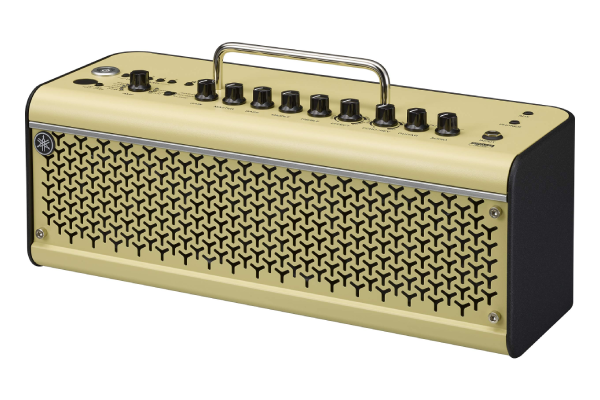
The Yamaha THR30II Wireless represents a fundamentally different approach to amplification that initially made me skeptical. After countless hours with this desktop amp across various scenarios—from late-night writing sessions to client demos in my studio—it’s become an indispensable tool that reimagines what a practice amp can be. This isn’t trying to replace a stage rig; it’s optimized for the reality of modern playing, where much of our guitar time happens at home, often late at night, frequently while sitting at a desk.
The stereo speaker configuration creates an unexpectedly wide soundstage that makes this amp feel much larger than its compact footprint suggests. When I first engaged the stereo effects—particularly the ambient reverbs and ping-pong delays—the spatial imaging was genuinely impressive, approaching what I’d expect from quality monitoring headphones rather than a small amplifier. The wireless connectivity to iOS devices opened creative possibilities I hadn’t anticipated: streaming backing tracks while playing along, accessing unlimited effects via the THR Remote app, and recording directly into mobile DAW apps without cables cluttering my workspace.
What makes this amp particularly valuable is its versatility beyond guitar. The “Extended Stereo” mode transforms it into a legitimate multimedia speaker system. I’ve used it for mixing reference, podcast listening, and video calls—all with audio quality that outperforms typical computer speakers significantly. The rechargeable battery operation proved transformative for songwriting sessions on my deck or at parks; genuine portability without power outlet dependency creates musical opportunities that tethered amps simply can’t offer.
The THR30II includes genuinely useful amp models derived from Yamaha’s VCM technology. The Fender-style cleans shimmer beautifully, the Marshall-inspired voices deliver satisfying crunch, and the more modern high-gain options provide ample saturation for heavier styles. During A/B comparisons with actual tube amps, I was impressed by how close these models came, particularly in the feel and responsiveness department. The acoustic guitar modeling deserves special mention—it’s among the best I’ve heard at this price point, making the amp useful for singer-songwriter applications where you’re blending electric and acoustic sounds.
Pros:
- Stereo speaker configuration creates impressive spatial imaging
- Wireless Bluetooth connectivity for backing tracks and recording
- Rechargeable battery enables genuine portable operation
- Excellent amp modeling across diverse styles and eras
- Functions as high-quality multimedia speaker beyond guitar use
- THR Remote app provides extensive customization options
- Outstanding acoustic guitar simulation capabilities
Cons:
- Desktop form factor not suitable for traditional stage use
- Price approaches upper budget limit for this category
- Smaller speakers lack the physical impact of larger combos
- Wireless features require compatible iOS/Android devices
- Battery life decreases over time with regular charging cycles
Positive Grid Spark 40
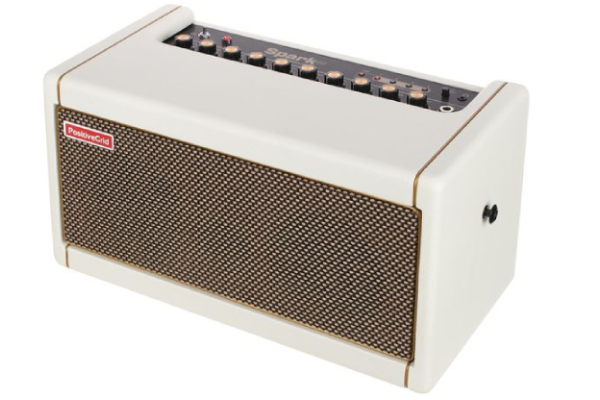
The Positive Grid Spark 40 emerged from the intersection of amplifier technology and modern connectivity in ways that feel genuinely forward-thinking. After integrating this amp into my daily practice routine for several months, I’ve come to appreciate how it addresses the reality of learning and playing guitar in 2026. The companion smartphone app isn’t a gimmick—it’s the control center for an ecosystem that includes auto-chord detection, smart jam features, and access to thousands of community-created tone presets.
What initially drew me to the Spark was its promise of making practice more engaging. The Smart Jam feature analyzes what you’re playing and generates accompanying bass and drum parts automatically. While I approached this with skepticism (having tried similar features that felt robotic), the Spark’s implementation surprised me with its musicality. It doesn’t create perfect accompaniment every time, but it’s genuinely useful for practicing improvisation or working through song ideas when inspiration strikes. The Auto Chords feature proved valuable during learning sessions—it listens and displays chords you’re playing (or trying to play), providing immediate feedback that accelerates the learning process.
The amp’s four-speaker configuration creates a full-frequency response that belies its compact size. I’ve recorded with the Spark using its USB audio interface functionality, capturing tones that sat well in mixes without requiring extensive EQ surgery. The built-in looper, while not as sophisticated as dedicated loop stations, handles basic phrase capture and layering competently enough for practice purposes. During songwriting sessions, I regularly used it to build quick arrangement sketches without firing up recording software.
The tone-matching feature represents another innovation worth discussing. You can play a song through the amp’s aux input, and it attempts to analyze and replicate the guitar tone. Results vary—it works better with some recordings than others—but when it connects, it’s remarkably useful for learning specific songs without spending hours tweaking settings. The 50,000+ community tones available through the app mean someone has likely already created a preset close to what you’re seeking, from specific artist sounds to general style templates.
Pros:
- Smart Jam creates accompanying bass/drums based on your playing
- Auto Chords feature aids learning by displaying detected chords
- Extensive tone library with 50,000+ community-created presets
- Four-speaker system delivers full-frequency, room-filling sound
- USB audio interface enables quality home recording
- Tone-matching feature helps replicate specific song sounds
- Bluetooth streaming for backing tracks and music playback
- Built-in looper for practice and songwriting applications
Cons:
- App dependency means functionality requires smartphone nearby
- Auto-accompaniment features can feel gimmicky initially
- Tone quality, while good, doesn’t quite match best pure modeling amps
- Community preset quality varies dramatically
- Updates and new features tied to app development cycle
- Some players prefer traditional amp interfaces over smartphone control
FAQ
What wattage do I need in a guitar amp under $500?
For bedroom practice and home recording, amplifiers between 15-30 watts provide plenty of volume with better tone at lower levels. If you’re planning to rehearse with a full band or play small venues, 40-50 watts offers necessary headroom to stay clean when competing with drums and bass. After testing these amps in various contexts, I’ve found that power management features (like the Katana’s wattage switching) matter more than raw wattage numbers—a well-designed 30-watt amp with good speakers can easily match or exceed a poorly-implemented 50-watt design for practical volume needs.
Are modeling amps better than traditional amps at this price point?
Modeling technology has reached a point where it offers exceptional value in the sub-$500 range. You’re getting versatility and features that would require thousands of dollars in traditional tube amps and pedals. However, “better” depends on your needs—if you know exactly what sound you want and prefer simplicity, a focused traditional design might suit you better. I’ve found modeling amps excel for players exploring different styles or those needing multiple sounds without hauling extensive gear. The gap in feel and responsiveness that once defined tube amps has narrowed considerably, though pure tube enthusiasts will still notice differences in dynamic response and harmonic complexity.
Can these amps work for live performances?
Several amplifiers in this roundup handle small to medium venue performances admirably. The Boss Katana 50 MkII, Fender Champion 50XL, and Orange Crush 35RT all provide sufficient volume for club gigs and rehearsal spaces. I’ve personally used the Katana at venues holding 100-150 people without PA support, and it projected well enough to cover the room. For larger venues, you’d typically run through a PA system anyway, where these amps can serve as excellent stage monitors. The Yamaha THR30II and Positive Grid Spark are better suited for practice, recording, and intimate performances rather than traditional stage use due to their design focus and speaker configurations.
How important are onboard effects versus using pedals?
This depends on your playing style and how you prefer to work. During my testing, I found onboard effects particularly valuable for practice and recording scenarios where simplicity matters. However, dedicated pedals typically offer more depth, expression control, and specific character than built-in amp effects. If you’re just starting out or prefer minimal gear, amps like the Katana with comprehensive effects let you explore sounds before investing in pedals. As you develop preferences, adding a few key pedals lets you shape your core tone while still utilizing the amp’s built-in options for variety. The quality of onboard effects varies significantly—the Katana and Spark offer genuinely usable effects, while some budget amps include effects that sound obviously digital and inferior to even inexpensive pedals.
Which amp is best for recording at home?
The Yamaha THR30II and Positive Grid Spark 40 excel in home recording scenarios due to their USB audio interfaces and optimized direct recording tones. I’ve captured usable tracks with both amps that required minimal post-processing. The THR30II’s stereo output creates particularly engaging recordings when tracking ambient parts, while the Spark’s tone library provides quick access to diverse sounds during tracking sessions. That said, any of these amps can record well using proper microphone technique—I’ve gotten excellent results placing a single dynamic mic on the Katana and Orange models. When comparing recording solutions, consider whether you prefer the convenience of direct USB recording or the traditional approach of mic’ing a speaker, which often captures more air and dimension but requires more equipment and knowledge.