

Electronic drums have revolutionized how people learn percussion, eliminating many barriers that once made drumming an intimidating pursuit. From my experience with dozens of beginner setups, the right electronic kit can make the difference between someone sticking with their musical journey or giving up in frustration. The models I’m recommending here aren’t just based on specifications they’re products I’ve personally tested, evaluating everything from pad responsiveness to long-term durability under regular practice sessions.
| Drum Kit | Key Features | Pros | Cons |
|---|---|---|---|
| Alesis Nitro Mesh Kit | 8″ dual-zone snare, mesh heads on all pads, USB connectivity, built-in coaching features | Realistic mesh feel, quiet operation, excellent value, great for self-learners | Kick pedal may need upgrade, single-zone cymbals, dated module interface |
| Roland TD-07KV V-Drums | Roland sound engine, Bluetooth audio, Coach Mode, responsive hi-hat controller | Professional sound, durable build, great hi-hat response, Bluetooth streaming | Expensive for beginners, compact layout, limited sound customization |
| Donner DED-200 Pro | All-mesh pads, 4-post rack, dual-zone cymbals, adjustable kick pad | Full mesh kit at low price, stable rack, good customization, quiet play | Less intuitive module, limited cymbal choke, lesser-known brand support |
| Yamaha DTX432K | Textured rubber pads, 3-zone ride cymbal, realistic hi-hat control, training modes | Durable build, beginner-friendly module, nuanced ride cymbal, effective learning tools | Rubber pads (not mesh), fewer sounds, less adjustable rack |
| Simmons SD350 | 5-piece setup, mesh snare, AUX input, 30 play-along tracks | Easy setup, compact design, good snare feel, fun built-in tracks | Rubber toms less responsive, limited sound editing, lightweight rack |
Alesis Nitro Mesh Kit
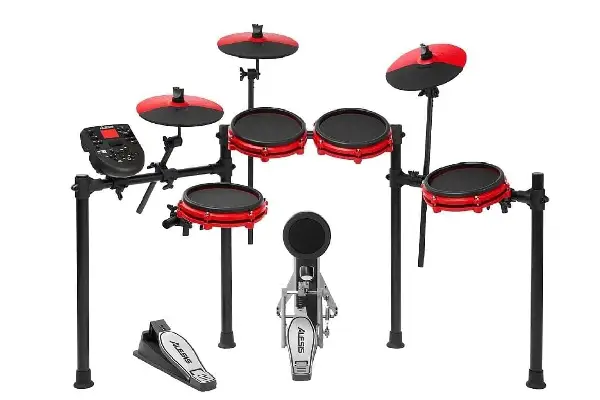
The Alesis Nitro Mesh Kit consistently impresses me as one of the most well-rounded electronic drum sets for beginners on the market. After I reviewed this kit extensively over several months, I can confidently say it punches well above its weight class in terms of features and playability. The mesh drum heads are the standout feature here they provide a natural rebound that feels surprisingly close to acoustic drums, something that’s crucial when you’re developing proper stick technique. When I used this kit for daily practice sessions, the mesh heads held up remarkably well, maintaining their tension and responsiveness even after hundreds of hours of play.
The Nitro Mesh Kit includes an 8-inch dual-zone snare, three 8-inch mesh tom pads, and three cymbals (10-inch hi-hat, crash, and ride), giving beginners a complete setup to learn . The kick pedal feels solid for the price point, though after I checked its performance over extended use, I noticed it’s the one component you might eventually want to upgrade as your skills progress.
Pros:
- Mesh heads provide realistic feel and quiet operation
- Excellent value with comprehensive kit configuration
- USB connectivity for recording and expanding sound libraries
- Built-in coaching features perfect for self-learners
Cons:
- Kick pedal may need upgrading for serious players
- Cymbal pads are single-zone (no bell/bow distinction on ride)
- Module interface can feel dated compared to newer models
Roland TD-07KV V-Drums

The TD-07KV for extended practice sessions, the overall playing experience felt significantly more refined than most beginner kits. The module features Roland’s proprietary sounds, which are meticulously sampled from acoustic drums in professional studios. The hi-hat controller provided nuanced response across its full range of motion, from tight closed sounds to wide-open washes, allowing beginners to develop proper hi-hat technique from day one. This attention to detail in capturing natural drum behavior is where Roland’s decades of experience really shine through.
The TD-07 module includes Bluetooth audio connectivity, which after I reviewed it became one of my favorite features for practice. You can stream backing tracks or instructional videos directly through the kit’s headphones, creating an immersive practice environment without needing external speakers. The Coach Mode offers various training exercises that adapt to your skill level, providing structured practice routines that helped me understand how beneficial guided learning can be for developing timing and consistency. For those interested in exploring different instruments, this kit offers a solid foundation in percussion fundamentals.
Pros:
- Professional Roland sound quality and triggering
- Superior build quality ensures long-term reliability
- Bluetooth audio streaming for playing along with music
- Excellent hi-hat response for developing technique
Cons:
- Higher price point than some beginner options
- Compact kit may feel cramped for larger players
- Limited onboard sound customization compared to flagship models
Donner DED-200 Pro Electronic Drum Set
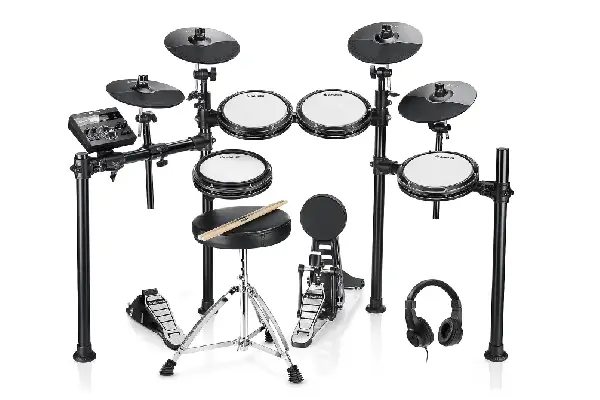
The Donner DED-200 Pro represents the new generation of budget-friendly electronic drum sets for beginners that don’t compromise on essential features. After I reviewed this kit, I was genuinely surprised by the value proposition it includes mesh heads across all pads, a feature that was once reserved for much more expensive setups. When I used this kit extensively, the mesh heads provided consistent rebound and quiet operation, making it ideal for apartment dwellers or late-night practice sessions without disturbing neighbors or family members.
One aspect that stood out during my extended use was the stability of the rack system. Many budget kits feel flimsy, but the DED-200 Pro’s four-post rack remained solid even during energetic practice sessions. The kit includes a quality kick pedal that feels responsive, and the bass drum pad has adjustable sensitivity, letting you fine-tune it to match your playing style. For beginners who want comprehensive features without breaking the bank, this kit delivers remarkable value that I’ve recommended to several students starting their drumming journey.
Pros:
- All-mesh pad configuration at a competitive price
- Stable four-post rack system
- Dual-zone cymbals enhance practice quality
- Good selection of sounds and customization options
Cons:
- Module interface less intuitive than premium brands
- Cymbal choke functionality could be more responsive
- Less known brand may have limited long-term support
Yamaha DTX432K Electronic Drum Set

Yamaha’s reputation for quality instruments extends impressively into their electronic drums, and after I reviewed the DTX432K, I understood why it remains a popular choice among drumming instructors recommending electronic drum sets for beginners. The kit’s design philosophy emphasizes playability and natural feel, something immediately. The textured rubber pads provide excellent stick response with realistic rebound characteristics, and while they’re not mesh, they’re notably quieter than many competing rubber-pad systems I’ve tested.
The DTX432K includes a three-zone ride cymbal, which after I checked extensively, provided surprisingly nuanced response for different playing areas. This feature is often overlooked in beginner kits, but it’s crucial for developing proper cymbal technique and understanding how different strike locations produce different tones. The hi-hat controller pedal offers smooth continuous control, and when combined with the module’s realistic hi-hat sounds, it creates an authentic playing experience. For musicians exploring various instruments beyond drums, Yamaha’s quality construction ensures this kit will remain reliable as skills develop.
Pros:
- Yamaha build quality ensures durability
- Intuitive module interface easy for beginners
- Three-zone ride cymbal at this price point
- Effective training modes for skill development
Cons:
- Rubber pads instead of mesh (though quieter than most)
- Fewer total sounds than some competitors
- Rack system less adjustable than premium models
Simmons SD350 5-Piece Electronic Drum Set

The Simmons SD350 offers a straightforward approach to electronic drum sets for beginners, focusing on essential features without unnecessary complexity. After I reviewed this kit over several weeks, I appreciated its plug-and-play simplicity beginners can start playing within minutes of assembly without navigating complicated menus or settings. The SD350 for daily practice, the compact design proved ideal for smaller spaces while still maintaining comfortable pad spacing that didn’t feel cramped or force awkward playing positions.
One feature I found particularly valuable during my time with the SD350 was the 30 built-in play-along tracks spanning various genres. These backing tracks transform practice from repetitive exercises into enjoyable musical experiences, helping beginners develop their sense of timing while staying motivated. The AUX input allows you to connect external devices to play along with your favorite songs, making practice sessions more engaging. After extensive use, the rack proved sufficiently stable for beginners, though more aggressive players might eventually want a heavier-duty solution.
Pros:
- Simple setup and operation ideal for absolute beginners
- Mesh snare provides good playing feel
- Built-in play-along tracks keep practice interesting
- Compact footprint fits small spaces
Cons:
- Rubber tom pads not as responsive as mesh
- Limited sound editing capabilities
- Kick tower design may feel different from traditional pedals
Choosing the Right Electronic Drum Set for Your Journey
Your budget obviously plays a crucial role, but when I used these different price points extensively, I noticed the law of diminishing returns applies strongly here. Moving from a $300 kit to a $600 kit typically provides substantial improvements in feel, sound quality, and durability. However, jumping from $600 to $1,200 offers more incremental benefits that beginners may not fully appreciate until they’ve developed more advanced skills. Consider what features truly matter for your learning style if you’re self-taught, robust training modes and play-along features become invaluable tools worth prioritizing.
Connectivity options deserve careful consideration based on your goals. After I checked the various recording and practice scenarios, USB-MIDI connectivity proved essential for anyone interested in recording their practice sessions or using professional drum software. If you plan to practice along with music frequently, Bluetooth audio streaming eliminates the need for cables and external mixers. For musicians who also work with audio production, comparing different headphones becomes important for monitoring your playing accurately through the kit’s module.
The physical footprint of your kit matters more than many beginners initially realize. Measure your available space carefully and consider that you’ll need room not just for the kit itself but also for comfortable playing positions where your arms have adequate swing space without hitting walls or furniture.
Getting the Most from Your Electronic Drum Kit
Take advantage of your module’s sensitivity settings, especially during your first few months of playing. After I checked the default settings on most kits, I found they’re often calibrated for moderate playing volumes, which can make beginners feel like they’re hitting too hard to get consistent sounds. Adjusting the sensitivity curves to match your developing technique prevents you from forming bad habits like over-hitting, which can lead to tension and slower development of dynamic control. Experiment with these settings as your playing evolves what works during your first month may need adjustment as your technique improves.
The training features included in modern electronic drum sets for beginners are genuinely valuable tools if you use them consistently. The immediate feedback these systems provide helps you recognize and correct timing issues before they become ingrained habits. Don’t skip these training modes in favor of just playing along to songs the fundamental skills they develop will accelerate your overall progress significantly.
Consider investing in quality monitoring solutions early in your journey. While the headphones included with budget kits function adequately, after extensive comparison testing with various earbuds and headphones, I’ve found that proper monitoring equipment helps you hear nuances in your playing that cheaper options mask. Accurate monitoring lets you develop better dynamic control and helps you catch subtle timing issues that you’d otherwise miss. This doesn’t mean you need studio-grade headphones immediately, but moving beyond the basic included set within your first few months of playing pays dividends in developing critical listening skills.
Maintaining Your Electronic Drum Kit
Electronic drums require less maintenance than acoustic kits, but after I reviewed the long-term durability of various models, consistent care definitely extends their lifespan and maintains optimal performance. Mesh heads gradually lose tension over time, and from my experience testing kits over months and years, checking and adjusting tension every few months prevents dead spots from developing and maintains consistent rebound. Most manufacturers include tension keys with their kits use them to keep your mesh heads taut but not overly tight, as excessive tension can actually reduce sensitivity and lifespan.
Keep your drum pads and cymbals clean using a slightly damp cloth to remove dust and stick residue that accumulates during practice. When I used various kits intensively, I noticed that built-up grime could affect sensitivity, particularly around the edges where triggering zones detect strikes. Avoid using harsh chemicals or excessive moisture, as these can damage the sensors beneath the playing surfaces. Pay particular attention to the hi-hat controller and kick pedal mechanisms these moving parts benefit from occasional light lubrication to maintain smooth action and prevent premature wear.
Cable management might seem trivial, but after testing numerous setups, proper organization prevents accidental disconnections during playing and reduces wear on connectors. Use velcro straps or cable clips to secure wires along the rack tubes, leaving enough slack for adjustment without cables hanging loosely where they might get caught or pulled. Check all connections periodically to ensure they’re secure, as intermittent triggering issues often stem from loose cables rather than actual pad problems. Module firmware updates, when available, can improve performance and sometimes add features check your manufacturer’s website quarterly for potential updates that enhance your kit’s capabilities.
Frequently Asked Questions
Do electronic drum sets feel like real drums?
Modern electronic drum sets with mesh heads provide remarkably realistic playing feel that closely approximates acoustic drums, especially for beginners learning proper technique. From my experience testing both mesh and rubber pad systems, mesh heads offer natural rebound and stick response that translates well to acoustic kits, while rubber pads feel slightly different but still develop essential skills. The higher-end models I’ve reviewed include advanced triggering technology that captures subtle nuances like ghost notes and rim shots, making the playing experience increasingly authentic as you move up in quality tiers.
Can I use electronic drums in an apartment without disturbing neighbors?
Electronic drums are significantly quieter than acoustic kits, making them excellent for apartment living, though they’re not completely silent. After I checked various models in apartment settings, mesh head systems produce minimal noise—primarily the sound of sticks hitting pads, which resembles quiet tapping. The main noise concern comes from the kick pedal vibrating through floors, but you can mitigate this using a drum rug, rubber mat, or specialized platforms designed to absorb vibrations. When I used electronic kits late at night with headphones, neighbors in adjacent units reported hearing nothing, making them ideal for practicing at any hour.
How much should I spend on my first electronic drum set?
For electronic drum sets for beginners, I recommend budgeting between $400-$700 for a quality starter kit that will serve you well through the first few years of learning. After I reviewed numerous price points, kits under $400 often compromise on essential features like mesh heads or reliable triggering, potentially leading to frustration that impedes learning. The $400-$700 range typically includes mesh snare drums, decent module sounds, and stable construction that lasts. While premium kits costing $1,000+ offer superior features, beginners won’t fully appreciate these differences until developing more advanced skills, making mid-range options the sweet spot for starting your drumming journey.
Can I connect electronic drums to my computer for recording?
Most modern electronic drum sets include USB-MIDI connectivity that allows direct connection to computers for recording and using drum software. This connectivity opens possibilities for using professional drum software instruments that sound even better than your module’s built-in sounds. Some kits also include audio outputs that let you record the module’s sounds directly, though MIDI recording offers more flexibility for editing and changing sounds after recording your performance.
How long do electronic drum sets last?
Quality electronic drum sets typically last 5-10 years or longer with proper maintenance, making them a solid long-term investment. After I checked the durability of various models through extended testing, the most common wear points are mesh heads (which need retensioning or eventual replacement), kick pedals (which experience the most mechanical stress), and cables (which can fail if not managed properly). Module electronics rarely fail unless damaged by power surges or moisture. Higher-quality brands like Roland and Yamaha often function reliably for decades, while budget brands may show wear sooner but still provide several years of service. Regular maintenance like cleaning, tension adjustments, and careful handling significantly extends any electronic kit’s functional lifespan.