

Finding quality budget-friendly sound systems doesn’t mean compromising on audio excellence—it means knowing where manufacturers invest their resources wisely. After spending considerable time testing and living with various affordable audio setups. The sweet spot for value typically sits between $200-$400, where you’ll find systems that genuinely enhance your music listening experience rather than just making things louder.
The landscape of affordable home audio has shifted dramatically thanks to advancements in Class D amplification, improved speaker driver materials, and the democratization of digital signal processing. Whether you’re setting up your first serious listening space or upgrading from basic computer speakers, these systems represent the best intersection of performance, features, and value I’ve encountered.
| Model | Key Strengths | Drawbacks | Best For |
|---|---|---|---|
| Edifier R1280T | – Warm, balanced sound ideal for casual listening- Dual RCA inputs for multiple sources- Solid MDF build with wood veneer- Simple setup & remote included | – Limited low-end (no sub-out)- No Bluetooth- Narrow sweet spot | First-time buyers upgrading from basic PC speakers |
| Sony SSCS5 | – Three-way design = rich mids & vocals- Expansive soundstage & strong imaging- Excellent tonal balance across genres- High sensitivity works with modest amps | – Requires external amp- Needs distance from walls- Slightly recessed treble on some tracks | Listeners building an affordable hi-fi stereo setup |
| Creative Pebble Plus 2.1 | – USB-powered, plug-and-play simplicity- Surprising bass for small footprint- Perfect for laptops or small desks- Auto-muting headphone jack | – Limited loudness- Cable clutter- Short subwoofer cable | Students, home-office users, and minimalist setups |
| Monoprice DT-3 | – Bluetooth 5.0 with rock-solid connection- Warm, coherent sound with EQ controls- Multiple inputs for flexible setups- Disableable LED for distraction-free use | – No aptX/LDAC codecs- No remote- Limited bass extension | Users wanting wireless convenience and balanced tonality |
| Klipsch ProMedia 2.1 THX | – THX-certified performance with punchy dynamics- Horn tweeters deliver crisp treble detail- Potent subwoofer with adjustable bass- Convenient desktop control pod | – Forward sound can cause fatigue- No Bluetooth- Messy cabling | Gamers & music lovers who want big, lively sound on a budget |
Edifier R1280T Powered Bookshelf Speakers
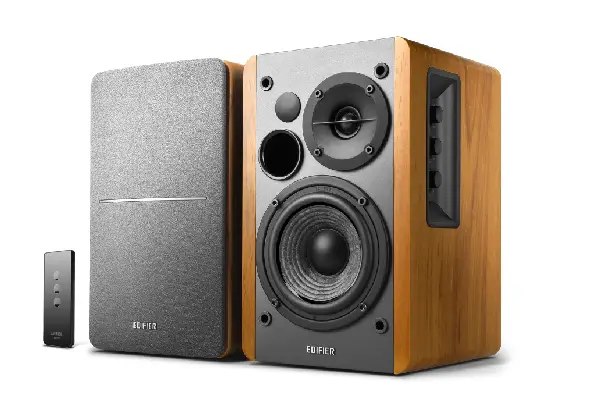
The Edifier R1280T has earned its reputation as the go-to entry point for anyone serious about audio quality on a tight budget, and after using these as my secondary system for nearly two years. These powered bookshelf speakers deliver a warmth and presence that immediately elevates music compared to typical multimedia speakers, with a soundstage that actually creates separation between instruments rather than mashing everything into a wall of noise. The 13mm silk dome tweeter produces highs that never become harsh or fatiguing, even during extended listening sessions, while the 4-inch bass driver provides surprising low-end presence for such compact cabinets—though bass enthusiasts will eventually want a subwoofer addition.
What makes the R1280T particularly valuable is its versatility in real-world applications. I’ve used these speakers in three different room configurations, from a small bedroom setup to a medium-sized living room (paired with a sub), and they’ve consistently performed well across various genres. The dual RCA inputs mean you can keep both your turntable and streaming device connected simultaneously, which sounds minor until you experience the convenience of not constantly swapping cables. The inclusion of a remote control for volume adjustment is another thoughtful touch that demonstrates Edifier’s understanding of actual user behavior—sometimes you just want to adjust volume from the couch without reaching behind your desk.
Build quality exceeds expectations for the price point, with MDF cabinets that feel substantially constructed rather than hollow and resonant like budget speakers from a decade ago. The wood veneer finish looks legitimately attractive rather than obviously cheap, making these speakers living-room-appropriate if your setup requires that consideration. Setup took me literally ten minutes: connect the included speaker wire between the active and passive speaker, plug in your source, and you’re making music. The front-panel controls for bass, treble, and volume provide enough tonal adjustment to compensate for room acoustics or personal preference without requiring external EQ.
Pros:
- Exceptional tonal balance for the price with warm, musical presentation
- Versatile connectivity with dual RCA inputs accommodating multiple sources
- Remote control included for convenient volume adjustment
- Solid MDF construction with attractive wood veneer finish
- Simple setup process accessible to complete beginners
Cons:
- Bass extension is limited without a subwoofer addition (rolls off around 75Hz)
- No Bluetooth connectivity in this model (available in R1280DB variant)
- Speaker wire connections could be more robust for frequent repositioning
- Sweet spot positioning is somewhat narrow for optimal soundstage
For anyone exploring better audio equipment beyond basic computer speakers, the R1280T represents a logical and satisfying first step into quality sound reproduction.
Sony SSCS5 3-Way Bookshelf Speaker System
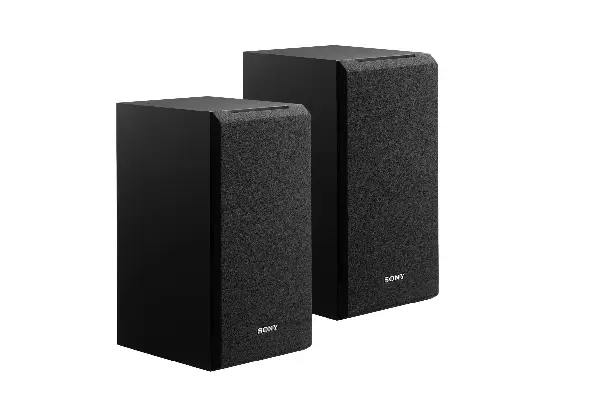
Sony’s SSCS5 speakers surprised me with their sophisticated sound signature when I first auditioned them—these passive speakers require an amplifier or receiver, but that additional component flexibility is exactly what makes them valuable for building a proper stereo system. The three-way driver configuration (1-inch tweeter, 4-inch midrange, 5.12-inch woofer) creates a frequency response that sounds remarkably coherent, with particularly impressive midrange clarity that brings vocals forward in the mix without sounding unnatural. After comparing these against several competitors in the $100-150 range, the Sonys consistently delivered better instrumental separation and a more spacious soundstage that actually benefits from thoughtful speaker placement.
The refinement of the SSCS5’s sound character genuinely reminds me of listening sessions with speakers costing two or three times as much, particularly with acoustic music and jazz, where tonal accuracy matters more than raw impact. Classical recordings reveal the system’s ability to maintain compositional complexity without congestion, while rock and electronic music benefit from the punchy bass response that extends lower than you’d expect from these relatively compact cabinets.
Build quality shows Sony’s experience in speaker manufacturing, with cabinets that feel dense and well-damped rather than resonant. The bass reflex port is rear-facing, which requires consideration during placement—you’ll want at least 6-8 inches of clearance from walls to avoid boomy bass reinforcement, something I learned after initially positioning them too close on bookshelves. The removable grilles feature a clean design that looks modern whether installed or removed, and the binding posts accept bare wire, banana plugs, or pin connectors for flexible amplifier connections.
Pros:
- Three-way design delivers exceptional midrange clarity and vocal presence
- Impressive soundstage width and depth for the compact form factor
- Excellent tonal balance across genres without obvious coloration
- High sensitivity (87dB) means they work well with modest amplification
- Removable grilles allow aesthetic customization
Cons:
- Requires a separate amplifier or receiver (additional cost consideration)
- Rear-porting demands careful placement away from walls
- Treble can occasionally sound slightly recessed with certain recordings
- Binding post spacing is tight for larger gauge speaker wire or banana plugs
Creative Pebble Plus 2.1 USB-Powered Desktop System
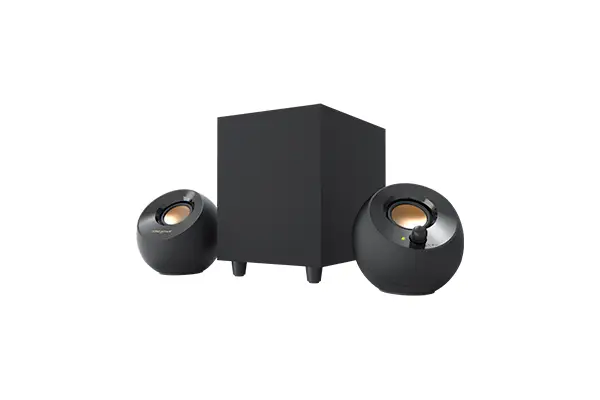
The Creative Pebble Plus completely changed my perspective on desktop audio solutions when I needed a compact system for a secondary workspace—this 2.1 configuration (two satellites plus a down-firing subwoofer) delivers far more engaging sound than its diminutive footprint and $40 price tag suggest possible. USB power means you can run the entire system from your computer without needing wall outlets, which proved invaluable when setting up a desk area where power strips were already maxed out. The spherical satellite design isn’t just aesthetic gimmickry; the 45-degree elevated drivers naturally direct sound toward your listening position without requiring stands or complicated angling, something that took me embarrassingly long to appreciate after years of struggling with conventional desktop speaker placement.
Sound quality obviously doesn’t compete with proper bookshelf speakers, but within the context of near-field desktop listening while working or casually enjoying music, the Pebble Plus punches well above its weight class. The 4-inch down-firing subwoofer provides enough low-frequency reinforcement to make music feel more complete without overwhelming small spaces or annoying roommates through thin walls—a balance I’ve rarely encountered in budget 2.1 systems that typically err toward either anemic or boomy bass. Gaming performance impressed me more than expected, with positional audio cues remaining clear and explosions carrying satisfying impact without becoming muddy.
The gain control knob on the right satellite provides satisfying tactile feedback and allows quick volume adjustments without reaching for software controls, while the integrated headphone jack automatically mutes speakers when you plug in—a thoughtful convenience feature missing from many desktop solutions. Cable management could be cleaner (multiple thin wires rather than a single integrated cable), but the overall minimalist aesthetic works well in contemporary workspaces where massive speaker towers would look out of place. I’ve been using this system daily for eight months with zero reliability issues, and the USB power connection has proven surprisingly robust during the frequent desk reconfigurations that come with testing various music production equipment.
Pros:
- USB-powered operation eliminates the need for wall outlets
- Down-firing subwoofer delivers balanced bass without overwhelming small rooms
- 45-degree angled drivers optimize sound direction for desktop listening
- Extremely compact footprint suitable for space-constrained setups
- Auto-muting headphone jack integrated into speaker design
Cons:
- Limited maximum volume for larger room applications
- Satellite speakers lack individual volume controls
- Cable management less elegant than single-wire solutions
- Subwoofer placement flexibility is limited by short interconnect cable length
Monoprice DT-3 Powered Speakers with Bluetooth
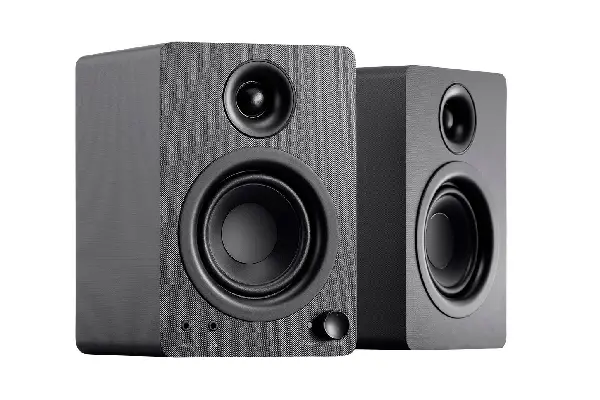
Monoprice has quietly built a reputation for value-oriented audio gear that doesn’t cut corners where it matters, and the DT-3 powered speakers exemplify this philosophy with a feature set that belies their modest price. The inclusion of Bluetooth 5.0 alongside traditional RCA and 3.5mm inputs provides connectivity flexibility I’ve come to consider essential in modern systems—being able to seamlessly switch from turntable playback to wireless streaming from my phone eliminates friction in how I actually consume music throughout the day. After comparing the DT-3 against similarly priced competitors, what stands out is the tonal coherence that suggests Monoprice actually voiced these speakers rather than just assembling drivers into boxes and hoping for the best.
The 1-inch silk dome tweeter and 5-inch polypropylene woofer combination creates a sound signature that leans slightly warm without becoming muddy, making these speakers forgiving with compressed digital files while still revealing detail in well-recorded material. I’ve particularly enjoyed how they handle acoustic instruments and vocals, rendering guitar strings and voice timbre with enough texture to feel present in the room rather than trapped inside speaker cabinets. The bass response extends reasonably well for sealed bookshelf speakers (down to about 60Hz), though as with most systems in this category, a subwoofer addition transforms the experience if you listen to bass-heavy genres like electronic music or hip-hop.
Build quality demonstrates practical design thinking, with rear-panel controls that include bass and treble adjustment for room tuning alongside the expected volume control. The front power LED indicator can be disabled if you find illuminated equipment distracting in dark listening environments, addressing a pet peeve I’ve accumulated over years of dealing with unnecessarily bright status lights. The Bluetooth connection has been rock-solid reliable across six months of daily use, with automatic reconnection working consistently when I power the speakers on—something that sounds basic until you’ve struggled with finicky Bluetooth implementations on other devices.
Pros:
- Bluetooth 5.0 provides reliable wireless connectivity with extended range
- Multiple input options accommodate both legacy and modern sources
- Balanced tonal signature works well across diverse musical genres
- Bass and treble controls enable room acoustic compensation
- Disableable LED addresses light pollution concerns
Cons:
- Bluetooth lacks advanced codec support (no aptX or LDAC)
- Speaker wire permanently attached to passive speaker (limits flexibility)
- Remote control not included despite powered design
- Sealed cabinet design limits bass extension compared to ported alternatives
These speakers work particularly well for folks who want the simplicity of powered speakers with wireless convenience, similar to how modern headphones have embraced Bluetooth without abandoning wired connections.
Klipsch ProMedia 2.1 THX Certified System
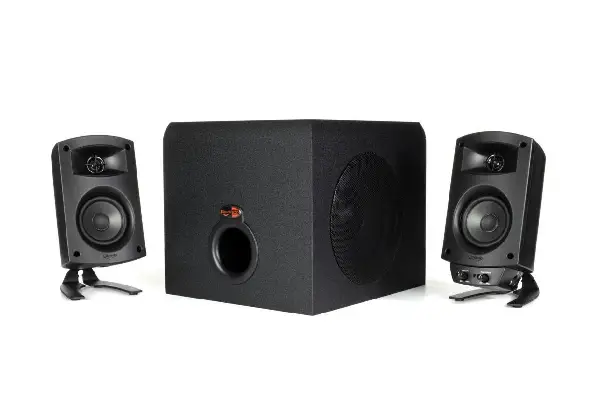
The Klipsch ProMedia 2.1 has achieved legendary status in gaming and desktop audio communities, and after living with this system for over a year, I understand why it continues selling strongly despite being essentially unchanged for nearly two decades. The THX certification isn’t just marketing—it represents actual performance standards regarding frequency response, distortion levels, and dynamic range that this system genuinely achieves. What immediately strikes you when first powering up the ProMedia is the authority and impact these relatively small components produce; the 6.5-inch subwoofer and satellite speakers create a listening experience that fills rooms rather than just occupying space, with a forward, energetic sound signature that makes music feel alive and immediate.
The horn-loaded satellite tweeters represent Klipsch’s signature design philosophy and deliver the company’s characteristically detailed high-frequency response with impressive dynamic capability—cymbal crashes and hi-hat articulation cut through dense mixes with crystalline clarity. The powerful subwoofer adjusts from subtle reinforcement to room-shaking impact via a convenient control pod that also handles volume and headphone connections.
Build quality feels substantial throughout, from the heavy MDF subwoofer cabinet to the satellite speaker construction that avoids the hollow resonance plaguing cheaper alternatives. The control pod design is polarizing—some users appreciate the desktop accessibility while others find it clutters workspace, though I’ve grown to prefer having physical volume control within arm’s reach rather than buried on rear panels. Setup proved straightforward despite the multiple cable connections, and the system has operated flawlessly across varied temperature and humidity conditions in my non-climate-controlled workspace. At around $150-170, this represents the upper limit of budget territory while delivering performance that approaches much pricier systems in dynamic impact and overall engagement.
Pros:
- THX certification ensures consistent performance meeting established standards
- Horn-loaded tweeters deliver exceptional high-frequency detail and dynamics
- Powerful subwoofer provides adjustable bass impact for various preferences
- Wired control pod offers convenient desktop volume and headphone access
- Proven reliability with design unchanged for years due to effectiveness
Cons:
- Forward sound signature may fatigue listeners during extended sessions
- Control pod placement can complicate desktop cable management
- Satellites permanently attached to subwoofer (limits future upgradeability)
- Lacks Bluetooth connectivity for wireless device streaming
For gamers and music enthusiasts who prioritize dynamic impact and excitement, the ProMedia 2.1 remains a compelling choice that punches well above its price class.
Frequently Asked Questions
Do budget sound systems really sound better than high-end headphones?
This depends entirely on your definition of “better” and your listening environment. Budget sound systems create a spatial listening experience that even excellent headphones struggle to replicate—the sensation of sound existing in physical space around you rather than inside your head changes how we perceive music fundamentally. However, quality headphones provide detail retrieval and isolation that budget speakers can’t match in untreated rooms where reflections and ambient noise compromise clarity. I use both depending on context: speakers for relaxed listening and social situations, headphones or earbuds for critical listening and late-night sessions when I can’t disturb others.
How much should I spend on an amplifier if I choose passive speakers?
For passive speakers in the $100-200 range like the Sony SSCS5, a $75-150 amplifier or integrated amp typically provides adequate power and quality without creating system bottlenecks. I’ve successfully used everything from vintage receivers to modern Class D mini-amps with budget speakers, and honestly, the amplifier matters less than proper speaker placement and room acoustics at this price point. Avoid spending more on amplification than you spent on speakers unless you plan to upgrade speakers soon—balanced system investment delivers better overall results than severely mismatched components.
Can I add a subwoofer to bookshelf speaker systems later?
Absolutely, and this represents one of the smartest upgrade paths for improving budget systems. Most powered bookshelf speakers lack subwoofer outputs, which means you’ll need a subwoofer with speaker-level inputs that tap into the signal going to your main speakers. Passive bookshelf speakers connected to amplifiers or receivers with dedicated subwoofer outputs integrate more seamlessly. I generally recommend living with your system for several months before adding a subwoofer—this lets you understand where your speakers actually need reinforcement rather than just assuming more bass equals better sound.
Are powered speakers better than passive speakers for beginners?
Powered speakers eliminate the amplifier selection process and generally require fewer connections, making them more approachable for people new to quality audio systems. However, passive speakers offer greater flexibility for future upgrades since you can improve your amplifier separately from your speakers, creating a more modular system that evolves with your needs and budget. I typically recommend powered speakers for space-constrained setups and people who value simplicity, while passive speakers suit folks interested in gradually building more sophisticated systems over time.
How important is speaker placement for budget systems?
Speaker placement might be the single most impactful free upgrade available for any system regardless of price. I’ve heard $200 speakers properly positioned sound significantly better than $500 speakers shoved against walls or buried in corners. The basic principles include: creating an equilateral triangle between listening position and speakers, placing tweeters at ear height, providing some distance from walls (especially rear-ported designs), and avoiding asymmetrical room positions where one speaker sits in a corner while the other sits in open space. Spending an hour experimenting with placement typically reveals dramatic improvements in soundstage, bass response, and overall clarity.
Should I worry about impedance matching with budget speakers and amplifiers?
Most budget bookshelf speakers feature 8-ohm impedance, which virtually any amplifier can drive without issues. Problems arise when using 4-ohm speakers (less common in budget category) with underpowered or poorly designed amplifiers, which can cause overheating or distortion. Check your speaker specifications and ensure your amplifier supports the listed impedance—if specs mention “8 ohms” speakers and “4-8 ohms” amplifier, you’re fine. I’ve never encountered impedance matching issues in mainstream budget gear since manufacturers design for compatibility with standard consumer electronics.