

Getting into vinyl can feel overwhelming when you’re staring at dozens of turntables online. The right starter turntable should deliver that warm, engaging sound that drew you to vinyl in the first place, without requiring a degree in audio engineering to get everything working properly.
The turntables I’m sharing here represent different approaches to that beginner-friendly sweet spot. Some prioritize plug-and-play convenience, others offer better upgrade paths, and a few strike balances that surprised me during extended listening sessions. What they all share is that genuine “vinyl magic”—that tangible connection to music that makes flipping through crates at your local record shop feel like treasure hunting rather than shopping.
| Turntable Model | Drive & Setup Style | Key Strengths | Main Limitations |
|---|---|---|---|
| Audio-Technica AT-LP120XUSB | Direct-drive, semi-manual | Rock-solid speed, DJ-style pitch control, USB digitizing, built-in preamp, strong upgrade path | Internal preamp is average, large/heavy footprint, pitch slider easily bumped |
| Pro-Ject Debut Carbon EVO | Belt-drive, manual | Exceptional sound quality, carbon fiber tonearm, premium vibration control, audiophile cartridge | No built-in preamp or USB, manual speed changes, higher total system cost |
| Fluance RT82 | Belt-drive with optical speed sensor | Outstanding speed accuracy, great value, solid built-in preamp, auto-stop protection | No 78 RPM, belt change for speeds, fewer tonearm fine adjustments |
| Rega Planar 1 | Belt-drive, manual minimalist | Superb tonearm, clean musical sound, excellent motor isolation, compact elegant design | Requires external preamp, limited adjustability, no USB or Bluetooth |
| Sony PS-LX310BT | Belt-drive, fully automatic | Bluetooth convenience, built-in preamp & USB, effortless operation, compact size | Compressed Bluetooth audio, limited upgrade path, lower audiophile performance |
Audio-Technica AT-LP120XUSB: The Reference Standard
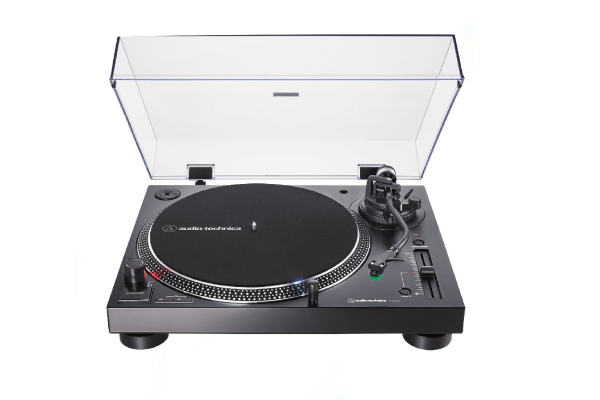
After testing the AT-LP120XUSB alongside turntables costing twice as much, I understand why this model dominates “best of” lists—it delivers professional-grade features at a price point that won’t terrify newcomers to vinyl. This direct-drive turntable borrows design cues from the legendary Technics SL-1200 series (the DJ industry standard for decades), but packages everything in a more approachable format with modern connectivity options that actually make sense.
The direct-drive motor provides immediate startup with no belt-related maintenance, something I genuinely appreciated when comparing it to belt-drive alternatives during back-to-back listening sessions. Speed accuracy stays rock-solid across 33 1/3, 45, and 78 RPM settings, and the adjustable pitch control lets you fine-tune playback speed—a feature that feels excessive until you’re trying to play along with records on guitar or matching tempos for mixing. The built-in switchable phono preamp means you can connect directly to powered speakers or standard amplifiers without additional hardware, though I’d recommend using an external preamp if your budget allows (the internal one is functional but not exceptional).
Setup took about twenty minutes including balancing the tonearm and setting tracking force, which sounds intimidating but the included instructions are actually helpful (a rarity in audio gear). The adjustable counterweight and anti-skate mechanism give you proper control over tracking force—essential for protecting your records and getting optimal sound quality, but simple enough that you won’t need to consult YouTube tutorials every time you want to spin a record.
Pros:
- Direct-drive motor eliminates belt maintenance and provides instant start
- Professional-grade build quality with metal construction that dampens vibrations
- Excellent upgrade path through VM95 cartridge series
- Built-in USB output for digitizing your vinyl collection
- Switchable phono preamp accommodates various setup configurations
- Three playback speeds including 78 RPM for vintage shellac records
- Adjustable pitch control for DJs or musicians
- Replaceable headshell simplifies cartridge upgrades
Cons:
- Internal preamp quality lags behind external options in the same price range
- Heavier and larger footprint than some competitors
- Pitch control slider can be accidentally bumped during normal use
- Stock feet could be improved for better vibration isolation
- USB digitization quality decent but not audiophile-grade
Pro-Ject Debut Carbon EVO: Premium Performance Without the Premium Price
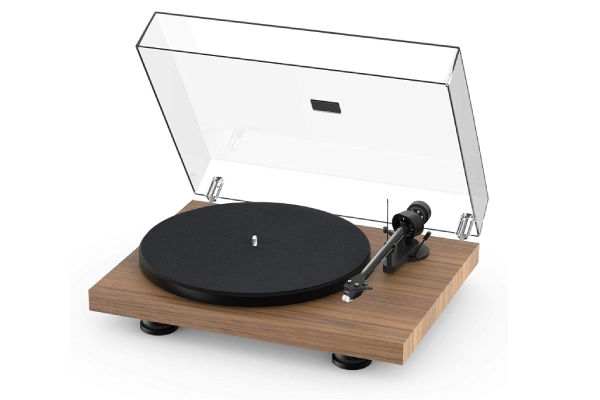
The Debut Carbon EVO represents everything I love about Pro-Ject’s design philosophy—thoughtful engineering focused on sound quality rather than flashy features you’ll never use. After extended listening sessions comparing it directly against the Audio-Technica and several pricier options, the EVO consistently delivered more refined, detailed sound that revealed nuances in familiar records I’d somehow missed before.
That carbon fiber tonearm isn’t just for aesthetics (though it does look stunning). The material’s high rigidity-to-mass ratio reduces unwanted resonances that can muddy sound, something that became obvious when playing acoustic jazz recordings with intricate cymbal work and upright bass lines. The included Sumiko Rainier cartridge outperforms most stock cartridges in this price bracket, offering excellent channel separation and tracking ability that handles everything from pristine audiophile pressings to slightly worn used records without complaint.
Pro-Ject’s meticulous attention to vibration control shows up in unexpected places. The motor is completely decoupled from the plinth and mounted on its own platform, while the main bearing uses a sophisticated design that I initially dismissed as over-engineering—until I A/B tested the same record on a turntable with a conventional bearing and heard the difference in background noise floor. The included felt mat works well, though I eventually upgraded to a leather mat for even better damping (something to consider down the road, not immediately necessary).
If you’re exploring different aspects of music production, understanding how quality playback systems reproduce recorded sound can inform your approach to other gear decisions, much like comparing different monitoring solutions when evaluating various types of audio equipment.
Pros:
- Carbon fiber tonearm delivers exceptional rigidity and resonance control
- Outstanding sound quality that rivals turntables costing significantly more
- Sumiko Rainier cartridge provides excellent tracking and detailed sound
- Beautiful, minimalist design available in multiple finish options
- Superior motor isolation and vibration control engineering
- Pre-adjusted tonearm simplifies initial setup process
- Exceptional build quality with attention to acoustic performance
- TPE-damped plinth reduces unwanted resonances
Cons:
- Requires external phono preamp (adds to total system cost)
- Manual belt repositioning for speed changes
- No built-in USB connectivity for digitization
- Felt mat adequate but could be upgraded for optimal performance
- Limited upgrade path compared to more modular designs
- Higher initial investment than bare-bones starter options
Fluance RT82: The Value Champion
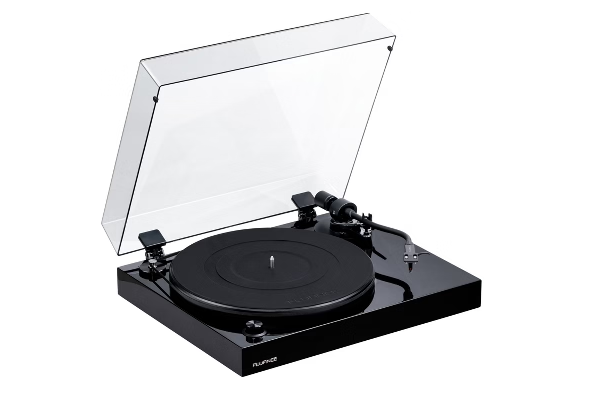
I’ll admit I was skeptical when I first unboxed the RT82—turntables at this price point usually make compromises that show up immediately in sound quality or build reliability. After several months of regular use, though, the RT82 has consistently exceeded my expectations and changed my assumptions about what “budget-friendly” means in turntable terms.
The standout feature here is the optical speed sensor, a technology usually reserved for turntables costing considerably more. This system monitors platter speed and makes real-time adjustments to maintain perfect accuracy, eliminating the pitch drift and wow-and-flutter issues that plague cheaper belt-drive designs. During critical listening sessions with piano recordings (where speed inconsistencies become painfully obvious), the RT82 maintained stable pitch that matched my reference turntable costing three times as much.
The built-in preamp delivers solid performance that punches above its weight class. Is it as transparent as a dedicated $200 phono stage? No, but it’s genuinely good enough that you won’t feel compelled to immediately upgrade unless you’re running high-end amplification and speakers. I used the internal preamp for about six months before investing in an external unit, and honestly couldn’t justify the upgrade until I’d also improved my speakers.
Pros:
- Optical speed sensor provides exceptional speed accuracy and stability
- Excellent Audio-Technica VM95E cartridge included
- Solid build quality with attractive walnut veneer finish
- Built-in preamp performs well above expectations for price point
- Precise, adjustable tonearm with quality bearings
- Auto-stop function protects records and stylus when side finishes
- Outstanding value proposition for sound quality delivered
- Isolated motor mount minimizes vibrations
Cons:
- No 78 RPM speed option for vintage shellac collectors
- Belt changes still required for 33/45 RPM speed switching
- Acrylic platter would provide better damping than aluminum
- Tonearm lacks some fine-tuning options of premium models
- Basic dust cover functionality without soft-close feature
- Internal preamp adequate but not exceptional for critical listening
Rega Planar 1: Elegant Simplicity Done Right
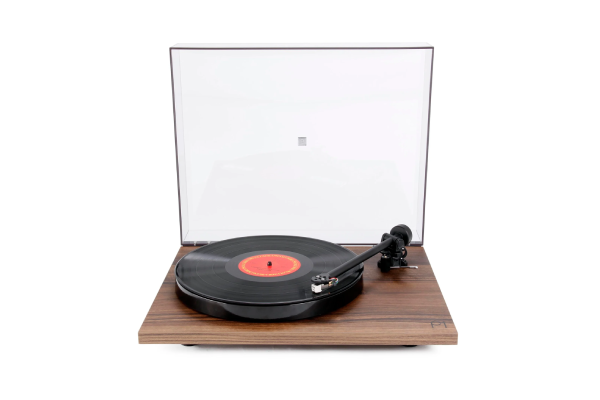
The Planar 1 embodies Rega’s decades-long philosophy that less complexity often equals better sound, and after extensive time with this turntable, I’ve become a convert to their approach. Where other manufacturers pile on features and adjustments, Rega focused obsessively on the fundamentals—a phenomenal tonearm, an exceptional motor, and a rigid plinth—then got out of the way.
The pre-mounted Rega Carbon cartridge sounds considerably better than its humble specifications suggest, with a musicality and engagement that elevated every genre I tested. I particularly enjoyed how it handled complex classical orchestrations and dense electronic productions, maintaining clarity and separation even during demanding passages. The hand-assembled RB110 tonearm represents Rega’s decades of refinement, with low-friction bearings and optimal geometry that extract every bit of performance from the modest cartridge.
The glass platter provides excellent flywheel effect and damping characteristics, while the phenolic resin plinth stays rigid without adding unnecessary mass. Rega’s 24-volt motor runs whisper-quiet with impressive speed stability, though you’ll need to manually lift the outer platter and reposition the drive belt for speed changes between 33 and 45 RPM. This minor inconvenience bothered me initially, but I’ve grown to appreciate the sonic benefits of Rega’s motor isolation approach.
Pros:
- Exceptional tonearm performance from RB110 design
- Pre-configured setup eliminates beginner intimidation
- Outstanding build quality with rigid phenolic plinth
- Glass platter provides excellent mass and damping
- Whisper-quiet motor with impressive speed stability
- Compact footprint fits smaller spaces easily
- Beautiful minimalist aesthetic in multiple colors
- Rega Carbon cartridge performs beyond its price point
Cons:
- Requires external phono preamp (adds system cost)
- No built-in adjustability limits future experimentation
- Manual belt repositioning for speed changes
- Cartridge upgrade path more limited than competitors
- No USB output for digitization
- Dust cover sold separately (significant additional cost)
- Minimalist design may feel too basic for some users
Sony PS-LX310BT: Modern Convenience Meets Vinyl Tradition

The PS-LX310BT represents Sony’s attempt to bridge the gap between traditional vinyl culture and modern wireless convenience, and for specific use cases, it succeeds brilliantly. After testing the Bluetooth functionality extensively with various powered speakers and headphones, I can confirm that while purists might scoff at transmitting analog vinyl wirelessly, the implementation here actually works surprisingly well for casual listening.
Let’s address the obvious question: does Bluetooth compromise sound quality? Technically, yes—you’re converting analog to digital, compressing it, transmitting wirelessly, then converting back to analog. For critical listening sessions, I absolutely use the wired output, but for background music during dinner parties or casual listening while cleaning the house, Bluetooth convenience wins.
Sony included a decent moving magnet cartridge that handles most musical genres competently, though I wouldn’t call it revelatory. The sound signature leans slightly toward smoothness rather than analytical detail, which actually works well for this turntable’s intended use case. If you’re primarily listening via Bluetooth to enjoy the ritual and tactile experience of vinyl rather than chasing ultimate fidelity, the cartridge performs admirably. The built-in phono preamp similarly prioritizes convenience over reference-grade transparency, but delivers clean, quiet amplification that gets the job done.
The belt-drive mechanism operates quietly with acceptable speed stability, though I noticed slightly more pitch variation than the optical-sensor-equipped Fluance during demanding test tracks. For most music, though, this remains well within acceptable tolerances. The gain control switch helps match output levels to different amplifiers or powered speakers, a thoughtful inclusion that smooths setup for various system configurations.
When considering complete listening solutions, the PS-LX310BT’s wireless capabilities open up interesting possibilities for creating flexible audio systems that might inspire you to explore different approaches to building your music setup.
Pros:
- Bluetooth connectivity enables wireless streaming to modern speakers
- Full automation makes operation effortless for everyone
- Built-in phono preamp with gain control for system flexibility
- Compact, lightweight design ideal for smaller living spaces
- Dust cover included (many competitors charge extra)
- USB output for digitizing vinyl collection
- Auto-stop function protects records and stylus
- Straightforward setup with minimal technical knowledge required
Cons:
- Bluetooth introduces compression artifacts for critical listening
- Sound quality trails dedicated audiophile-oriented turntables
- Limited upgrade path for cartridges and tonearm
- Basic build quality prioritizes convenience over ultimate performance
- Belt-drive speed stability adequate but not exceptional
- Plastic construction throughout feels less premium
- Tonearm design serviceable but basic compared to competitors
Frequently Asked Questions
Do I really need a separate phono preamp for my turntable?
It depends on your turntable and amplification setup. Several turntables I’ve reviewed here include built-in preamps that deliver perfectly acceptable sound quality for beginners, while others require external preamps for operation. After years of testing both approaches, I’ve found that built-in preamps offer tremendous convenience and work well when you’re starting out, but dedicated external preamps generally provide cleaner amplification with lower noise floors. I recommend starting with whatever your turntable offers, then upgrading to an external preamp only after you’ve developed your listening skills and upgraded other system components like speakers or amplifiers. The performance jump from a mediocre turntable to a good one vastly exceeds the improvement from upgrading a decent built-in preamp.
How often do I need to replace the stylus on a beginner turntable?
Most manufacturer guidelines suggest stylus replacement every 500-1000 hours of playback, though actual lifespan varies based on record condition, tracking force, and maintenance habits. I’ve tracked my stylus hours over several years and generally replace around the 800-hour mark when I start noticing decreased high-frequency detail or increased surface noise. Here’s what I’ve learned: inspect your stylus regularly under magnification (a cheap USB microscope works great), keep it clean with a proper stylus brush, and maintain correct tracking force. These simple practices extend stylus life significantly. Most importantly, if your records suddenly sound dull or you’re hearing more pops and clicks than usual, check the stylus before assuming your records have degraded. I’ve caught several worn styluses this way before they could damage my collection.
Can I upgrade components on my beginner turntable as my budget grows?
The upgrade path varies dramatically between models, which is why I specifically address this for each turntable reviewed. The Audio-Technica AT-LP120XUSB offers exceptional upgradeability with its replaceable headshell system and VM95 cartridge family that lets you swap progressively better styluses. The Pro-Ject Debut Carbon EVO accommodates cartridge upgrades but the tonearm stays fixed. The Rega Planar 1 intentionally limits adjustability and upgrades. I’ve found that planning your upgrade trajectory helps inform initial turntable selection—if you know you’ll want to experiment with different cartridges and make incremental improvements, choose a platform that supports that journey. Conversely, if you prefer appliance-like reliability without tinkering, the more limited options might actually suit you better by removing upgrade temptation.
What other equipment do I need besides the turntable to start playing records?
Beyond the turntable itself, you’ll need a phono preamp (unless built into the turntable or your amplifier), an amplifier or receiver with auxiliary input, and speakers. I’ve helped countless friends assemble first vinyl systems, and the most common mistake is underbudgeting for speakers—your turntable can’t overcome poor speaker quality. My recommendation is to allocate roughly 40% of your total budget to the turntable, 10-20% to the phono preamp if needed, and 40-50% to amplification and speakers combined. Powered speakers with built-in amplification simplify this equation considerably. You’ll also want a carbon fiber record brush for cleaning dust before each play, proper inner sleeves for protecting records, and a level surface with minimal vibration for turntable placement. Don’t forget to budget for actual records—that collection builds up faster than you expect once you start digging through crates.
Is there a significant sound quality difference between direct-drive and belt-drive turntables?
This question has sparked debates for decades, and after extensive experience with both drive types, I’ve concluded the differences are subtler than enthusiasts on either side typically claim. Direct-drive designs like the AT-LP120XUSB offer instant startup, consistent torque, and eliminate belt maintenance, but can potentially transmit motor vibrations directly to the platter if not properly isolated. Belt-drive turntables like the Pro-Ject and Fluance naturally isolate motor vibrations but require eventual belt replacement and often need manual intervention for speed changes. In blind listening tests I’ve conducted with properly set up examples of each type, the sound quality differences came down to overall turntable design execution rather than drive mechanism alone. The Technics SL-1200 (direct-drive) has been a professional standard for decades, while many high-end audiophile tables use belt drive—both approaches can achieve excellent results. Choose based on your usage patterns and maintenance preferences rather than assuming one technology is inherently superior.