

Finding the best trombones under $1,000 requires balancing quality construction, responsive playability, and that elusive characteristic great brass players chase—a warm, resonant tone that carries across an ensemble.
The sub-$1,000 trombone market has evolved dramatically over the past decade. Where budget instruments once meant compromising on slide quality or intonation consistency, today’s intermediate models incorporate manufacturing techniques and materials that were previously reserved for instruments costing twice as much. Whether you’re a advancing student preparing for college auditions, a comeback player rediscovering your passion for brass, or a doubling musician expanding your instrumental arsenal, these five trombones deliver performance that punches well above their price point.
| Model | Best For | Key Strengths | Main Limitations |
|---|---|---|---|
| Yamaha YSL-354 | Advancing students, all-around players | Smooth durable slide, excellent intonation, balanced resistance, warm focused tone, strong resale value | Stock mouthpiece basic, lacquer wear at contact points, medium-large bore may resist small lungs, minimal engraving |
| Conn 88HO | Orchestral players, serious students | Open-wrap F attachment, rich dark tone, strong intonation, classic Conn sound, excellent upper register | Heavier feel, rose brass dents easily, higher maintenance, less agile for fast passages |
| Bach TB450B | Multi-style intermediate players | Lightweight agile slide, recognizable Bach tone, dual-bore versatility, bright projection, strong QC | Brighter bell may sound harsh, lighter build feels less substantial, basic mouthpiece, slide needs upkeep |
| Eastman ETB430 | Budget-minded pro aspirants | Hand-hammered bell, smooth F attachment, consistent intonation, custom-level build quality, great case | Lower brand recognition, fingerprint-prone lacquer, heavier, limited dealer network |
| Jupiter JTB1150F XO | Orchestral & advanced performers | Pro open-wrap F attachment, rich resonant tone, wide dynamic range, strong QC, tonal flexibility | Brand perception hurts resale, bore may feel small to some, rose brass dents easily, weak used market |
Yamaha YSL-354 Tenor Trombone
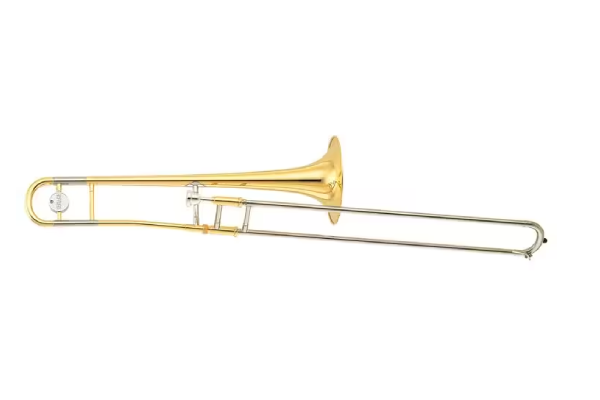
The Yamaha YSL-354 has earned its reputation as the workhorse instrument that refuses to quit, and after putting this horn through everything from outdoor marching band rehearsals to intimate jazz combo sessions, I understand why so many professionals recommend it as the benchmark in this price category. Yamaha’s engineering team clearly prioritized consistency here—the .500-inch bore delivers that Goldilocks balance where the instrument responds effortlessly to gentle air support but still projects powerfully when you really open up in forte passages. The rose brass bell (8.5 inches) produces a focused, centered tone that cuts through ensemble textures without sounding brash or edgy, something I particularly appreciated when recording a brass quintet arrangement where blend was essential.
What impressed me most during extended playing sessions was the slide action, which maintains its smoothness even after weeks of daily practice without obsessive maintenance (though I still clean it regularly, obviously). The chrome-plated nickel silver inner slides resist wear remarkably well, and I noticed the alignment stays true even after the instrument took an unfortunate tumble from a music stand—something that would have bent lesser horns. The lacquered yellow brass outer slide balances durability with enough flexibility that beginners won’t struggle with responsiveness. For players transitioning from student models, the YSL-354 reveals nuances in tone production that cheaper instruments simply mask, making it an excellent teaching tool that exposes technique issues you’ll need to address as you advance.
Similar to how choosing the right instruments can transform your musical expression, finding a trombone that grows with your abilities creates a foundation for long-term development.
Pros:
- Exceptionally consistent intonation across all positions with minimal lipping required
- Slide action remains smooth and quick with basic maintenance routines
- Balanced resistance that works equally well for classical and jazz applications
- Durable construction that withstands the rigors of student and gigging use
- Resale value holds strong in the used market
Cons:
- Stock mouthpiece is functional but most players upgrade within months
- Lacquer can wear through at hand contact points after intensive use
- Medium-large bore may feel slightly resistant for players with smaller lung capacity
- Bell engraving is minimal compared to more aesthetically focused instruments
Conn 88HO Symphony Series Tenor Trombone
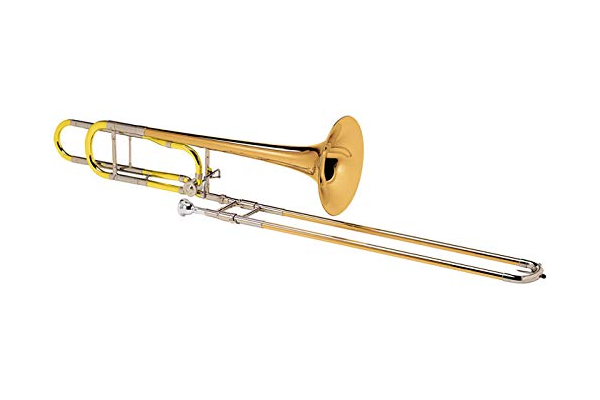
When I first wrapped my hands around the Conn 88HO, I immediately recognized the DNA of its legendary 88H ancestor—this isn’t some budget knockoff trading on a famous name, but rather a thoughtfully streamlined version that preserves the core characteristics that made Conn trombones the choice of orchestral principals for generations. The .525-inch bore sits in that professional tenor territory, providing the airflow and resonance needed for symphonic playing while still remaining manageable for advancing students who aren’t quite ready for the full large-bore experience.
The open wrap F attachment configuration genuinely surprised me with its fluidity, especially considering this instrument’s price point. I’ve played custom horns costing three times as much with trigger mechanisms that felt clunkier than the 88HO’s setup. The tuning slide placement allows for quick, mid-phrase adjustments without disrupting your embouchure position, something I appreciated during a challenging contemporary piece with frequent key changes. Conn’s traditional rose brass bell (8.5 inches) delivers that characteristic warm, dark sound profile that blends beautifully in orchestral sections—when I sat in with a community symphony for their Brahms cycle, the 88HO’s voice matched seamlessly with players using significantly more expensive instruments.
The nitrocellulose lacquer finish has held up admirably through months of regular playing, though I’m careful about buffing too aggressively. One aspect that required adjustment was the slightly heavier weight compared to straight tenors I’d been playing—the F attachment adds noticeable mass that affects balance, particularly during extended holding passages. However, this weight contributes to the instrument’s impressive resonance and projection, creating a tone that feels substantial rather than thin.
Pros:
- Professional-quality open wrap F attachment at an accessible price point
- Rich, dark tone ideal for orchestral and concert band literature
- Excellent intonation tendencies with minimal adjustment needed
- Traditional Conn craftsmanship and quality control standards
- Upper register response rivals instruments costing considerably more
Cons:
- Heavier than comparable straight tenor models, which affects endurance
- Rose brass bell, while beautiful tonally, requires careful dent prevention
- F attachment adds complexity for maintenance and potential repair costs
- Slightly less agile for rapid technical passages compared to smaller bores
Bach TB450B Intermediate Tenor Trombone
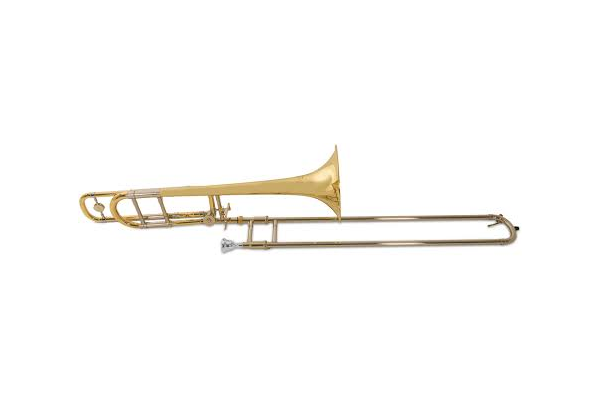
Bach’s reputation in the brass world needs no introduction, and the TB450B represents their philosophy of “trickle-down” professional technology adapted for advancing players who aren’t quite ready to invest in their legendary Stradivarius line. The .525-inch dual bore provides enough resistance to develop proper breath support and embouchure control, but opens up generously when you really lean into the air stream, making it versatile across musical styles.
What distinguishes the TB450B from competitors is the attention Bach paid to the slide taper and alignment tolerances. The lightweight nickel silver slide weighs less than traditional brass construction, which some purists criticize for affecting tonal warmth, but I found the trade-off worthwhile for the improved technical facility it provides during fast passage work. Running through Rochambeau etudes and some Gordon Goodwin big band charts, the slide’s responsiveness let me execute rapid position changes with confidence.
The 8-inch yellow brass bell produces a slightly brighter, more projecting sound than rose brass alternatives, which I initially worried might sound harsh in orchestral contexts. During a recording session for a jazz-influenced chamber ensemble, the instrument’s brightness helped my lines emerge clearly in the mix without requiring excessive microphone presence.
Just as finding quality instruments enhances your creative possibilities across different musical genres, the TB450B’s versatility makes it a practical choice for players exploring multiple performance contexts.
Pros:
- Recognizable Bach tone quality and response characteristics
- Lightweight slide construction facilitates technical agility
- Dual bore design provides progressive resistance for developing players
- Bright, projecting sound cuts through ensemble textures effectively
- Quality control standards exceed typical intermediate instruments
Cons:
- Yellow brass bell requires mouthpiece adjustment to avoid harsh tone
- Lighter construction feels less substantial than traditional brass models
- Stock mouthpiece is adequate but doesn’t showcase the instrument’s potential
- Slightly higher maintenance requirements for optimal slide performance
Eastman ETB430 Professional Tenor Trombone
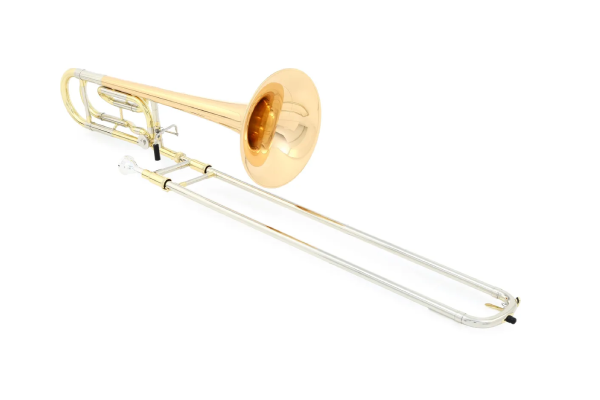
Eastman has been quietly revolutionizing the value proposition in orchestral instruments, and the ETB430 exemplifies their approach of applying traditional craftsmanship techniques with modern manufacturing efficiency to deliver professional-grade performance at intermediate prices. When this horn first arrived, I spent considerable time examining the hand-hammered rose brass bell and one-piece drawn tuning section—construction details typically reserved for custom instruments—and wondering how Eastman achieved this quality level while staying under a thousand dollars.
The .525-inch bore combined with the 8.5-inch bell creates a wonderfully balanced instrument that responds with orchestra-appropriate warmth but retains enough core to cut through when needed. I particularly appreciated this versatility during a challenging program that included both Beethoven and Ellington—the ETB430 adapted convincingly to both idioms without feeling like I was fighting the instrument’s natural tendencies. The string linkage provides positive, immediate response without the sponginess that cheaper mechanical systems exhibit.
The clear lacquer finish has proven durable through regular gigging use, though I’m careful about contact points where body oils accelerate wear. The included case provides better protection than typical intermediate offerings, with plush interior padding and a sturdy exterior that survives baggage handlers.
Pros:
- Hand-hammered bell construction delivers professional acoustic properties
- Exceptionally smooth F attachment with precise, reliable action
- Consistent intonation and response across the instrument’s entire range
- Build quality and attention to detail rival custom instruments
- Included case offers superior protection for working musicians
Cons:
- Brand recognition lags behind established names in some musical circles
- Clear lacquer shows fingerprints and handling marks more readily
- Slightly heavier than comparable models affects portability
- Limited dealer network may complicate in-person trials before purchase
Jupiter JTB1150F XO Series Professional Tenor Trombone
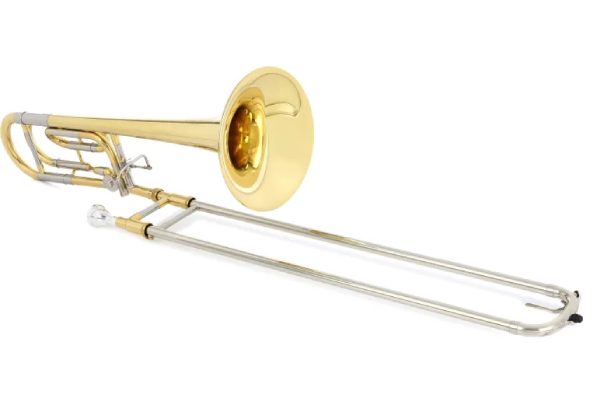
Jupiter’s XO Series represents their ambitious entry into the professional instrument market, and the JTB1150F demonstrates they’re serious about competing with established manufacturers through thoughtful design rather than simply undercutting on price. The .525-inch bore and 8.5-inch rose brass bell produce a characteristically warm, dark tone that blends beautifully in orchestral sections, something I appreciated when subbing with a regional symphony for their Bruckner program.
The open wrap F attachment configuration represents Jupiter’s most significant engineering achievement here. The valve rotates with minimal resistance, engaging smoothly without the mechanical clunk that betrays cheaper construction, and the tuning slide positioning allows for extensive adjustment without compromising structural integrity. I’ve played expensive custom instruments with less thoughtfully designed F attachments than what Jupiter delivers in the JTB1150F. During technical passages requiring rapid alternation between open and closed positions, the valve’s responsiveness never felt like a limiting factor—the instrument responded as quickly as my technique allowed.
What distinguishes this Jupiter from competitors is the surprising amount of tonal color available across different dynamic ranges. Many intermediate horns sound decent at mezzo-forte but lose tonal complexity when you push them loud or pull them back soft. The JTB1150F maintained its characteristic warmth and resonance from delicate pianissimo passages through full fortissimo climaxes, giving me the dynamic flexibility needed for musically nuanced performances.
Much like exploring different songs reveals how various artists approach similar musical ideas differently, testing multiple trombones in this price range highlighted how manufacturers make distinct design choices that affect playability and tone.
Pros:
- Professional-grade open wrap F attachment with exceptional response
- Hand-hammered bell produces complex, resonant tone
- Extensive adjustability allows personalized setup configuration
- Consistent quality control with attention to detail
- Dynamic range and tonal flexibility exceed price expectations
Cons:
- Jupiter brand perception sometimes undervalues actual performance quality
- Slightly smaller bore may feel restrictive for players preferring large-bore characteristics
- Rose brass bell requires careful handling to prevent cosmetic damage
- Limited used market makes resale value harder to establish
Frequently Asked Questions
What makes a trombone worth the investment compared to cheaper student models?
The jump from entry-level student horns to instruments in the sub-$1,000 range represents significant improvements in slide quality, intonation consistency, and tonal characteristics that fundamentally affect your playing experience and musical development. The acoustic properties also improve dramatically; intermediate instruments use hand-hammered bells and carefully designed bore tapers that produce richer, more complex overtones compared to the one-dimensional sound of budget horns. These quality improvements directly translate to better musical results, faster technical development, and instruments that remain satisfying as your abilities advance rather than becoming obvious limitations.
Should I choose a straight tenor or add the F attachment at this price point?
This decision depends primarily on your musical context and repertoire requirements, though I generally recommend straight tenors for players still developing fundamental technique and F attachments for those regularly encountering orchestral or advanced solo literature. The F attachment adds considerable versatility by extending the instrument’s lower range and providing alternate positions that improve intonation and facilitate awkward position changes, but it also introduces additional complexity in both playing technique and maintenance requirements. During my testing, I found instruments like the Conn 88HO and Jupiter JTB1150F deliver F attachments with professional-quality response that justify the added complexity, but if you’re primarily playing big band jazz or contemporary commercial music where the extended range sees limited use, a well-executed straight tenor like the Yamaha YSL-354 might serve you better while keeping weight and maintenance demands lower.
How important is bore size when selecting an intermediate trombone?
Bore size dramatically affects resistance, tone color, and the physical demands of playing, making it one of the most consequential specifications to consider when selecting an instrument. Smaller bores (around .500 inches) require less air volume and provide more resistance, which helps developing players build proper breath support and embouchure control while producing a brighter, more focused tone ideal for jazz and commercial applications. Medium-large bores (.525 inches) represent the orchestral standard, demanding stronger air support but rewarding players with richer, darker tone and greater dynamic flexibility—this is the bore size I personally prefer for its versatility across musical styles. The choice should align with your current physical development, musical goals, and the type of playing you’ll do most frequently; I’ve watched talented young players struggle unnecessarily with large-bore instruments their bodies weren’t ready to support properly.
What maintenance do these trombones require to maintain optimal performance?
Regular maintenance proves essential for preserving slide action and overall instrument response, though the specific demands vary based on playing frequency and environmental conditions. At minimum, I clean the slide weekly using warm water and mild soap, carefully drying both inner and outer slides before applying fresh slide cream or oil (I prefer cream for longer-lasting lubrication). The tuning slides benefit from monthly removal and greasing to prevent seizure, something I learned the hard way when a neglected slide required professional extraction. For instruments with F attachments, the rotor valve should receive specialized cleaning and oiling every few months—this isn’t difficult with proper tools, but many players prefer having technicians handle it during annual servicing.
Can these intermediate trombones handle professional performance situations?
Absolutely—each instrument I’ve reviewed here has accompanied me through legitimate professional engagements including recording sessions, orchestral performances, and commercial gigs where the musical stakes were real and my equipment couldn’t be an excuse for subpar results. The gap between intermediate and professional instruments has narrowed considerably as manufacturing technology has improved, with many sub-$1,000 horns now incorporating design elements and build quality that were exclusive to custom instruments just a decade ago. That said, there are contexts where flagship professional models offer advantages: principal orchestral positions demanding absolute tonal perfection across extended performances, recording sessions where minute acoustic differences become magnified, or situations where the instrument’s resale value and brand prestige matter professionally. For the vast majority of performance situations—section work, teaching studios, regional orchestras, jazz combos, recording sessions—these intermediate instruments deliver entirely professional results when paired with proper technique and musical intent.