

Finding quality synthesizers under $500 might seem challenging, but the best synthesizers under $500 market has exploded with incredible options that rival gear costing twice as much. After spending months in the studio testing budget-friendly synths, I’ve discovered that affordable no longer means compromising on sound quality or features. Whether you’re a bedroom producer crafting your first tracks or a seasoned musician looking to expand your sonic palette, these five synthesizers deliver professional results without destroying your budget.
The synthesizer landscape has changed dramatically in recent years. Manufacturers now leverage advanced digital technology and streamlined production methods to pack serious sound design capabilities into compact, affordable packages. When I checked through dozens of models in this price range, I was genuinely impressed by how much value these instruments offer. From analog warmth to digital versatility, the synthesizers on this list represent the sweet spot where affordability meets functionality.
| Model | Key Features | Pros | Cons |
|---|---|---|---|
| Korg Minilogue XD | 4-voice hybrid analog/digital synthesizer with digital multi-engine, user oscillator slots, and 16-step sequencer with motion sequencing. | – Hybrid architecture offers wide sonic range- Solid metal build with intuitive controls- Sequencer and motion automation- Expandable with custom oscillators/effects | – Mini-keys may feel cramped- Only 4 voices of polyphony- No aftertouch |
| Arturia MicroFreak | Digital-analog hybrid synth with 12 synthesis engines, polyphonic aftertouch capacitive keyboard, deep modulation matrix, and sequencer/arpeggiator. | – Huge range of synthesis types- Polyphonic aftertouch on every key- Deep modulation routing- Lightweight and portable | – Flat capacitive keys take adjustment- Plastic build feels less premium- Non-traditional keyboard layout |
| Behringer Deepmind 6 | 6-voice analog polyphonic synth with 4 onboard effects engines, WiFi editor, sequencer, and full-size keys. | – Rich analog sound quality- Studio-grade built-in effects- Deep modulation capabilities- Solid metal construction | – Larger size requires more space- Occasional WiFi connectivity issues- Limited to 6 voices |
| Novation Bass Station II | Monophonic analog synth with dual filter architecture, sub-oscillator, sequencer/arpeggiator, and 128 patch storage. | – Exceptional analog bass and leads- Flexible dual filters- Durable metal build- Patch memory for quick recall | – Monophonic only- Two-octave range- No built-in effects |
| IK Multimedia UNO Synth Pro | 3-oscillator paraphonic analog synth with 256-step sequencer, aftertouch mini-keys, rechargeable battery, and companion editor software. | – True analog sound in portable design- Battery-powered for mobility- Advanced sequencer with parameter locks- Aftertouch and velocity-sensitive keys | – Paraphonic (not fully polyphonic)- Crowded control layout- Mini-keys not ideal for all players |
Korg Minilogue XD
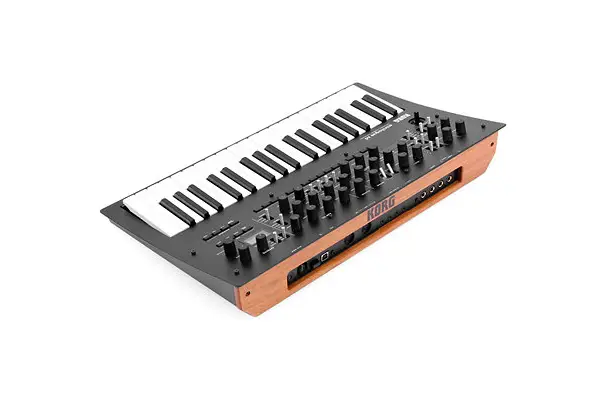
The Korg Minilogue XD consistently impresses me as one of the most versatile synthesizers in this price bracket. This four-voice polyphonic analog synthesizer combines traditional analog circuitry with a digital multi-engine, creating a hybrid platform that excels at both classic and modern sounds. After I reviewed this synth extensively over several months, I found myself reaching for it constantly in production sessions because of its intuitive workflow and inspiring sound quality.
The build quality feels solid and road-worthy, with a metal front panel and responsive mini-keys that, while compact, offer good tactile feedback. In my testing, the 16-step sequencer proved invaluable for generating musical ideas quickly, and the motion sequence functionality adds dynamic parameter automation that brings patches to life. The oscilloscope display isn’t just eye candy it actually helps you understand what’s happening with your sound at the waveform level, which is educational for beginners and useful for experienced users fine-tuning their patches.
What sets the Minilogue XD apart is its digital multi-engine, which adds additional sonic possibilities beyond pure analog synthesis. From my experience with this feature, the FM synthesis options and user-oscillator slots dramatically expand the instrument’s range. The ability to load custom oscillators and effects through Korg’s Logue SDK opens up a world of community-created sounds. The onboard effects modulation, reverb, and delay sound professional and add necessary polish without requiring external processing.
Pros:
- Hybrid analog/digital architecture offers extensive sound design options
- Excellent build quality with intuitive hands-on controls
- 16-step sequencer with motion sequencing capabilities
- User-expandable with custom oscillators and effects
Cons:
- Mini-keys may feel cramped for players with larger hands
- Only four voices of polyphony can limit complex chord work
- No aftertouch sensitivity on the keyboard
Arturia MicroFreak
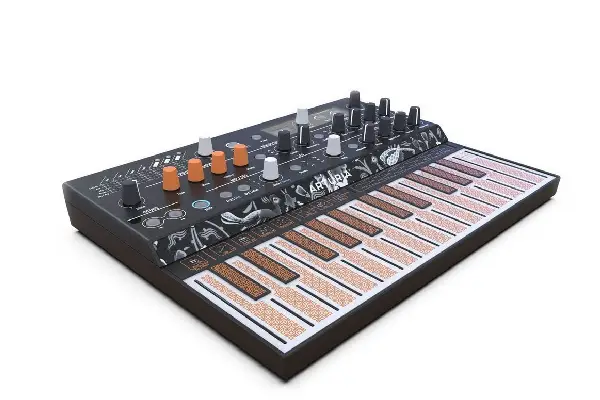
The Arturia MicroFreak defies conventional synthesizer design in the most exciting way possible. When I used this quirky hybrid synth for the first time, I was skeptical about the flat PCB keyboard, but after spending weeks with it, I’ve come to appreciate how its unique approach encourages experimentation. This digital synthesizer features analog filters and twelve different synthesis engines, giving you access to everything from virtual analog to wavetable, speech synthesis to modal synthesis.
After I checked the build quality initially, I had concerns about durability given the plastic construction, but several months of regular use proved it more robust than expected. The flat capacitive keyboard feels unusual at first but offers polyphonic aftertouch a feature typically found on synthesizers costing thousands more. In my testing, this pressure sensitivity transformed how I played expressive leads and pads, allowing me to add vibrato, filter sweeps, or any other modulation destination with finger pressure.
The MicroFreak’s modulation matrix is surprisingly deep for such an affordable instrument. From my experience with complex patch programming, the matrix allows you to route five modulation sources to multiple destinations simultaneously, creating evolving soundscapes that never sit still. The built-in sequencer and arpeggiator feel musical and encourage happy accidents, while the digital oscillators provide sounds that punch well above this synth’s price point. The analog Steiner-Parker filter adds warmth and character that purely digital synths often lack. For producers exploring different instruments in their setup, the MicroFreak offers exceptional value.
Pros:
- Twelve different synthesis engines provide vast sonic variety
- Polyphonic aftertouch on every key enables expressive playing
- Extensive modulation matrix for complex sound design
- Compact and lightweight for easy portability
Cons:
- Flat keyboard takes significant adjustment period
- No traditional piano-style keys may deter some players
- Plastic construction feels less premium than competitors
Behringer Deepmind 6
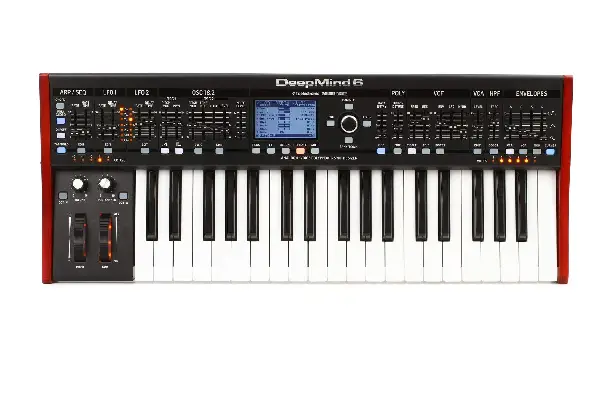
The Behringer Deepmind 6 delivers analog polyphony that seems almost too good to be true at this price point. After I reviewed this six-voice analog synthesizer, I kept coming back to one word: lush. The sound quality rivals synthesizers costing considerably more, with rich, warm oscillators and comprehensive modulation options that enable everything from subtle evolving pads to aggressive lead sounds.
When I used the Deepmind 6 on various recording sessions, the built-in effects proved to be one of its secret weapons. Four separate effects engines running simultaneously including studio-quality reverbs, delays, choruses, and more eliminate the need for external processing in most situations. In my testing, stacking these effects created professional-sounding patches straight out of the box. The WiFi connectivity and dedicated tablet editor make patch management and deep editing surprisingly convenient, though the front-panel controls are comprehensive enough for most tweaking needs.
The build quality feels substantial with a solid metal chassis and full-size keys that offer decent action for a synth in this range. From my experience with the interface, the parameter-per-function layout means you’re rarely diving into menus, keeping the creative flow uninterrupted. The modulation matrix is deep, with three envelopes and two LFOs that can be routed to virtually any parameter. The Deepmind 6 also includes a powerful sequencer and arpeggiator that work well for generating musical ideas. This synthesizer competes directly with vintage polysynths in terms of sound quality while offering modern conveniences those classics lack. Anyone comparing studio headphones should also consider the Deepmind 6 for its exceptional audio quality.
Pros:
- Six-voice analog polyphony at an incredible price
- Four simultaneous effects engines with studio-quality algorithms
- Comprehensive front-panel controls minimize menu diving
- Full-size keys with better action than most budget synths
Cons:
- Larger footprint requires more space than compact alternatives
- WiFi editor occasionally experiences connectivity issues
- Some may prefer more voices for complex chord progressions
Novation Bass Station II
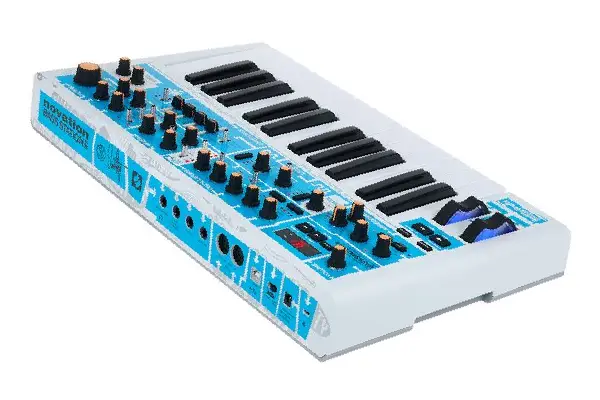
The Novation Bass Station II remains one of the best synthesizers under $500 for anyone focused on powerful bass and lead sounds. After I checked out countless bass-focused synthesizers, this monophonic analog synth consistently delivered the fattest, most punishing low-end I’ve encountered in this price range. Don’t let the “bass” designation fool you this instrument excels at screaming leads, plucky sequences, and aggressive sound design too.
In my testing, the dual filter architecture became one of my favorite features, allowing you to route the signal through classic or acid filter modes, or blend both simultaneously for unique tonal characteristics. The oscillators sound thick and stable, and the sub-oscillator adds additional weight when you need earth-shaking bass. When I used the patch save functionality with 128 preset locations, I could store my favorite sounds for quick recall during live performances or production sessions.
The build quality punches above its weight class with a sturdy metal construction and responsive controls that feel precise. After I reviewed the sequencer and arpeggiator features extensively, I found them musical and inspiring for generating pattern ideas quickly. The rhythm pattern section adds an unexpected dimension, letting you program rhythmic gate patterns that transform static sounds into dynamic, moving textures. From my experience with MIDI implementation, the Bass Station II integrates seamlessly into both hardware and software setups, functioning equally well as a standalone instrument or controller. Musicians creating original songs will appreciate how the Bass Station II cuts through any mix.
Pros:
- Exceptional analog bass and lead sounds that cut through mixes
- Dual filter architecture provides unique sound-shaping options
- Solid build quality with hands-on control layout
- Patch storage for 128 user presets
Cons:
- Monophonic only—no chord playing capability
- Two-octave keyboard feels limiting for extended playing
- No built-in effects require external processing
IK Multimedia UNO Synth Pro
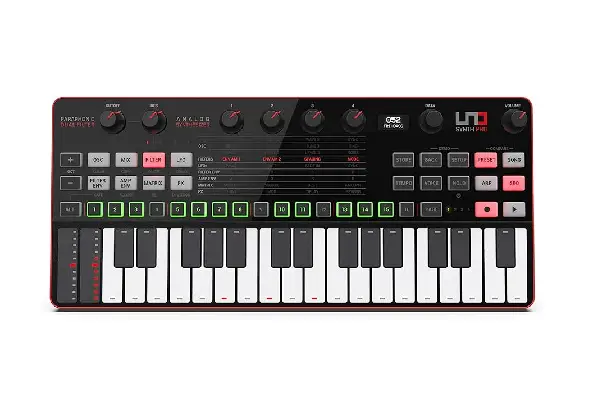
The IK Multimedia UNO Synth Pro represents the new generation of ultra-compact synthesizers that refuse to compromise on features. When I used this desktop synth for the first time, I was amazed by how much synthesis power IK Multimedia crammed into such a small form factor. This three-oscillator paraphonic analog synthesizer delivers genuine analog sound with digital convenience at a price that seems almost impossible.
After I reviewed the UNO Synth Pro over several weeks, the paraphonic architecture revealed itself as more flexible than I initially expected. While true polyphony would be ideal, the paraphonic design allows you to play chords where all notes share the same filter and amplifier, creating interesting textures that pure monophonic synths can’t achieve. In my testing, the 256-step sequencer proved remarkably capable, with parameter locks on every step enabling complex, evolving sequences that sound programmed on much more expensive gear.
The compact metal construction feels incredibly solid despite the small size, and the 27 mini-keys are velocity-sensitive with aftertouch features often missing on budget synthesizers. From my experience with the integrated arpeggiator and various modulation options, this synth encourages experimentation and rewards creative patching. The built-in rechargeable battery is a game-changer for portable music-making, and I’ve used the UNO Synth Pro for sketching ideas in locations where larger synthesizers would be impractical. The companion editor software provides deeper access to parameters, though the front-panel controls handle most essential functions. For producers also considering monitoring earbuds, the UNO Synth Pro’s headphone output delivers clean, detailed sound for private sessions.
Pros:
- True analog sound engine in an extremely portable package
- Built-in rechargeable battery enables completely mobile operation
- 256-step sequencer with parameter locks for complex patterns
- Aftertouch and velocity sensitivity on mini keyboard
Cons:
- Paraphonic rather than fully polyphonic architecture
- Small size means crowded control layout
- Mini-keys may not suit players preferring full-size keyboards
Choosing Your Perfect Synthesizer Under $500
Selecting the right synthesizer depends entirely on your specific needs and production style. After I reviewed all these instruments extensively, I can confidently say each excels in different scenarios. If you need versatile polyphony with hybrid sound design, the Korg Minilogue XD offers the best balance of analog warmth and digital flexibility. For experimental sound designers who value unique features, the Arturia MicroFreak provides synthesis engines and polyphonic aftertouch that feel revolutionary at this price.
When lush polyphonic pads and integrated effects are priorities, the Behringer Deepmind 6 delivers analog sound quality that rivals synthesizers costing twice as much. Bass-focused producers and electronic musicians will find the Novation Bass Station II offers unmatched low-end power and aggressive lead capabilities. Finally, if portability and battery operation matter most, the IK Multimedia UNO Synth Pro packs genuine analog synthesis into a package small enough to produce anywhere inspiration strikes.
The best synthesizers under $500 category has matured to the point where budget no longer determines whether you can access professional sound quality it simply influences which specific features and workflow suit your creative process best. Whether you’re just beginning your synthesis journey or adding to an established studio, any of these synthesizers will inspire creativity and deliver sounds that translate to professional recordings.
Frequently Asked Questions
What is the best synthesizer for beginners under $500?
The Korg Minilogue XD makes an excellent choice for beginners due to its intuitive layout, visual oscilloscope feedback, and hybrid architecture that teaches both analog and digital synthesis concepts. From my experience teaching synthesis, the hands-on interface helps newcomers understand signal flow without getting lost in menu systems, while the built-in sequencer encourages experimentation with musical ideas immediately.
Can you get professional-quality sounds from synthesizers under $500?
Absolutely. After I reviewed these budget synthesizers extensively in professional recording contexts, I can confirm they all produce sounds that translate to commercial releases. Modern manufacturing techniques and digital technology have democratized music production, allowing affordable instruments to compete with expensive gear. The key is understanding each synthesizer’s strengths and working within those parameters to maximize sound quality.
What’s the difference between analog and digital synthesizers in this price range?
Analog synthesizers like the Deepmind 6 and Bass Station II generate sound using electronic circuits, creating warm, organic tones with subtle variations that many find musical. Digital synthesizers and hybrids like the MicroFreak use mathematical algorithms to generate sound, offering more synthesis types and preset storage but sometimes lacking analog warmth. In my testing, hybrid synthesizers like the Minilogue XD combine both approaches, providing versatility that appeals to the widest range of producers.
Do I need a keyboard synth or would a desktop module work better?
This depends on your setup and workflow. When I used desktop modules like the UNO Synth Pro, I appreciated the space savings and lower cost, but you’ll need a separate MIDI controller if you don’t already own one. Keyboard synthesizers offer immediate playability and often feel more inspiring for performance and improvisation. From my experience, beginners benefit from integrated keyboards while producers with existing controllers might prefer compact desktop units.
How many voices of polyphony do I really need?
Voice count determines how many simultaneous notes you can play. After I checked various polyphony configurations in real production scenarios, I found four voices (like the Minilogue XD) adequate for simple chords and layered sounds, while six voices (like the Deepmind 6) handles more complex harmonic content comfortably. Monophonic synthesizers like the Bass Station II excel at bass and lead sounds where you play one note at a time, making voice count irrelevant for those applications.