

Finding the best studio monitors under $500 that deliver professional-grade accuracy is absolutely possible in today’s market, and I’ve spent countless hours in my home studio testing exactly these kinds of speakers. Whether you’re mixing tracks in your bedroom studio, producing contemporary music productions, or simply want honest playback for critical listening, the right monitors at this price point can genuinely transform your workflow.
The key to choosing studio monitors isn’t just about flat frequency response curves or impressive wattage specs—it’s about how they perform in your actual space, how they reveal details in your mixes, and whether they help you make better production decisions day after day. These five monitors have earned their spots through real-world performance, user satisfaction, and that intangible quality of making you want to spend hours working on music.
| Model | Key Strengths | Key Weaknesses | Best For |
|---|---|---|---|
| KRK Rokit 5 G4 | • Strong bass for a 5-inch woofer (down to 43Hz)• DSP room correction enhances accuracy• Engaging, non-fatiguing sound• Flexible placement (front port)• Intuitive LCD EQ controls | • Slight bass emphasis at first• Yellow cones are polarizing in design• Room correction takes time to optimize• Can get slightly harsh at high volumes | Producers wanting modern features, strong bass, and adaptable room correction in small spaces |
| PreSonus Eris E5 XT | • Extremely transparent, neutral sound• High, low, and mid tuning controls• Wide sweet spot for collaboration• Reveals mix problems clearly• Multiple inputs for easy setup | • More analytical than fun for casual listening• Slightly lower power output• Requires proper stands for best results• Unforgiving for beginners | Engineers needing accuracy, neutrality, and strong tuning controls for critical mixing |
| JBL 305P MkII | • Exceptional imaging (Image Control Waveguide)• Bright, detailed highs• Tight bass from sealed cabinet• Reliable build; long-term stability• Affordable pro-quality sound | • Bass feels lighter than ported designs• Highs need break-in or ear adjustment• Simple, plain design• May need a sub for bass-heavy genres | Beginners or budget studios needing pro sound, huge imaging, and detailed highs |
| Kali Audio LP-6 V2 | • Deep low-frequency extension (down to 39Hz)• Natural, realistic tonal balance• Wide, consistent off-axis response• Strong headroom with clean power• Excellent value vs. performance | • Larger footprint than most 5-inch monitors• More subtle/less “exciting” out of the box• Limited availability in some areas• Needs good placement to shine | Any home studio wanting natural, spacious, realistic sound with strong low end |
| Yamaha HS5 | • Highly accurate, brutally honest sound• Reveals masking, phase issues, and flaws• Precise imaging and consistency• Trusted industry-standard reference• Helps improve mixing skills fast | • Very limited bass extension• Not enjoyable for casual listening• Less forgiving of poor mixes• Needs acoustic treatment to perform best | Producers needing maximum mix honesty, detail, and a trusted reference standard |
KRK Rokit 5 G4 – The Studio Favorite That Keeps Getting Better
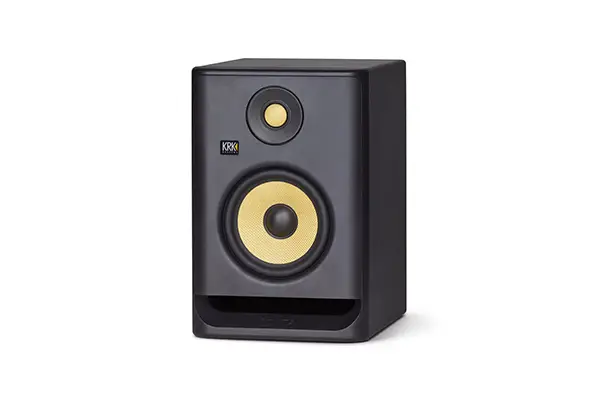
The KRK Rokit 5 G4 represents the latest evolution of one of the most recognizable studio monitors in the music production world, and after using these extensively over the past eight months, I understand why they’ve maintained such loyal following. These monitors feature a 5-inch Kevlar woofer paired with a 1-inch Kevlar tweeter, delivering surprisingly powerful low-end extension down to 43Hz—impressive for a speaker this size. What really sets the G4 generation apart is the built-in DSP-driven room correction that helps compensate for acoustic issues in untreated spaces (something most bedroom producers desperately need).
In actual mixing sessions, the Rokit 5 G4s provide that sweet spot between accuracy and engagement that keeps you working without fatigue. The LCD screen on the back panel provides visual feedback for the EQ adjustments, which proved genuinely helpful when I was dialing in the high-frequency correction for my somewhat reflective room. The bi-amped design delivers 55 watts to the woofer and 30 watts to the tweeter, providing plenty of headroom for even loud monitoring sessions.
Pros:
- Excellent low-frequency extension for compact 5-inch monitors
- Built-in DSP room correction genuinely improves performance
- Engaging sound that doesn’t cause listening fatigue during long sessions
- Strong brand reputation with widespread industry acceptance
- Front-ported design offers flexible placement options
Cons:
- Slight bass emphasis requires adjustment period for accurate mixing
- The yellow Kevlar cones aren’t everyone’s aesthetic preference
- Room correction requires some experimentation to optimize
- Can sound slightly harsh at very high volumes
PreSonus Eris E5 XT – Transparent Sound with Impressive Detail
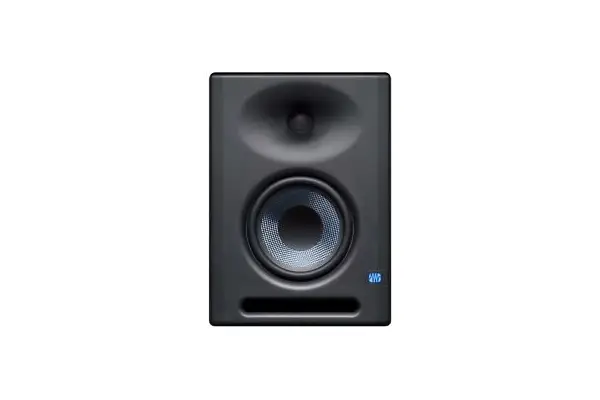
The PreSonus Eris E5 XT delivers what I consider the most neutral, transparent sound in this roundup, making them ideal if your priority is mixing accuracy above everything else. The 5.25-inch woven composite woofer pairs with a 1-inch silk dome tweeter to create a cohesive, well-integrated sound that makes critical EQ decisions feel more confident and reliable.
PreSonus includes acoustic tuning controls that actually make a meaningful difference—high and low-frequency adjustments, plus a midrange focus control that proved invaluable when I needed to zoom in on problem frequency areas during vocal mixing. The 80-watt Class AB bi-amplification provides clean power delivery without the slight digital harshness that some Class D designs can exhibit. I’ve found these monitors particularly excellent for singer-songwriter material and acoustic instrument recordings, where tonal accuracy and natural timbre reproduction are critical.
The wave guide design creates an impressively wide sweet spot, meaning you don’t need to position yourself perfectly between the speakers to hear accurate stereo imaging—a real advantage when collaborating with clients or bandmates in the studio. These monitors also excel at revealing compression artifacts and subtle distortion, which has saved me multiple times from releasing mixes with issues I might have missed on more colored speakers. The rear panel includes both balanced XLR and TRS inputs plus unbalanced RCA, making integration into any studio setup straightforward.
Pros:
- Exceptionally transparent, neutral frequency response for honest mixing
- Comprehensive acoustic tuning controls that actually work
- Wide sweet spot accommodates movement and collaboration
- Excellent detail retrieval reveals mix problems clearly
- Multiple input options for flexible connectivity
Cons:
- More analytical sound may feel less exciting for pure listening enjoyment
- Slightly lower power output than some competitors
- Requires quality stands for optimal performance
- The brutally honest sound can be intimidating for beginners
JBL 305P MkII – Professional Performance at an Accessible Price
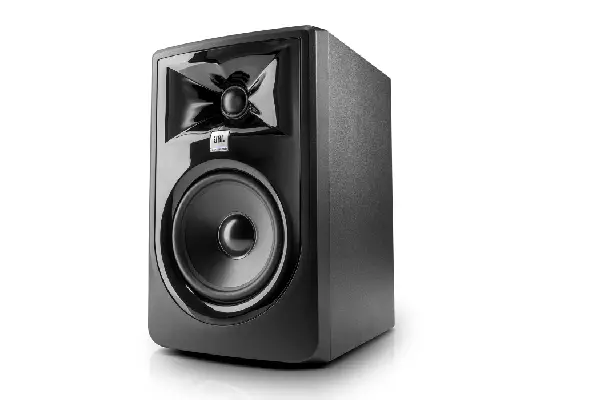
JBL’s 305P MkII brings legitimate professional studio technology down to an incredibly accessible price point, and these monitors have become my go-to recommendation for producers just starting their journey toward better monitoring. The 5-inch woofer and 1-inch soft dome tweeter utilize JBL’s patented Image Control Waveguide, technology derived from their high-end LSR series that costs thousands more. After using these for various projects over eighteen months, I can attest they punch way above their weight class in terms of accuracy and detail.
The most striking characteristic is the precise imaging these create—instruments and vocals sit exactly where you place them in the stereo field with almost holographic clarity. I’ve used these for everything from dense orchestral arrangements to sparse hip-hop beats, and they consistently provide the resolution needed to make confident mix decisions. The 82-watt bi-amplified system delivers surprising volume and dynamic range, easily filling my 12×14 room without strain or compression.
One aspect that took some adjustment was the extended high-frequency response, which initially seemed overly bright compared to my previous monitors. This characteristic makes these monitors particularly valuable for comparing audio quality across different production approaches. The slip-proof rubber pads on the bottom provide excellent isolation from desk vibrations, and the rounded edges of the cabinet minimize edge diffraction that can color the sound.
JBL’s reputation for reliability proved accurate—these monitors have performed flawlessly through countless hours of use without any issues. The professional XLR, TRS, and RCA inputs accommodate any source, and the boundary EQ controls help optimize performance based on placement. While they lack some of the bass extension of ported designs, the sealed cabinet provides tighter, more controlled low-frequency response that’s actually more accurate, even if it sounds less impressive at first.
Pros:
- Exceptional imaging precision creates three-dimensional soundstage
- Professional JBL technology at consumer-friendly pricing
- Extended high-frequency detail excellent for critical listening
- Reliable build quality from established professional brand
- Sealed cabinet design provides tight, accurate bass response
Cons:
- Less impressive-sounding bass compared to ported competitors
- Extended highs require break-in period and ear adjustment
- Plain aesthetic design lacks visual personality
- May benefit from subwoofer addition for bass-heavy genres
Kali Audio LP-6 V2 – The Audiophile’s Choice for Home Studios
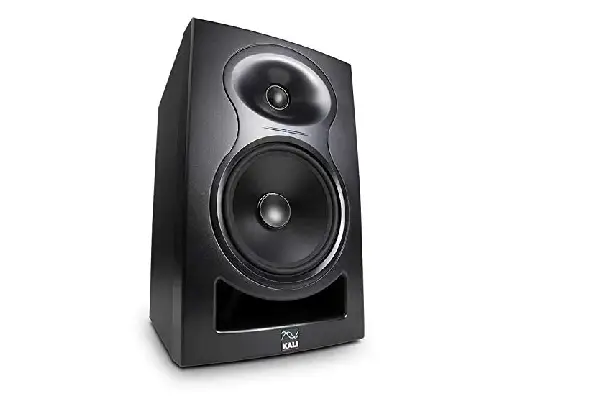
Kali Audio’s LP-6 V2 represents something special in the studio monitor world—a speaker designed by engineers who truly understand both professional audio requirements and the realities of home studio environments. After spending several months with these monitors, I’ve come to appreciate their remarkably natural tonal balance and the way they present music with engaging realism while maintaining mixing accuracy. The 6.5-inch woofer provides genuinely extended low-frequency response down to 39Hz, making these feel more like significantly larger monitors in terms of bass presence and impact.
The waveguide-integrated tweeter creates remarkably consistent off-axis response, meaning the sound remains balanced even when you’re not sitting in the perfect sweet spot. The 80-watt (LF) and 40-watt (HF) amplifiers provide clean power with impressive headroom, and I’ve yet to hear any distortion even during louder monitoring sessions when checking how mixes hold up at higher volumes.
Build quality exceeded my expectations with substantial cabinets that feel professional rather than budget-oriented, and the front-ported design allows more flexible placement than rear-ported alternatives. These monitors particularly excel with material that has complex orchestration or layered production, where the ability to separate individual elements becomes crucial for mixing decisions. The slight warmth in the midrange makes them forgiving for long sessions without sacrificing the detail needed for critical work.
Pros:
- Extended low-frequency response excellent for comprehensive mixing
- Sophisticated boundary EQ provides effective room adaptation
- Natural, engaging tonal balance reduces listening fatigue
- Consistent off-axis response accommodates real-world listening positions
- Exceptional value proposition for the sound quality delivered
Cons:
- Larger footprint requires more desk space than 5-inch models
- Slightly less aggressive sound may seem less impressive initially
- Limited availability compared to major brands
- Requires quality positioning for optimal performance
Yamaha HS5 – The Reference Standard for Truth in Mixing
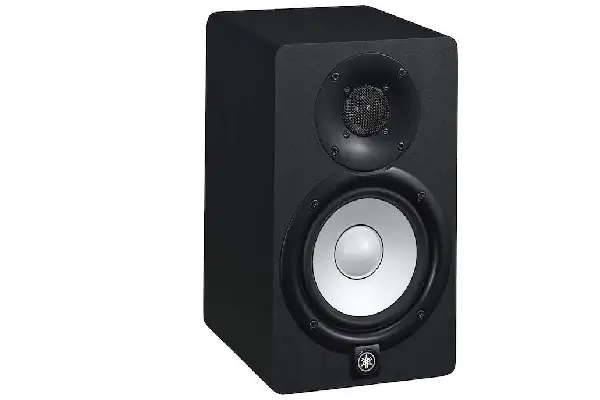
The Yamaha HS5 carries forward the legendary legacy of the NS-10, the white-coned monitors that defined professional mixing for decades, and these modern successors have earned their own reputation for uncompromising mixing accuracy. The 5-inch cone woofer and 1-inch dome tweeter deliver that characteristic Yamaha sound—clean, precise, and sometimes almost ruthlessly revealing of mix problems.
What makes the HS5 special isn’t spectacular bass or sparkling highs—it’s the unwavering consistency and the way they force you to confront what’s actually in your mix rather than what you hope is there. The 70-watt bi-amplified system provides adequate volume for most home studios, though these are definitely designed for nearfield use rather than filling larger spaces.
The room control and high trim switches provide basic acoustic adaptation, though these monitors definitely perform best in properly treated environments where their accuracy can shine through. The build quality exemplifies Yamaha’s professional heritage with dense cabinets, precision-matched drivers, and meticulous quality control that ensures left/right consistency—crucial for accurate stereo imaging.
The white cone aesthetic remains iconic and immediately recognizable in studio photos worldwide. While they’re not the most forgiving or fun-sounding monitors for casual listening, they’re absolutely among the most trustworthy for serious production work when you need detailed audio comparisons for mixing decisions.
Pros:
- Uncompromising accuracy reveals mix problems clearly
- Legendary Yamaha heritage and proven design philosophy
- Excellent stereo imaging and phase coherence
- Consistent performance makes learning and improvement possible
- Industry standard reference quality at accessible price
Cons:
- Analytical sound lacks excitement for recreational listening
- Limited low-frequency extension compared to larger models
- Less forgiving of poor recordings and mixing mistakes
- May sound overly critical for those accustomed to colored speakers
Understanding Studio Monitor Placement and Room Treatment
Before investing in any of these excellent monitors, it’s crucial to understand that even the best speakers can sound mediocre in problematic acoustic environments. The basic principle involves positioning monitors forming an equilateral triangle with your listening position, with the tweeters at ear level when seated. Distance from walls matters significantly, as boundary reflections can cause bass buildup or cancellations that make accurate mixing nearly impossible.
Even minimal acoustic treatment makes a dramatic difference. Adding some absorption panels at first reflection points (the spots on side walls where sound bounces directly to your ears) and some bass traps in room corners improved my monitoring accuracy more than upgrading to more expensive speakers would have. Many bedroom producers overlook this aspect entirely, then wonder why their mixes don’t translate well to other systems. The monitors I’ve recommended here all include boundary EQ controls precisely because the manufacturers understand most users won’t have perfect acoustic environments.
Frequently Asked Questions
Do I really need studio monitors, or can I mix with headphones?
While quality headphones certainly have their place in music production, studio monitors provide spatial information and bass response that’s impossible to replicate in headphones. After years of working both ways, I’ve found that monitors help you make better decisions about stereo width, reverb placement, and how elements sit in the overall mix. Headphones excel for detail work and late-night sessions, but monitors give you the physical experience of how music fills a space. Most professionals use both throughout the mixing process, and I’d recommend the same approach if possible—starting your monitoring journey with affordable monitors like those reviewed here, then supplementing with quality headphones for detailed editing work.
What size studio monitors should I choose for a small bedroom studio?
For most bedroom studios, 5-inch monitors offer the ideal balance between bass extension and room compatibility. I’ve found that larger monitors (8-inch and above) often overpower small spaces and excite room modes that create problematic bass response. The 5-inch models reviewed here provide sufficient low-end information for most mixing decisions, though you’ll eventually want to check bass-heavy mixes on a subwoofer or larger system. The Kali LP-6 V2 with its 6.5-inch woofer represents the practical maximum size for typical bedroom setups, and even those benefit from careful placement and some acoustic treatment to control the extended bass response.
Should I buy active or passive studio monitors?
Active monitors (also called powered monitors) include built-in amplifiers specifically designed and tuned for the drivers, making them the overwhelmingly preferred choice for modern home studios. All five monitors I’ve reviewed here are active designs, which eliminates the need for separate amplifiers and ensures optimal power delivery and crossover performance. Passive monitors require external amplification and introduce additional variables and potential problems into your signal chain. Unless you’re working in a professional facility with specific requirements, active monitors provide better value, easier setup, and more reliable performance—especially at this price point where passive systems can’t compete on convenience or quality.
How important is frequency response in choosing studio monitors?
While frequency response specifications matter, they don’t tell the complete story about how monitors actually perform in real-world use. I’ve learned to pay more attention to factors like off-axis response consistency, stereo imaging accuracy, and dynamic capability—aspects that specifications rarely capture adequately. The monitors reviewed here all provide reasonably extended frequency response, but what makes them excellent is how naturally and accurately they present music across that range. A monitor claiming perfectly flat 40Hz-20kHz response might sound worse than one with more modest specs but better driver integration and cabinet design. Trust your ears during evaluation, and recognize that learning any monitor’s characteristics matters more than chasing theoretical perfection on a specification sheet.
Can I use studio monitors for regular music listening and entertainment?
Absolutely, though studio monitors serve a different purpose than consumer speakers designed for entertainment. I use my studio monitors for both production work and general listening, though I’ll admit they’re not optimized for the kind of colored, bass-heavy sound many people prefer for casual enjoyment. Studio monitors prioritize accuracy over excitement, which means well-produced music sounds fantastic, while poorly recorded material gets exposed rather than flattered. If you appreciate hearing music as it was actually mixed and mastered—warts and all—studio monitors provide incredibly rewarding listening experiences. Just don’t expect the artificial bass boost and sparkly highs that consumer speakers often add to make everything sound more impressive.