

When you’re spending 8, 10, sometimes 12 hours in the studio perfecting that mix or layering synthesizers until your track finally breathes, the best studio chairs for producers become more than just furniture—they become essential production tools. I learned this the hard way after a marathon session left me with back pain that derailed my creativity for days.
The right studio chair doesn’t just keep you comfortable during those extended sessions when you’re chasing the perfect compressor settings or dialing in automation curves. It actually influences how you work, how you hear, and ultimately, the quality of music you create. Poor seating can cause fatigue that clouds your judgment on mix decisions, while a properly designed chair keeps you alert and focused throughout the critical listening process.
| Chair | Best For | Key Strengths | Main Limitations |
|---|---|---|---|
| Herman Miller Aeron | Professionals who spend long hours mixing or producing | Best-in-class lumbar support, breathable Pellicle mesh, extreme adjustability, legendary durability | Very expensive, minimal cushioning, adjustments can feel complex |
| Steelcase Gesture | Producers who change posture often while working | Spine-adaptive backrest, moving armrests, excellent seat depth and recline control | Expensive, large footprint, heavy, armrests can feel overly sensitive |
| Secretlab Titan Evo | Producers who want premium support at a lower price | Dense long-lasting foam, magnetic lumbar support, deep recline, strong value | Gaming look, bulky size, firm feel not for everyone |
| UPLIFT Enzo | Home-studio users who want quality without premium pricing | Smooth recline, compact size, good back support, excellent value | Mesh not as premium, fewer armrest and recline adjustments |
| IKEA MARKUS | Beginners and budget studios | Very affordable, tall back support, simple and reliable design | Very limited adjustability, foam and fabric wear faster, fixed lumbar |
Herman Miller Aeron Chair
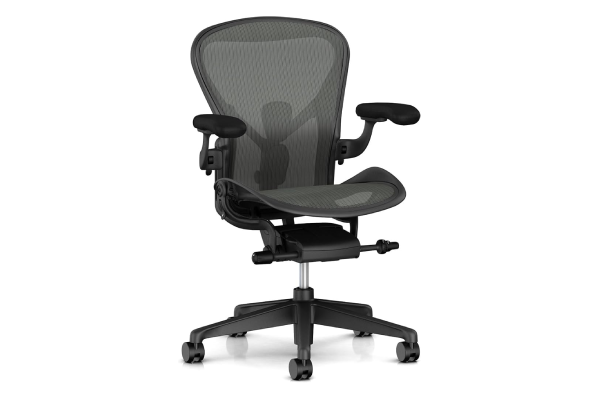
The Herman Miller Aeron has achieved almost legendary status in professional studios, and after using one as my primary chair for over two years, I understand why engineers and producers continue recommending it despite the premium price tag. This isn’t just ergonomic excellence on paper—it’s a chair that genuinely adapts to your body and working style in ways that become more apparent the longer you use it.
The PostureFit SL lumbar support system is where the Aeron truly separates itself from competitors. Unlike the generic lumbar cushions found on most chairs, this dual-pad system independently adjusts to support both your lower back and sacral region. The 8Z Pellicle mesh suspension is equally impressive—it distributes weight so effectively that pressure points simply don’t develop, even during marathon production sessions.
Build quality reflects the investment—every component feels engineered to last decades rather than years. The aluminum frame and reinforced mesh have shown zero degradation despite daily use, and the hydraulic cylinder still responds with the same smooth precision as day one. If you’re comparing headphones at headphones and taking that decision seriously, your chair deserves the same consideration since you’ll use it far more frequently.
Pros:
- Exceptional lumbar support system that genuinely prevents fatigue during extended sessions
- Breathable mesh prevents heat buildup during intense production work
- Extensive adjustability accommodates different body types and working positions
- Professional-grade build quality that justifies long-term investment
- Industry-standard presence means resale value remains strong
Cons:
- Premium pricing puts it out of reach for bedroom producers on tight budgets
- Mesh suspension requires break-in period (about two weeks) before optimal comfort
- Minimal padding may not suit everyone’s preference, especially those transitioning from cushioned chairs
- Complex adjustment system can overwhelm users initially
Steelcase Gesture
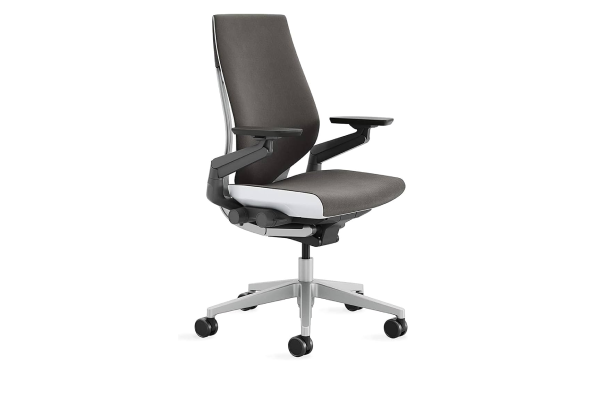
The Steelcase Gesture emerged from research into how we actually work with technology, and that research-driven design philosophy resonates throughout every aspect of this chair. The Gesture accommodates all these movements with an almost uncanny intuitiveness.
The 3D LiveBack technology is genuinely innovative rather than marketing hyperbole. The backrest doesn’t just tilt—it actually mimics the natural movement of your spine, flexing and adjusting as you shift positions. The synchronized armrests move naturally with the backrest, so your arms remain supported whether you’re leaning forward to automate effects or reclining to evaluate the overall balance of a mix.
What distinguishes the Gesture in studio environments is how it supports the wide range of postures that music production demands. The seat depth adjustment is particularly well-executed, accommodating different leg lengths without that annoying gap or pressure point behind the knees. The recline tension dial offers finer control than most chairs, letting me set the perfect resistance for my body weight—firm enough for stability during active work, yet relaxed enough for those analytical listening moments.
Pros:
- Adaptive spine-mimicking backrest supports constantly shifting production postures
- Coordinated armrests maintain support throughout full range of motion
- Excellent seat depth adjustment accommodates various body proportions
- Sophisticated mechanism that feels intuitive rather than complicated
- High-quality construction with premium materials throughout
Cons:
- Price point comparable to Herman Miller makes it a significant investment
- Wider footprint requires more floor space than compact alternatives
- Some users find the armrest adjustments too sensitive, requiring frequent readjustment
- Heavier weight (around 60 lbs) makes repositioning within studio space more difficult
Secretlab Titan Evo
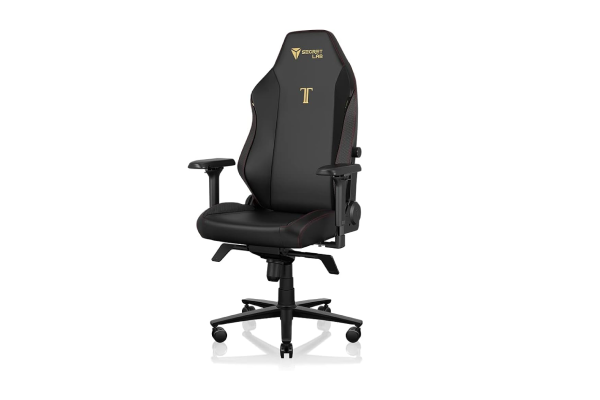
When Secretlab started making serious ergonomic improvements to their gaming chair designs, I was skeptical about whether gaming chairs could genuinely work for professional studio use. The cold-cure foam composition provides a firmness that initially feels almost too supportive, but this density is exactly what maintains consistent comfort during those marathon sessions. Unlike cheaper foam that compresses and loses support over time, this material has retained its structure perfectly after hundreds of hours of use. The integrated lumbar support system uses a magnetic adjustment mechanism that lets me dial in the exact amount of lower back support I need—more support when I’m actively mixing, slightly less when I’m in relaxed listening mode.
The aesthetic definitely skews toward gaming culture with bold styling and color options, which might not suit every studio environment (especially if you’re working with artists who expect a more traditional professional setup). That said, the build quality and material choice—particularly the NEO Hybrid Leatherette—has proven remarkably durable and easy to clean, an underrated consideration when you’re eating lunch at your workstation between sessions. If you’re exploring other gear for your studio setup at instrument, the Titan Evo represents a similar value proposition: professional-level performance at a more accessible price point.
Pros:
- Dense cold-cure foam maintains support far longer than standard chair padding
- Magnetic lumbar adjustment offers precise, easily repeatable positioning
- Extended recline range excellent for critical listening evaluation
- Significantly more affordable than Herman Miller or Steelcase options
- Easy assembly process with clear instructions and quality hardware
Cons:
- Gaming aesthetic may not align with professional studio image
- Firm cushioning requires break-in period and may not suit everyone’s preferences
- Bulkier design takes up more space than streamlined office chairs
- Armrests, while adjustable, are slightly larger than ideal for some production workflows
UPLIFT Enzo Chair
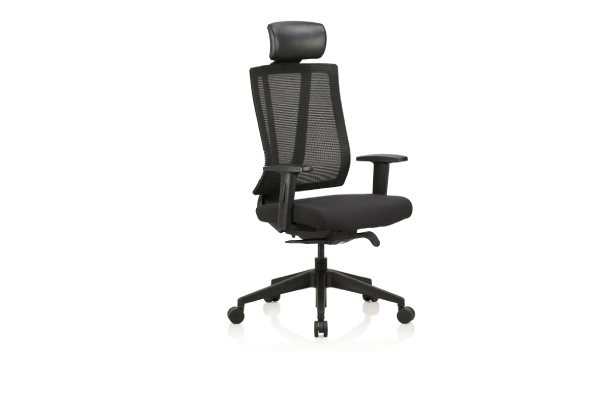
The UPLIFT Enzo caught my attention because it represents a philosophy I’ve increasingly embraced in my own studio: professional-grade performance shouldn’t require mortgage-level investment. The Italian-designed mechanism provides a smoothness in the recline and tilt functions that rivals chairs costing considerably more. There’s a precision to how the chair responds to weight shifts that makes micro-adjustments natural and intuitive—essential when you’re constantly moving between different tasks in your production workflow. The contoured backrest offers excellent support through the mid and upper back regions, areas that bear significant strain during extended periods of focused listening through monitors or when you’re evaluating complex arrangements.
The mesh back provides adequate breathability without sacrificing support structure, though it doesn’t quite match the sophisticated suspension of the Aeron’s Pellicle mesh. Assembly was straightforward, and the included tools were actually usable (a rarity in flat-pack furniture). For producers comparing different production tools at earbuds who understand that value means balancing performance against cost, the Enzo embodies that same smart prioritization.
Pros:
- Outstanding value proposition with performance exceeding price point
- Smooth, precise mechanism that handles daily production demands reliably
- Thoughtful feature set focusing on adjustments that actually matter
- Compact footprint works well in smaller home studios
- Excellent customer service and warranty support from UPLIFT
Cons:
- Mesh quality doesn’t quite match premium options, showing slight loosening after heavy use
- Armrests offer less adjustment range than higher-end alternatives
- Maximum recline angle is more limited than competitors
- Build quality is very good but doesn’t achieve the tank-like permanence of Herman Miller
IKEA MARKUS
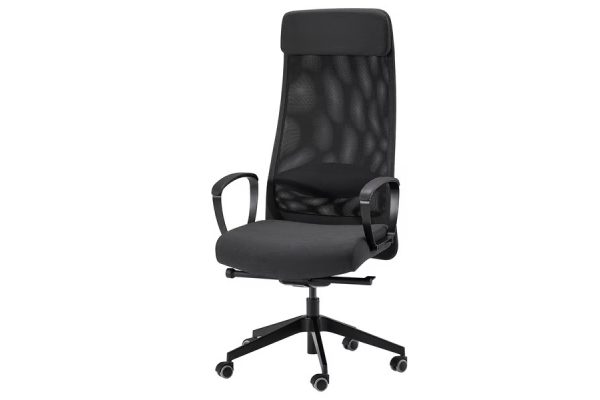
I initially tested the IKEA MARKUS out of curiosity more than expectation—could a chair at this price point genuinely support professional studio work? After incorporating it into my workspace rotation for over six months, I’ve gained tremendous respect for what IKEA achieved here. This isn’t a chair that competes with the Aeron or Gesture on features or adjustability, but it solves the fundamental challenge of extended comfortable sitting far better than its price suggests possible.
The tall backrest design is immediately noticeable and provides support all the way up to shoulder level, something even some premium chairs neglect. For producers who prefer a more upright working position (which I’ve found beneficial for maintaining alertness during critical mixing decisions), that extended back support prevents the shoulder fatigue that accumulates during long sessions. The integrated lumbar curve is fixed rather than adjustable, which sounds limiting but actually works well for average body types—I’m 5’10” and find the curve hits exactly where it should.
Where the MARKUS shows its price point is in long-term adjustability to your body and materials durability. The fabric upholstery has developed some pilling after heavy use, and the foam cushioning has compressed noticeably (though it remains functional). The lack of seat depth adjustment means it won’t optimize for everyone, and taller or shorter producers might find the proportions don’t quite align. Still, for emerging producers setting up their first serious workspace, or as a secondary chair in a multi-station facility, the MARKUS delivers remarkable value. When you’re investing in your initial studio setup alongside tracking down great music at songs, this chair lets you maintain comfort without derailing your equipment budget.
Pros:
- Exceptional value—delivers functional comfort at accessible price point
- Tall backrest provides shoulder-level support rare in this category
- Simple, reliable mechanism with minimal points of potential failure
- Readily available with easy replacement if needed
- Surprisingly decent build quality for the investment
Cons:
- Extremely limited adjustability beyond basic height and tilt
- Fixed armrests won’t accommodate all desk heights or working positions
- Foam cushioning compresses faster than premium alternatives
- Basic materials show wear more quickly under heavy daily use
- No lumbar adjustment means fit is hit-or-miss depending on body proportions
Choosing the Right Studio Chair for Your Workflow
Selecting among the best studio chairs for producers involves understanding how your specific workflow, physical needs, and studio environment intersect. The chair that’s perfect for a mixing engineer spending twelve consecutive hours in critical listening mode might not suit a producer who’s constantly jumping between instruments, MIDI controllers, and outboard gear. I’ve found that the best approach is identifying your primary working position and the secondary positions you frequently adopt, then prioritizing chairs that excel in those specific scenarios.
Budget is obviously a significant factor, but I’ve learned to think about chair investment differently than other studio gear. Your interface, monitors, and instruments all get used for specific tasks during your session, but your chair supports literally everything you do for the entire time you’re working. When viewed through that lens, investing in proper seating becomes one of the smartest decisions for both your health and your productivity. The physical fatigue that poor seating creates directly impacts your ability to make good creative and technical decisions, especially during the later hours of extended sessions when ears and judgment are already fighting fatigue.
Studio space considerations matter more than many producers initially realize. In my 12×14 home studio, the footprint difference between the compact MARKUS and the wider Steelcase Gesture significantly affected room functionality and movement between equipment stations. If you’re working in a dedicated professional facility with ample space, chair size is less critical. In a bedroom studio where every square foot counts, a more compact chair might preserve the ability to comfortably access all your gear.
Frequently Asked Questions
Are studio chairs different from regular office chairs?
Studio chairs aren’t necessarily a distinct category, but the best options for music production prioritize features that matter specifically for audio work. The key differences I’ve noticed center on how studio work involves more dynamic movement between active production tasks and passive critical listening evaluation. You need a chair that supports both forward-leaning concentration during detailed editing and relaxed reclined positions during mix evaluation, often shifting between these postures dozens of times per session. The best studio chairs offer smooth, precise mechanisms that handle these constant adjustments without disrupting your workflow or focus.
How much should I spend on a studio chair?
I typically recommend allocating 5-10% of your total studio setup budget toward seating, though that percentage shifts based on your situation. For a producer investing $15,000 in a complete studio, spending $1,000-1,500 on a chair like the Aeron or Gesture makes sense and provides professional-grade support for years of daily use. For someone building a $3,000 starter setup, the IKEA MARKUS at under $300 or the UPLIFT Enzo around $500 delivers adequate comfort without compromising funds needed for essential audio equipment. What I’ve learned is that skimping too much on seating creates false economy—the back problems and reduced productivity from poor seating cost far more than the chair savings.
Do I really need lumbar support for music production?
After years of studio work both with and without proper lumbar support, my answer is an emphatic yes, especially for sessions extending beyond 3-4 hours. The forward-leaning posture that music production naturally encourages—whether you’re adjusting plugins, programming MIDI, or operating hardware—puts significant strain on the lower back. Adequate lumbar support maintains the natural curve of your spine and distributes load properly, preventing the fatigue that accumulates into chronic pain. I’ve noticed that proper support doesn’t just reduce physical discomfort; it actually helps me maintain better listening focus because I’m not constantly shifting position to manage back pain.
Can gaming chairs work for professional studio use?
Gaming chairs have evolved considerably, and options like the Secretlab Titan Evo demonstrate that the line between gaming and professional seating has blurred significantly. The key is distinguishing between genuinely ergonomic gaming chairs and cheaper options that prioritize aesthetics over functionality. A well-designed gaming chair offers the adjustability, build quality, and long-term comfort that studio work demands, often at more accessible price points than traditional office furniture. The main consideration is whether the aesthetic fits your studio environment, particularly if you’re working with clients who might perceive gaming chairs as less professional than traditional options.
How often should I replace my studio chair?
Chair replacement depends more on performance degradation than arbitrary timelines. I evaluate my chair’s condition every 6-12 months by checking several key indicators: does the gas cylinder still hold height reliably, has foam cushioning compressed to the point where I can feel the base structure, do adjustment mechanisms still operate smoothly, and most importantly, am I experiencing increased physical fatigue during sessions? Premium chairs like the Aeron or Gesture can easily last 10-12 years with proper care, while budget options might need replacement every 3-5 years. The MARKUS I’ve been testing shows noticeable wear after six months of heavy use, which suggests a 2-3 year realistic lifespan for serious daily studio work.