

Loop stations have fundamentally changed how guitarists approach live performance and songwriting. After spending countless hours with various loop pedals in both studio and stage environments, I’ve developed a deep appreciation for how these devices can transform a solo guitarist into a full band. The right loop station doesn’t just record and playback—it becomes an extension of your creative process, enabling layered soundscapes that were once impossible for a single performer.
| Looper | Best For | Key Strengths | Main Limitations |
|---|---|---|---|
| Boss RC-505 MKII | Tabletop performers, vocalists, and multi-instrument loopers | Five independent tracks, long 13-hour recording time, 49 effects, USB audio interface, 99 phrase memories | Expensive, takes desk space, not foot-controlled, learning curve |
| TC Electronic Ditto X4 | Guitarists who want simple, creative dual-loop control | True stereo, two independent loops, tape-style effects, loop decay, compact pedalboard design | Only 5 minutes per loop, limited effects, no rhythms or metronome |
| Electro-Harmonix 22500 | Guitarists building layered stereo loop performances | Dual-stereo loops, 12 minutes per track, reverse & octave effects, 100 memories, SD card expansion | Large footprint, no built-in rhythm, needs extra foot controller for full control |
| Boss RC-5 | Guitarists needing a powerful but compact looper | 13 hours of recording, 57 rhythm patterns, 99 memories, USB support, excellent sound quality | Single footswitch, no stereo input, small screen, limited effects |
| Pigtronix Infinity Looper 3 | Professional guitarists and advanced live loop performers | Dual channels, 24-bit/48kHz audio, MIDI sync, loop aging, independent effects loops | Very expensive, large pedalboard footprint, no built-in rhythms |
Boss RC-505 MK2 Loop Station
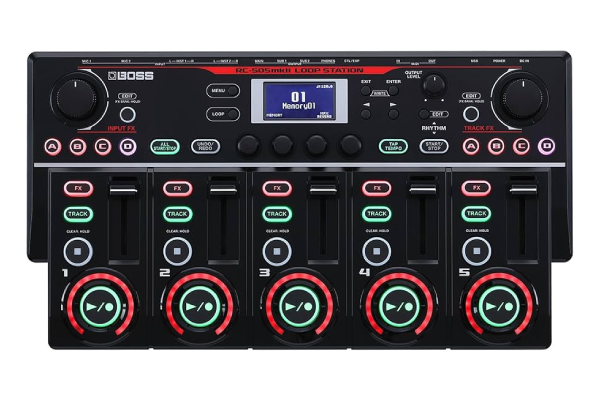
The Boss RC-505 MK2 represents a significant evolution in tabletop loop stations, and after integrating it into my performance setup for several months, I can confidently say it’s redefined my expectations for what a looper can accomplish. This five-track powerhouse features individual faders for each loop track, giving you unprecedented mixing control during live performance—something I found absolutely essential when building complex arrangements on the fly. The 13 hours of stereo recording time means you’ll never run out of space during even the longest jam sessions, and the 49 onboard effects include everything from vintage tape delays to modern glitch effects that can completely transform your guitar tones.
The phrase memory system deserves special mention—having 99 phrase memories means you can prepare entire setlists with different loop configurations for each song. I found this invaluable when transitioning between pieces that required different effects chains or track assignments. The USB audio interface functionality also proved surprisingly useful for incorporating this unit into home recording workflows, something many guitarists exploring various instruments will appreciate when expanding their creative toolkit.
Pros:
- Five independent tracks with individual faders for precise mix control
- Extensive effects library with 49 types plus Input FX processing
- Massive 13-hour recording capacity across 99 phrase memories
- USB audio interface for seamless DAW integration
- Robust build quality designed for professional touring applications
Cons:
- Higher price point may be prohibitive for beginners
- Tabletop format isn’t ideal for guitarists preferring floor-based pedalboards
- Learning curve can be steep when exploring advanced features
- Requires dedicated space in your performance setup
TC Electronic Ditto X4 Looper
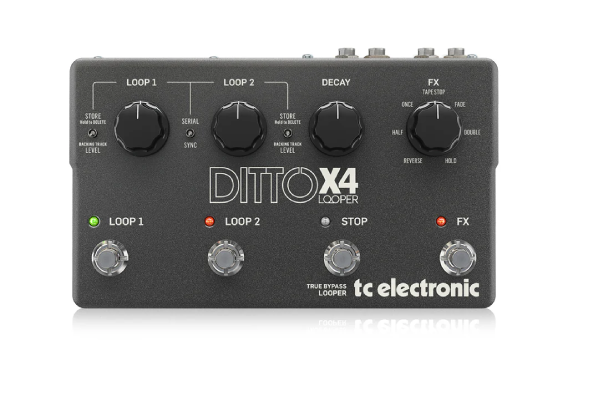
After years of gravitating toward feature-packed loop stations, I found the TC Electronic Ditto X4 to be a refreshing return to focused functionality with just enough creative expansion to stay interesting. This dual-track looper strips away the overwhelming options that plague many modern units while retaining the essential tools that actually matter during performance. The dedicated stop button might seem like a small detail, but after using loopers that require precise timing or button combinations to stop playback, having immediate stop control fundamentally changes how confidently you can navigate song arrangements.
The two independent loop tracks operate with genuine stereo processing, maintaining the full spatial character of your guitar signal—something I noticed immediately when running stereo delay and reverb pedals before the Ditto X4. During live performances, I developed a workflow where Track 1 handled rhythm foundations while Track 2 captured lead melodies and textural elements, and the ability to control these independently created dynamic arrangements that felt more composed than typical looped performances. The seven built-in effects include reverse, half-speed, and various tape-style manipulations that add creative possibilities without cluttering the interface.
Five minutes of loop time per track provided more than enough space for even my most elaborate compositions, and the analog dry-through design meant my core guitar tone remained pristine regardless of what was happening in the loop buffer. The unit’s compact footprint fit perfectly onto my already crowded pedalboard, sitting comfortably between my drive section and time-based effects. I particularly valued the loop decay function, which gradually reduces loop volume—perfect for natural-sounding transitions when moving between song sections or creating ambient swells that fade into silence.
Pros:
- Intuitive two-track operation with independent stop/start control
- True stereo signal path preserves spatial effects character
- Compact pedalboard-friendly design with rugged metal construction
- Analog dry-through maintains pristine tone integrity
- Dedicated stop button provides immediate playback control
Cons:
- Limited to five minutes total loop time may restrict longer compositions
- Only seven effects compared to more feature-rich alternatives
- No built-in rhythm patterns or metronome functions
- Single footswitch for each track limits hands-free control options
Electro-Harmonix 22500 Dual Stereo Looper
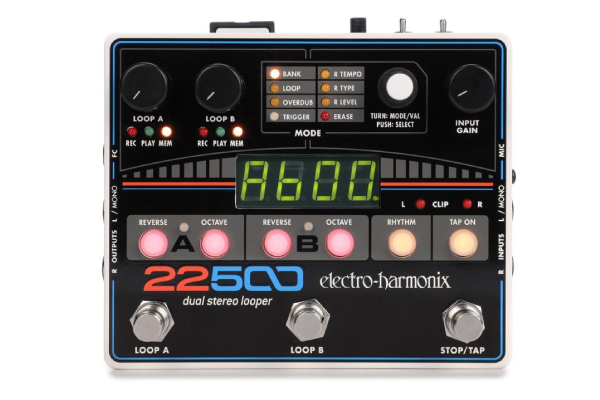
The Electro-Harmonix 22500 emerged as my go-to recommendation for guitarists serious about loop-based performance but not ready for the complexity of professional multi-track workstations. What immediately distinguished this unit during my testing was the genuine dual-stereo architecture—not just two independent loops, but full stereo recording and playback for both, which preserved every nuance when I ran stereo modulation effects into it. The 12 minutes of recording time per loop provided remarkable freedom, letting me build extensive arrangements without constantly monitoring remaining time or making compromises about which parts to keep.
The dedicated reverse function became one of my most-used creative tools, instantly flipping any loop for ethereal textures that work beautifully in ambient guitar contexts. During a recent recording session for some original songs, I used the 22500 to capture spontaneous ideas, and the ability to save 100 different loop combinations to internal memory meant I could revisit these sketches weeks later without losing the exact layering and effects settings. The octave-up and octave-down functions expand your sonic palette considerably, letting you simulate bass parts or create organ-like textures from standard guitar signals.
Pros:
- True dual-stereo architecture with 12 minutes per loop
- 100 internal memory slots for saving complete loop arrangements
- Reverse, octave-up, and octave-down effects expand creative possibilities
- Three different stop modes accommodate various musical contexts
- Removable SD card enables virtually unlimited storage expansion
Cons:
- Larger footprint requires significant pedalboard real estate
- No built-in metronome or drum patterns for timing reference
- Optional foot controller needed for maximum hands-free operation
- Interface can feel cramped when making adjustments mid-performance
Boss RC-5 Loop Station

Sometimes the best tool is the one that disappears into your workflow, and the Boss RC-5 achieves exactly that balance between capability and simplicity. After incorporating this compact looper into both practice sessions and live performances, I’ve come to appreciate how Boss refined the essential looping experience without overwhelming users with features they’ll rarely access. The 13 hours of stereo recording time seems almost excessive for a pedal this size, but it means you’ll genuinely never worry about storage limitations—even after months of saving loops for different projects.
The 57 built-in rhythm patterns proved far more useful than I initially expected. As someone who typically scorns built-in drums in guitar gear, I found these rhythms genuinely musical and surprisingly dynamic, providing solid foundations for building loops without the robotic feel that plagues many drum machine implementations. The dedicated rhythm knob made it effortless to adjust the drum mix relative to your loops, and I developed a practice routine using different time signatures to challenge my rhythmic vocabulary. The RC-5 also includes 99 phrase memories, which sounds like overkill until you start seriously organizing loop ideas by project or setlist—then it becomes absolutely essential.
What separates the RC-5 from budget alternatives is the sound quality and the professional-grade buffer management. I never experienced the slight degradation that happens with some loopers after multiple overdubs, and the undo/redo functionality worked flawlessly even when building dense, heavily layered arrangements. The USB connectivity enables firmware updates and loop import/export, transforming this pedal into a genuine creative tool rather than just a performance accessory. When monitoring my loops through quality headphones during late-night practice sessions, the RC-5’s audio fidelity consistently impressed me with its clarity and dynamic range.
Pros:
- Compact Boss enclosure fits easily into any pedalboard configuration
- 57 rhythm patterns with dedicated level control and tempo adjustment
- 13 hours recording capacity across 99 phrase memories
- USB connectivity for loop management and firmware updates
- Reliable Boss build quality with intuitive single-pedal operation
Cons:
- Single footswitch limits advanced control without additional switches
- No stereo inputs (though output is stereo)
- Effects are limited compared to more expensive alternatives
- Display can be difficult to read in bright outdoor performance situations
Pigtronix Infinity Looper 3

The Pigtronix Infinity Looper 3 represents the pinnacle of what’s possible in a floor-based loop station, and after extensively testing it against competitors, I can say it delivers professional-grade functionality without requiring a computer science degree to operate. This dual-channel looper treats each loop completely independently while offering seamless switching between them—essential for guitarists building complete arrangements that require distinct verse and chorus sections. The dedicated stop and volume controls for each loop provided unprecedented flexibility during performances where I needed to balance multiple layers dynamically.
What genuinely set the Infinity Looper 3 apart during real-world use was the attention to workflow details. The loop aging effect subtly degrades each successive overdub, creating vintage tape-style character that prevents loops from sounding too pristine or digital—something I found particularly effective when building lo-fi textures or intentionally degraded soundscapes. The MIDI sync capabilities meant I could lock the looper to external gear or DAW tempos, maintaining perfect synchronization even when integrating this pedal into complex hybrid performance rigs. After several festival performances where ambient stage vibrations cause problems with some pedals, the Infinity’s rock-solid footswitches never missed a trigger.
The professional audio quality deserves special emphasis—recording at 24-bit/48kHz with completely transparent AD/DA conversion means your guitar tone suffers no compromise passing through this unit. The serial effects loop on each channel enabled creative routing possibilities, and I often inserted different pedals into each loop’s signal path to create contrasting textural layers. For guitarists serious about loop-based composition and performance, the Infinity Looper 3 justifies its premium price through exceptional execution of every fundamental looping function.
Pros:
- True dual-channel architecture with independent control and routing
- Loop aging effect adds organic character to successive overdubs
- Professional 24-bit/48kHz audio conversion maintains pristine tone
- MIDI sync capabilities for integration with larger performance rigs
- Serial effects loops enable advanced signal routing possibilities
Cons:
- Premium pricing places it beyond many guitarists’ budgets
- Requires significant pedalboard space for the main unit and auxiliary switch
- Complex feature set may overwhelm beginners just exploring looping
- No built-in rhythms or metronome functions
Frequently Asked Questions
What’s the difference between single-track and multi-track loop stations?
Single-track loopers record all your parts onto one continuous loop, meaning everything you play gets mixed together without individual control—think of it like recording onto a cassette tape where you keep adding layers but can’t adjust individual volumes afterward. Multi-track loopers give you separate loops that can be controlled independently, letting you mute the bass line while keeping rhythm guitar playing, or gradually fade out ambient textures while maintaining your core progression. After working with both extensively, I’ve found multi-track systems essential for complex arrangements, while single-track loopers excel for simple layering and practice applications where you just want to build grooves quickly without managing multiple elements.
How much loop time do I actually need for live performance?
Most guitarists discover that five minutes per loop provides more than enough space for typical song structures, though having extra headroom eliminates any anxiety about running out of storage mid-performance. During my gigging experience, I’ve rarely used more than three minutes even for extended jam-based pieces, since longer loops become difficult to manage and remember where specific elements enter. That said, if you’re creating ambient soundscapes or experimental compositions, having 10-15 minutes available enables more expansive creative exploration. I’d recommend prioritizing features and sound quality over maximum loop time—you’ll benefit more from superior audio fidelity and intuitive controls than from recording capacity you’ll rarely access.
Can loop stations work well with effects pedals in my signal chain?
Loop stations integrate beautifully into effects chains, though placement strategy significantly impacts your creative possibilities and overall sound quality. I typically position my looper after time-based effects like delay and reverb, which means those effects get “baked into” each loop layer—perfect for creating lush, atmospheric textures where the ambience becomes part of the loop’s character. Alternatively, placing the looper before your effects sends all your loops through the same processing, enabling you to adjust the collective sound with pedal tweaks. Many advanced loopers include effects loops that let you process individual channels differently, opening up complex routing possibilities. When monitoring through quality earbuds during headphone practice sessions, experiment with different pedal orders to discover which configurations serve your creative vision best.
Are built-in drum patterns actually useful or just gimmicky?
My perspective on built-in rhythms completely shifted after seriously incorporating them into my practice routine and compositional process. Initially skeptical, I discovered that having immediate access to drum patterns eliminated the friction of setting up separate backing track devices or smartphone apps—I could instantly establish a groove and start building loops without breaking creative flow. The key is choosing loop stations with genuinely musical drum implementations rather than cheap, robotic-sounding patterns that distract more than assist. Quality rhythm sections also prove invaluable for developing timing precision and exploring different feels—I’ve used loop station drums to practice everything from jazz swing to odd-meter progressive patterns, significantly expanding my rhythmic vocabulary in ways that silent practice never achieved.
Do I need MIDI connectivity in my loop station?
MIDI capabilities transform a loop station from a standalone tool into an integrated component of larger performance or recording systems, though their necessity depends entirely on your specific applications and workflow. For guitarists working with drum machines, synthesizers, or computer-based DAW systems, MIDI sync ensures everything stays perfectly locked to the same tempo—eliminating the slight timing drift that ruins otherwise great performances. I’ve found MIDI particularly valuable when using loop stations alongside sequencers or when programming changes between different loop phrases via MIDI program changes. However, if you’re a solo performer using only your guitar and looper, MIDI connectivity offers minimal benefit and shouldn’t influence your purchasing decision. Focus first on sound quality, loop time, and control options—then consider MIDI as a valuable bonus feature if your setup might eventually expand beyond strictly guitar-based looping.