

When you’re standing in a packed club at 2 AM with a thousand people depending on your set to keep the energy alive, your DJ mixer becomes more than just gear—it’s your lifeline to the crowd. The right mixer handles relentless 8-hour sessions without overheating, provides pristine audio quality that cuts through powerful sound systems, and offers tactile controls you can operate confidently even when the booth is dark and crowded.
Club environments are brutally honest testing grounds for DJ equipment. The mixers I’m covering here represent the current gold standard for professional club use—each one has proven itself in real-world scenarios where there’s no room for compromise. Whether you’re a resident DJ building your reputation or a touring artist who needs gear that travels well and performs consistently across different venues, these five mixers represent the best options available right now for serious club work.
| Mixer Model | Channel Count & Design | Core Strengths | Key Drawbacks |
|---|---|---|---|
| Pioneer DJ DJM-A9 | 4 channels, digital club standard | Exceptional 32-bit audio quality, rugged touring build, USB-C DVS, advanced Sound Color FX | Very high price, large footprint, deep features require learning time |
| Allen & Heath XONE:96 | 6 channels, analog signal path | Warm analog sound, legendary dual VCF filters, four-band EQ, extremely durable | Heavier unit, limited onboard effects, higher noise floor than digital rivals |
| Pioneer DJ DJM-V10 | 6 channels, rotary-focused design | Musical rotary workflow, premium sound, master isolator, extensive routing | Expensive, large and complex, not ideal for simple two-deck setups |
| Rane SEVENTY-TWO MKII | 2 channels, battle-style digital | Mag Four contactless faders, dual FX engines, touchscreen control, Serato-focused | Non-standard layout, touchscreen upkeep, limited channel count |
| Denon DJ X1850 PRIME | 4 channels, digital performance mixer | Excellent value, six simultaneous effects, broad media compatibility, strong sound | Slightly less refined feel, limited club adoption, effects take practice |
Pioneer DJ DJM-A9: The New Flagship Setting Club Standards
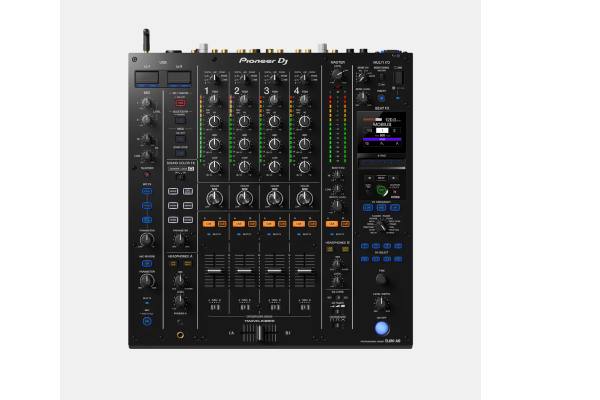
The DJM-A9 arrived last year as Pioneer’s answer to DJs who demanded more sonic refinement than the industry-standard DJM-900NXS2 could deliver. This mixer incorporates technology from Pioneer’s high-end audiophile division, resulting in sound quality that finally matches what modern club sound systems can reproduce. The 32-bit D/A converters and redesigned analog circuitry produce noticeably cleaner low-end response and more detailed high frequencies—differences that become apparent when you’re working with bass-heavy electronic music on a proper club system.
The build quality exceeds even Pioneer’s typically robust standards, with metal channel faders that feel smoother than previous generations and rotary knobs offering just the right amount of resistance for precise adjustments. After four months of regular use including several festival appearances where the mixer traveled in cases and endured setup/teardown cycles, everything still operates like new. The USB-C connectivity for DVS control eliminates the need for separate audio interfaces, streamlining setup considerably—a detail that matters when you’re doing quick changeovers between artists.
Pros:
- Exceptional audio quality with 32-bit conversion and high-end components
- Professional build quality that handles touring and resident use
- Comprehensive connectivity including USB-C for simplified DVS setup
- Advanced Sound Color FX with studio-grade processing
- Intuitive layout familiar to anyone who’s used Pioneer club mixers
Cons:
- Premium pricing puts it out of reach for many working DJs
- Larger footprint than some competitors may challenge tight booth spaces
- Feature depth requires time investment to fully utilize capabilities
Allen & Heath XONE:96: The Analog Purist’s Dream Machine
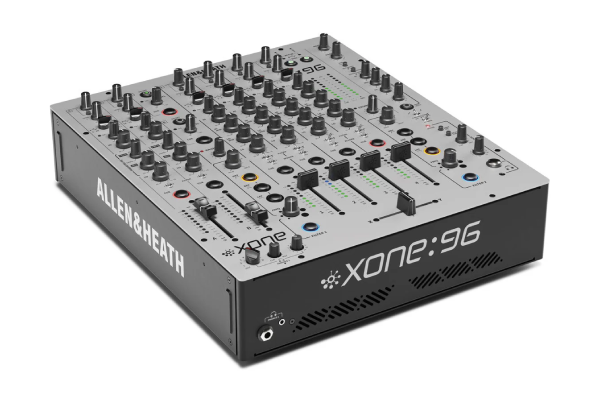
There’s something undeniably special about the way analog mixers translate music through a club sound system, and the XONE:96 represents the pinnacle of this approach for modern DJing. Allen & Heath built their reputation on the XONE:92, which became legendary in underground clubs worldwide, and the 96 refines that formula with contemporary features while preserving the warm, musical character that made its predecessor essential.
Allen & Heath’s famous filters sound spectacular on this mixer, offering smooth analog resonance that enhances rather than dominates your music. The dual VCF filters can be assigned independently to different channels or summed for creative effects, and they retain musical character even when pushed hard—something digital filter emulations often sacrifice for surgical precision. I’ve noticed seasoned house and techno DJs consistently gravitate toward XONE mixers specifically for these filters, which have become integral to certain mixing styles where filter sweeps punctuate transitions and build energy.
Pros:
- Authentic analog signal path with exceptional warmth and character
- Four-band EQ with parametric mids for surgical frequency control
- Legendary VCF filters that define the sound of underground dance music
- Incredibly robust construction designed for decades of club use
- Excellent headphone amplifier with multiple cue options
Cons:
- Higher noise floor than premium digital mixers (though musically pleasant)
- Limited built-in effects compared to digital competitors
- Substantial weight makes it less practical for mobile DJs
Pioneer DJ DJM-V10: Six Channels of Rotary Sophistication
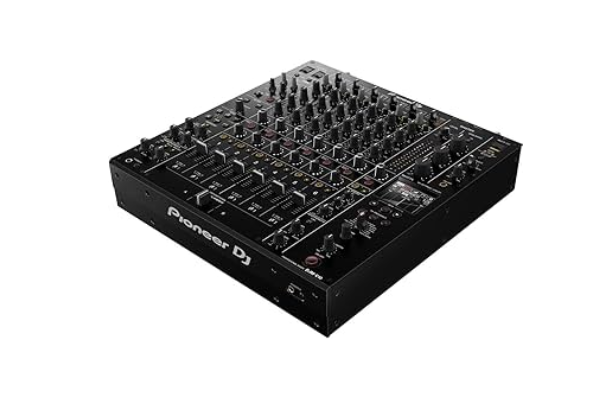
When Pioneer released the V10, they made a bold statement that rotary mixers—long considered niche equipment for specific genres and mixing styles—deserved flagship treatment with modern features. After using this mixer for various sets ranging from deep house to ambient electronic music, I’ve come to appreciate how the rotary control scheme fundamentally changes your relationship with mixing. Instead of abrupt fader cuts, you’re encouraged toward smoother, more musical blends where tracks breathe together. This workflow particularly suits extended DJ sets where you’re building atmosphere over hours rather than delivering rapid-fire track changes.
The six-channel configuration provides genuine flexibility for complex mixes involving loops, samples, and multiple tracks layered simultaneously. The isolator-style EQ on each channel offers full kill capability, and the master isolator provides additional tone-shaping for the entire mix—a combination that gives you unprecedented control over your sound before it hits the club system.
Sound quality rivals the A9 with similar high-end components, but the V10’s character leans slightly warmer due to circuit design choices that complement the rotary mixing approach. The built-in effects include studio-grade reverbs and delays alongside DJ-focused tools like echo and filter, all accessible through an intuitive interface that doesn’t disrupt workflow. For those interested in exploring different approaches to electronic music creation and performance, understanding various instruments can provide valuable context for integrating hardware into DJ setups.
Pros:
- Six channels accommodate complex setups and hybrid performance approaches
- Rotary controls encourage musical, atmospheric mixing styles
- Exceptional build quality with premium components throughout
- Comprehensive routing options for creative signal flow
- Master isolator EQ provides final tone-shaping control
Cons:
- Rotary workflow requires adjustment period for fader-accustomed DJs
- Premium pricing and large size limit accessibility
- Overkill for DJs who stick to straightforward two-deck mixing
Rane SEVENTY-TWO MKII: Battle Mixer Innovation for Club Performance
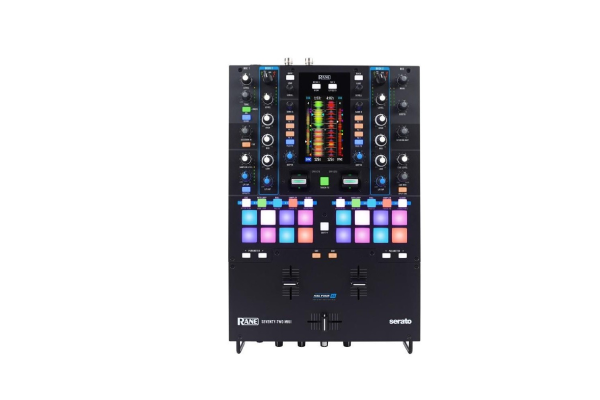
Rane built their reputation on indestructible battle mixers designed for turntablists who absolutely destroy equipment during performances, and the SEVENTY-TWO MKII translates that durability philosophy into a club-ready package with modern features. The Mag Four contactless faders use magnetic technology rather than traditional rails, eliminating the wear point that eventually causes fader bleed and degraded performance on conventional mixers.
Flex FX offers simultaneous dual effects processing, meaning you can run reverb on one channel while the other gets delayed without choosing between them—a capability that supports more complex creative mixing than traditional single-effect-bus designs. The effects themselves sound excellent, rivaling dedicated processors while maintaining the instant accessibility DJs need during live performance. Build quality feels appropriately bombproof with metal construction throughout and controls that resist the spills, impacts, and environmental challenges that club mixers inevitably face. Just as selecting the right mixer matters, choosing appropriate monitoring equipment ensures you can properly judge your mixes in loud club environments.
Pros:
- Mag Four contactless faders deliver unmatched durability and consistency
- Touchscreen interface provides deep feature access without panel clutter
- Dual effects buses support creative processing without compromise
- Battle-mixer build quality withstands touring and heavy club use
- Excellent Serato integration for DVS performance
Cons:
- Touchscreen requires occasional cleaning in club environments
- Layout differs significantly from Pioneer standard, requiring adjustment
- Effects interface occasionally responds slower than dedicated hardware controls
Denon DJ X1850 PRIME: Professional Performance, Competitive Value
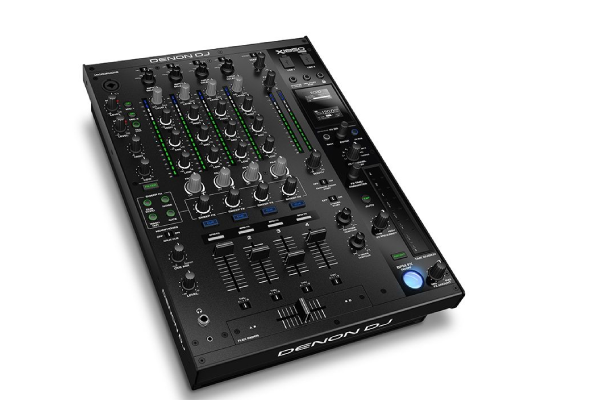
The X1850 PRIME emerged as Denon’s declaration that they could compete directly with Pioneer’s club standard while offering distinctive features and aggressive pricing This mixer feels like legitimately professional equipment rather than a budget alternative, with build quality approaching Pioneer’s level and sonic performance that holds its own against more expensive competitors. I’ve been genuinely impressed by how Denon managed to pack this much capability into a mixer that costs significantly less than comparable Pioneer or Allen & Heath options.
The onboard effects processor provides six simultaneous effects—an extravagant number compared to most competitors—letting you apply processing across multiple channels independently or stack effects for complex sound design. During an experimental techno set, I ran different delay times on three channels while using filter sweeps on a fourth, creating polyrhythmic textures impossible on single-effect mixers. The effects quality rivals dedicated studio processors, with particular standout performance from the delays and reverbs that add genuine space and dimension rather than obviously digital artifacts.
What really sets the X1850 apart is its flexibility regarding source components. The mixer integrates seamlessly with Denon’s own SC6000 media players, but it also works perfectly with CDJs, turntables, or computers running various DJ software. The three-band isolator EQ provides full kill capability, essential for modern mixing techniques, and the channel filters sound musical rather than overly digital. For DJs exploring different genres and styles, discovering new songs and productions can inspire creative mixing approaches that make full use of your mixer’s capabilities.
Pros:
- Exceptional value proposition with professional features at competitive pricing
- Six simultaneous effects expand creative mixing possibilities
- Universal compatibility with various media players and DJ software
- Solid build quality appropriate for regular club use
- Excellent sound quality with clean signal path and low noise
Cons:
- Slightly less refined feel compared to top-tier Pioneer mixers
- Fewer rental houses stock Denon equipment, complicating touring
- Effects interface requires practice to operate efficiently during performance
Frequently Asked Questions
What makes a DJ mixer suitable specifically for club use versus home practice?
Club mixers need features and build quality that home units can skip—primarily bulletproof construction that survives years of nightly use in demanding environments with multiple DJs handling the equipment. Professional club mixers use higher-quality components throughout the signal path to maintain audio fidelity when connected to powerful sound systems that reveal every weakness in lesser equipment. They also include comprehensive connectivity for various source formats since you’ll encounter resident DJs using different setups, from vinyl turntables to USB media players to laptop DVS systems. The channel EQs on club mixers typically offer greater range and precision because you’re making critical tonal adjustments that directly affect how your mix translates through substantial PA systems to large crowds. Finally, club-standard mixers provide robust headphone amplifiers with sufficient power to overcome extremely loud monitoring environments where you need to clearly hear your cue without maxing out the volume control and risking hearing damage.
Do I really need a four-channel mixer for club DJing, or will two channels suffice?
Two channels remain perfectly adequate for straightforward DJ sets focused on traditional mixing between tracks, and many legendary DJs have built entire careers on two-channel mixers without limitation. However, four channels dramatically expand your creative options—you can layer percussion loops or samples underneath your main tracks, prepare a third track in your headphones while two others play, or run external effects processors and synthesizers alongside your primary music sources. I’ve found four channels particularly valuable during extended sets where building complex soundscapes helps maintain energy and interest over several hours. The additional channels also provide flexibility when technical issues occur, since you have backup channels available if one develops problems during performance. That said, more channels mean more controls to manage and potentially more variables to troubleshoot, so if your mixing style doesn’t require the expanded capability, a focused two-channel mixer might actually serve you better by keeping your workflow streamlined.
How important is mixer brand compatibility with club-installed equipment?
Brand compatibility matters less than it once did, though practical considerations still apply. Most professional DJs can adapt to different mixer brands within a single set, but there’s undeniable value in using the same equipment model you’ll encounter in clubs and festivals. Pioneer’s market dominance means their mixers are the default installation in most professional venues worldwide, so familiarity with DJM-series layout and workflow translates directly to countless booths you’ll work in throughout your career. That said, any competent DJ should be able to adapt to different mixers since technical proficiency means understanding the fundamental principles rather than memorizing one specific layout. I’ve switched between Pioneer, Allen & Heath, and Denon mixers mid-tour without significant issues because the core controls—channel faders, EQ knobs, crossfader, and effects—occupy similar positions and function analogously across brands. The adjustment period typically lasts about 30 minutes of focused practice, after which muscle memory adapts and you’re operating normally.
Should I prioritize digital features or analog sound quality when choosing a club mixer?
This decision fundamentally depends on your mixing style and the music you play. If you’re performing house, techno, or other electronic genres where warm analog character traditionally defines the sound, mixers like the Allen & Heath XONE:96 provide tonal qualities that many DJs consider essential to achieving authentic underground club atmosphere. However, modern high-end digital mixers like the Pioneer DJM-A9 now offer sound quality that rivals analog equipment while adding features like comprehensive effects processing, USB recording, and software integration that expand creative possibilities. I’ve found that the “analog versus digital” debate often obscures the more important question: does this specific mixer sound good and support my workflow? Both approaches can deliver exceptional results, and mediocre examples of each technology sound worse than great implementations of the other. Listen to your music through both options if possible, trust your ears over theoretical arguments, and prioritize the mixer that makes your sets more engaging and reduces technical friction during performance.
What mixer features do professional club DJs consider absolutely essential?
Professional DJs consistently identify several features as non-negotiable for serious club work. First, robust channel EQs with significant boost and cut range, preferably with full kill capability on each frequency band—this allows creative mixing techniques where you completely remove elements before introducing the next track. Second, a high-quality crossfader with adjustable curve settings that can handle both smooth blends and sharp cuts depending on your mixing style and the music demands. Third, comprehensive connectivity including balanced XLR master outputs for connecting to club sound systems, multiple auxiliary sends for external effects, and booth monitoring outputs separate from the main mix. Fourth, a powerful headphone amplifier with split cue functionality so you can monitor the incoming track in one ear while hearing the master output in the other—essential for beatmatching and timing transitions. Finally, professional DJs value tangible build quality with controls that feel solid and precise rather than loose or cheap, because reliability matters when your reputation and income depend on equipment performing flawlessly during every set. Just as DJs value quality mixers, music producers and listeners alike appreciate well-crafted portable audio solutions for monitoring mixes and productions in various environments.