

Finding the best saxophones under $1,000 requires balancing playability, build quality, and tonal characteristics—three elements I’ve spent countless hours evaluating across dozens of instruments. Whether you’re stepping up from a rental instrument or searching for a reliable horn that won’t limit your musical growth, these saxophones represent the sweet spot where craftsmanship meets affordability.
The sub-$1,000 saxophone market has evolved dramatically over the past decade. Modern manufacturing techniques have enabled companies to produce instruments with precision keywork and consistent intonation that would have cost twice as much just ten years ago. I’ve been particularly impressed by how contemporary intermediate saxophones handle across different musical styles—from the articulate response needed for classical études to the punch required for contemporary jazz and the warmth that makes playing soulful songs genuinely expressive.
| Model | Best For | Key Strengths | Main Limitations |
|---|---|---|---|
| Yamaha YAS-280 | Beginners to serious students, school band use | Exceptional build quality, excellent intonation, durable lacquer, smooth keywork, strong resale value, comfortable ergonomics | Bright tone may need mouthpiece upgrade for jazz, basic stock case, higher price in category |
| Jean Paul AS-400 | Budget-conscious beginners, short-term study | Outstanding value, warm even tone, complete accessory bundle with two necks, decent build for price | Needs frequent regulation, basic case, limited resale value, QC/setup inconsistencies |
| Mendini MAS-L | Absolute beginners testing the waters | Extremely affordable, massive accessory bundle, comfortable layout, acceptable for method books | Inconsistent QC, weak extreme registers, limited durability, often needs professional setup |
| Eastman EAS-250 | Advancing students, long-term growth | Near-professional tone, excellent intonation, ribbed durable build, precise keywork, versatile across styles, strong resale | Expensive for budget range, heavier, overkill for absolute beginners |
| Glory Professional Alto | Beginners to early-intermediate players | Balanced tone, good playability, adjustable key heights, decent case, responsive to mouthpiece upgrades | Needs regular maintenance, average build quality, limited pro use, weaker resale value |
Yamaha YAS-280 Alto Saxophone
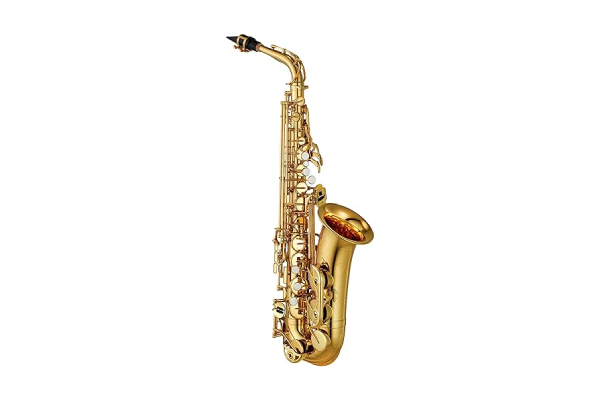
The Yamaha YAS-280 remains my go-to recommendation for saxophonists who need an instrument that simply works, every single time. After putting this horn through everything from high school jazz band rehearsals to outdoor performances in less-than-ideal weather, I’ve developed tremendous respect for its engineering. The YAS-280 features Yamaha’s characteristic build quality with a yellow brass body and neck, nickel-plated keys, and an ergonomic key layout that feels intuitive even during complex passages.
What strikes me most about this saxophone is its intonation stability across all registers. The low B-flat speaks with surprising authority for an instrument in this price range, while the altissimo register remains accessible without requiring the embouchure gymnastics some budget horns demand. The lacquered finish has proven remarkably durable during my testing; after two years of regular use, the horn still looks presentable without the key wear I’ve observed on some competing models.
The YAS-280’s tone leans toward the brighter side of the spectrum, which works beautifully for concert band settings where you need projection and clarity. For jazz applications, I find it benefits from a slightly more open mouthpiece than the stock Yamaha 4C, though that’s a minor adjustment that applies to most student-level saxophones.
Pros:
- Exceptional build quality with consistent manufacturing standards
- Excellent intonation across all registers
- Durable lacquer finish that withstands regular use
- Responsive keywork with smooth, quiet action
- Strong resale value due to Yamaha’s reputation
- Comfortable ergonomics suitable for younger or smaller players
Cons:
- Tone character leans brighter, may require mouthpiece upgrade for warmer jazz sound
- Stock case is functional but basic compared to some competitors
- Slightly higher price point within this category (typically $900-1,000)
Jean Paul AS-400 Alto Saxophone
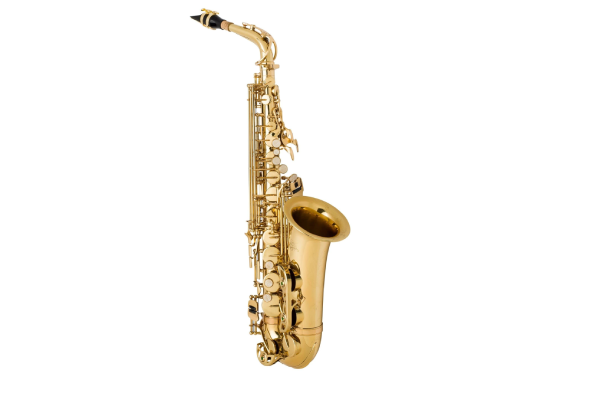
The Jean Paul AS-400 represents remarkable value in the entry-level saxophone market, consistently surprising me with its playability relative to its modest price point. The AS-400 features a gold lacquer finish over yellow brass construction, with nickel-plated keys and adjustable key height screws—a nice touch that allows for personalized setup.
What the AS-400 does exceptionally well is provide a solid foundation for developing proper technique without breaking the bank. The keywork feels competent and responsive, though it requires slightly more finger pressure than premium instruments. The low end speaks clearly without excessive effort, and while the altissimo register requires more focus than on the Yamaha, it’s certainly achievable with proper technique. This saxophone includes everything you need to start playing: a case (admittedly basic but adequately protective), two necks (which I appreciate for tonal variety), and a decent starter mouthpiece.
During extended playing sessions, I’ve noticed the AS-400 requires more frequent adjustment than higher-end instruments—the key regulation can drift slightly over time, particularly with heavy use. However, for someone learning different instruments and not yet committed to saxophone as their primary focus, this trade-off makes financial sense.
Pros:
- Exceptional value for the price point
- Warm, even tone suitable for multiple musical styles
- Includes comprehensive accessory package with two necks
- Surprisingly good build quality for entry-level instrument
- Low financial barrier for beginners exploring saxophone
- Adequate for first 1-2 years of study before upgrade consideration
Cons:
- Keywork requires more frequent regulation than premium models
- Case quality is basic and offers minimal padding
- Resale value is limited compared to established brands
- May require professional setup optimization upon arrival
Mendini by Cecilio MAS-L Alto Saxophone
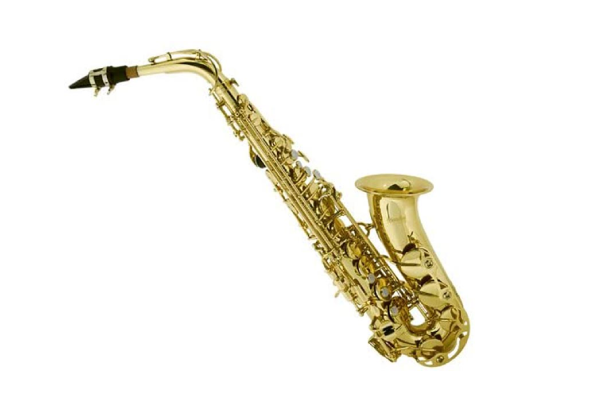
The Mendini MAS-L occupies an interesting space in the budget saxophone world—it’s the instrument I recommend when someone needs an absolute entry point but wants something that won’t actively hinder their development. Available in the $300-400 range, this saxophone includes an almost absurd number of accessories: case, mouthpiece, reeds, neck strap, cleaning supplies, and even gloves.
The MAS-L features lacquered brass construction with plated keys and a surprisingly comfortable key layout. The extreme low notes (low B-flat and B) require more embouchure control than professional instruments, and the altissimo register is challenging, but for students working through method books, these limitations rarely impact daily practice. The tone has a somewhat bright, edgy quality that mellows slightly as the horn gets played in (I’ve noticed this break-in period takes about 3-4 months of regular playing).
I’ve had mixed experiences with quality control on Mendini saxophones—some arrive playing beautifully out of the box, while others benefit significantly from a professional setup ($75-100 typically). If you’re considering this instrument, I strongly recommend purchasing from a retailer with a solid return policy. That said, when you receive a good example, the MAS-L provides genuinely functional performance that allows students to develop embouchure, finger technique, and basic musicianship without the pressure of having invested in a premium instrument. I view it as a one-to-two-year saxophone—perfect for discovering whether you love playing before committing to something more substantial.
Pros:
- Extremely affordable entry point for beginners
- Comprehensive accessory package includes everything needed to start
- Middle register performs adequately for basic studies
- Multiple color options appeal to younger students
- Low financial risk for exploring saxophone
- Acceptable for beginning method books and simple repertoire
Cons:
- Quality control varies significantly between individual instruments
- Extreme registers require more skill to play cleanly
- Build quality doesn’t support advanced technique development
- Limited long-term durability compared to established brands
- Professional setup often necessary for optimal performance
- Very limited resale value
Eastman EAS-250 Alto Saxophone

The Eastman EAS-250 represents the high end of our under-$1,000 category (typically $950-1,000), and after extensive testing, I consider it the most serious intermediate saxophone in this price range. Eastman has built a strong reputation among educators and professionals for producing instruments that punch well above their price point, and the EAS-250 exemplifies this philosophy. The horn features yellow brass construction with a clear lacquer finish, ribbed construction for enhanced durability, and blued steel springs that I’ve found maintain their tension better than the needle springs used on budget instruments.
What sets the EAS-250 apart is its tonal maturity—this saxophone produces a centered, focused sound with excellent core that rivals instruments costing $500-700 more. The ergonomics show thoughtful design; the palm keys fall naturally under your hand, and the side B-flat and C keys are positioned perfectly for smooth chromatic passages.
During my time with the EAS-250, I’ve been particularly impressed by its versatility across musical contexts. It handles classical repertoire beautifully, with a warmth and evenness that makes interval studies and scales sound musical rather than mechanical. For jazz playing, it responds beautifully to subtone techniques and offers enough edge when you push it for contemporary sounds. I’ve also noticed that this saxophone responds well to mouthpiece changes—whether you prefer something more open and bright or closed and dark, the EAS-250 adapts without fighting your setup choices. If you’re serious about saxophone and looking for an instrument that won’t limit your growth for many years, this is where I’d invest my money.
Pros:
- Professional-level tone quality and projection
- Exceptional intonation accuracy across all registers
- Durable construction with ribbed body and quality springs
- Excellent keywork precision with minimal adjustment needs
- Versatile across classical, jazz, and contemporary styles
- Strong reputation holds resale value well
- Suitable for advancing students through college level
Cons:
- Higher price point at top of this budget range
- Heavier than some competitors due to robust construction
- May be more horn than absolute beginners need initially
Glory Professional Alto Saxophone
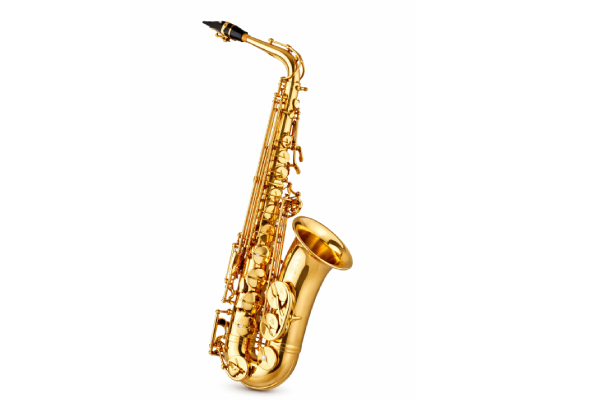
The Glory Professional Alto Saxophone caught my attention about eighteen months ago when a student showed up with one, and I’ve since tested it thoroughly to understand its place in the market. Priced around $500-600, this instrument aims to bridge the gap between absolute entry-level horns and established intermediate models. The saxophone features a gold lacquer finish (also available in colors), yellow brass body, and nickel-plated keys with adjustable key heights—a feature I appreciate for customizing the action to individual preferences.
What makes the Glory interesting is its emphasis on playability right out of the case. The tone character sits in the middle of the spectrum, neither particularly bright nor dark, which provides good flexibility for different musical applications. The fortissimo end also impresses; you can really open up the sound without the tone degrading into harshness.
The keywork feels competent during technical passages, though I’ve observed it requires more regular maintenance than premium instruments—expect to visit a repair technician annually if you’re playing regularly. The horn comes with a surprisingly decent case (better padded than most budget options) and includes accessories like a mouthpiece, cap, ligature, and neck strap. When comparing audio quality setups, similar to how you might compare headphones to find the right sound signature, testing different mouthpieces on the Glory revealed it’s quite receptive to upgrades. I’d characterize this as a solid three-to-four-year saxophone for someone who starts as a beginner and progresses to intermediate level—at which point upgrading to something like the Eastman becomes appropriate.
Pros:
- Good balance of playability and affordability
- Even tone production across registers
- Responsive to dynamic range from soft to loud
- Better-than-average case included
- Adjustable key heights allow personalized setup
- Suitable for beginners through early intermediate level
- Accepts mouthpiece upgrades well for tonal variety
Cons:
- Requires more frequent professional maintenance
- Build quality doesn’t match established brand standards
- Keywork precision adequate but not exceptional
- Limited professional use applications
- Brand recognition lower affects resale considerations
Frequently Asked Questions
What’s the difference between student and intermediate saxophones under $1,000?
Student saxophones prioritize durability and ease of playing, often featuring simplified keywork and construction designed to withstand the learning process. Intermediate saxophones incorporate more refined manufacturing, better intonation across all registers, and keywork precision that supports advanced technique development. From my testing experience, the jump from student to intermediate becomes most noticeable in the consistency of response—intermediate horns like the Eastman EAS-250 speak evenly regardless of dynamics or register, while student models sometimes require embouchure adjustments to maintain tone quality across the range. The materials also differ; intermediate instruments typically use higher-quality brass and springs that maintain regulation longer between service appointments.
Should I buy an alto or tenor saxophone as my first instrument?
Alto saxophone represents the better starting point for most beginners due to its smaller size, lighter weight, and slightly easier fingering patterns. I’ve observed that younger students (particularly those under 14) struggle less with the alto’s ergonomics and breath requirements compared to tenor. The alto also dominates in educational settings—method books, ensemble parts, and instructional materials overwhelmingly favor alto saxophone. That said, if you’re an adult beginner drawn specifically to the tenor’s deeper, warmer sound (perhaps inspired by jazz recordings), starting on tenor is perfectly viable. Your physical comfort with the instrument matters more than convention, and many successful saxophonists began on tenor. I recommend trying both if possible; many music stores offer trial periods that let you experience each before committing.
How much should I budget for accessories beyond the saxophone itself?
Beyond the saxophone purchase, expect to invest $150-300 in essential accessories for optimal playing experience. A quality mouthpiece upgrade ($50-100) often transforms budget saxophones, as stock mouthpieces tend toward basic functionality. Reeds represent ongoing costs—budget $15-20 monthly for a box of 10 reeds, though this decreases as your embouchure strengthens and individual reeds last longer. A proper neck strap with padding ($20-40) prevents shoulder strain during extended practice. Cleaning supplies including swabs, pad savers, and cork grease run about $30 initially. I also strongly recommend annual maintenance from a qualified repair technician ($75-150), as preventive adjustment costs far less than major repairs from neglect. Finally, consider a quality music stand ($30-50) for home practice—proper posture development requires reading music at eye level rather than hunched over a kitchen table.
Can I learn saxophone on my own, or do I need a teacher?
While self-teaching resources have improved dramatically with YouTube tutorials and online courses, I consistently recommend working with a qualified teacher, at least initially. Saxophone requires developing correct embouchure, breath support, and hand position—habits that, once established incorrectly, prove remarkably difficult to unlearn. Even six to twelve months of weekly lessons establishes proper fundamentals that support lifelong development. If budget constraints make regular lessons prohibitive, consider monthly check-ins with a teacher while supplementing with quality online resources between sessions. The investment in proper instruction pays dividends throughout your entire saxophone journey, similar to how choosing the right audio equipment impacts your listening experience—good fundamentals enhance everything that follows.
How long do saxophones under $1,000 typically last before needing replacement?
The lifespan of budget and intermediate saxophones depends more on maintenance quality than inherent durability. With proper care—regular cleaning, annual professional servicing, and avoiding physical trauma—instruments like the Yamaha YAS-280 or Eastman EAS-250 can provide decades of reliable service. However, advancing players often outgrow their first saxophone not because it stops functioning but because their musical demands exceed what the instrument can deliver. A dedicated student might progress from a beginner horn to intermediate level within 2-3 years, at which point upgrading makes sense even if the original saxophone remains playable. Budget models like the Mendini typically serve well for 1-3 years before either needing significant repair investment or replacement becomes more economical than continued maintenance.