

The modern budget amp market has evolved dramatically—today’s affordable amplifiers incorporate modeling technology, premium components, and thoughtful design features that were exclusive to professional-grade equipment just a decade ago.
Whether you’re a bedroom player crafting late-night riffs, a student building your first practice setup, or an experienced guitarist seeking a reliable backup amp, this guide covers amplifiers I’ve personally put through their paces across various musical contexts. These aren’t just theoretical recommendations—each amp on this list has earned its place through actual performance in real-world situations, from quiet apartment practice sessions to full-band rehearsals.
| Model | Best For | Key Strengths | Main Limitations |
|---|---|---|---|
| Fender Champion 20 | Practice, home recording, beginners | Great clean tones, 12 amp voices, musical built-in effects, headphone + aux input, solid build, good volume for home use | 8″ speaker sounds boxy loud, weak high-gain, no effects loop, speaker upgrade adds cost |
| Boss Katana-50 MkII | Students, intermediate players, rehearsals | Power scaling, excellent high-gain tones, Tone Studio deep editing, effects loop, 12″ speaker, strong dynamics | Acoustic channel unrealistic, software dependency, slightly sterile vs tube, limited front-panel control |
| Orange Crush 20RT | Rock, punk, alternative players | Authentic Orange tone, aggressive mids, real spring reverb, CabSim headphones, robust build, intuitive controls | Less versatile, limited clean headroom, single-channel design, mid-heavy low end |
| Yamaha THR10II | Apartment practice, recording, portability | Excellent low-volume tone, USB audio interface, battery powered, 15 amp models, compact size, immersive stereo | Too quiet for bands, proprietary PSU, higher price, weak room projection |
| Blackstar ID:Core 10 V3 | Ambient practice, effects exploration | Super Wide Stereo, 6 voices + Voice control, strong effects, USB recording, compact size, deep software editing | Too quiet for rehearsals, off-axis stereo loss, software reliance, limited clean headroom |
Fender Champion 20
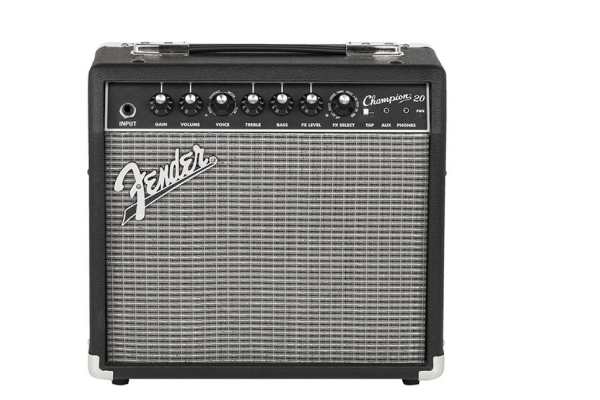
The Fender Champion 20 represents everything I appreciate about straightforward, no-nonsense amplification. After using this amp extensively for both practice and small recording projects, I’ve come to view it as the benchmark against which other budget amps should be measured. The 20-watt output through an 8-inch speaker provides surprising headroom—I’ve comfortably used it for acoustic jam sessions with friends without feeling underpowered.
The onboard effects (reverb, delay/echo, chorus, tremolo, and Vibratone) aren’t just checkbox features—they’re genuinely usable and musical. I found myself particularly drawn to the spring reverb emulation, which adds appropriate atmosphere without washing out your core tone.
The Champion 20’s versatility becomes apparent when you explore its twelve amp voice settings. From vintage Fender cleans to British stack crunch and modern high-gain textures, this little box covers substantial tonal territory. While purists might argue that modeling never quite captures the nuance of the original circuits (and they’re not entirely wrong), the practical reality is that for practice, songwriting, and home recording scenarios, these voices are more than convincing. I’ve tracked guitar parts using the Tweed and British settings that sat perfectly in mixes alongside tracks recorded through thousand-dollar tube amps.
The auxiliary input and headphone jack extend this amp’s practicality considerably. Late-night practice sessions become guilt-free when you can plug in headphones and play along with tracks streaming from your phone. The construction feels solid for the price bracket—this isn’t boutique-level craftsmanship, but the controls have appropriate resistance, the cabinet doesn’t rattle at moderate volumes, and the overall impression is one of thoughtful manufacturing rather than cost-cutting desperation.
Pros:
- Exceptional clean tones that honor Fender’s legacy
- Twelve amp voices provide extensive tonal variety for practice and exploration
- Built-in effects are musical and surprisingly responsive
- Headphone output with cabinet simulation for silent practice
- Auxiliary input makes jam-along practice sessions convenient
- Sufficient volume for small rehearsal spaces and home recording
Cons:
- 8-inch speaker can sound boxy at higher volumes compared to 10 or 12-inch options
- High-gain settings lack the complexity and responsiveness of dedicated metal amps
- No effects loop for integrating external pedals into the signal chain
- Speaker upgrade significantly improves performance but adds to overall cost
Boss Katana-50 MkII
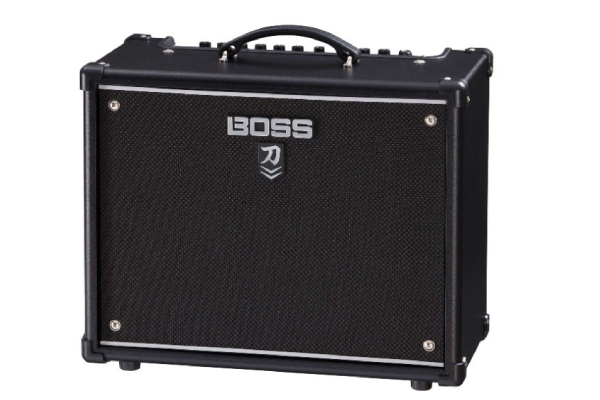
The Boss Katana series fundamentally changed my expectations for what budget amplifiers could achieve, and the MkII 50-watt version represents the refinement of an already impressive concept. This amplifier has become my default recommendation for students and intermediate players because it eliminates the usual compromises associated with affordable gear. After integrating it into my teaching studio and using it for various recording applications, I’ve watched it consistently exceed expectations.
The five amp characters (Acoustic, Clean, Crunch, Lead, and Brown) each occupy distinct sonic territories, and what impressed me most during extended use was how responsive they remain to playing dynamics and guitar volume adjustments. The Brown channel, in particular, delivers convincing high-gain textures that respond to pick attack and maintain note definition even under heavy distortion—characteristics you typically associate with amplifiers costing three or four times more. I’ve recorded aggressive rhythm parts using this channel that needed minimal post-processing to sit properly in dense metal and hard rock mixes.
Boss’s Tone Studio software integration deserves specific mention because it transforms the Katana from a good practice amp into a serious recording tool. The editor provides access to over sixty effects types, parametric EQ controls, and detailed amplifier voicing adjustments that simply aren’t accessible from the front panel alone. I spent an evening diving deep into the software’s capabilities and emerged with custom patches tailored to specific songs and playing scenarios—patches that now live permanently in the amp’s memory banks. This level of programmability at this price point feels almost unfair to competitors.
The power scaling feature (0.5W, 25W, 50W) might seem like a technical specification until you actually use it in context. The ability to achieve power amp saturation characteristics at bedroom-appropriate volumes addresses one of the fundamental challenges guitarists face with traditional amplifiers. I’ve dialed in satisfying crunch tones at volumes that won’t disturb family members or neighbors, something that would require expensive attenuators with conventional tube amps.
Practical considerations further elevate the Katana’s value proposition. The effects loop allows integration of your favorite pedals, the headphone output includes cabinet simulation for realistic tone when practicing silently, and the auxiliary input facilitates playing along with backing tracks or instructional videos. Build quality inspires confidence—this amp feels engineered for durability rather than disposability, with controls that operate smoothly and a cabinet construction that resists resonance at higher volumes.
Pros:
- Tone Studio software unlocks extensive customization beyond front-panel controls
- Power scaling enables cranked-amp tones at living-room volumes
- Excellent high-gain tones with tight low-end response and articulate note separation
- Effects loop integration for incorporating external pedals
- Remarkably responsive to playing dynamics across all gain settings
- 12-inch speaker delivers full-range frequency response
Cons:
- Acoustic channel, while useful, doesn’t convincingly replicate actual acoustic guitar tone
- Software dependency for advanced features may frustrate non-technical users
- Slightly sterile character compared to tube amplification in direct comparison
- Front-panel controls access simplified versions of actual amplifier capabilities
Orange Crush 20RT
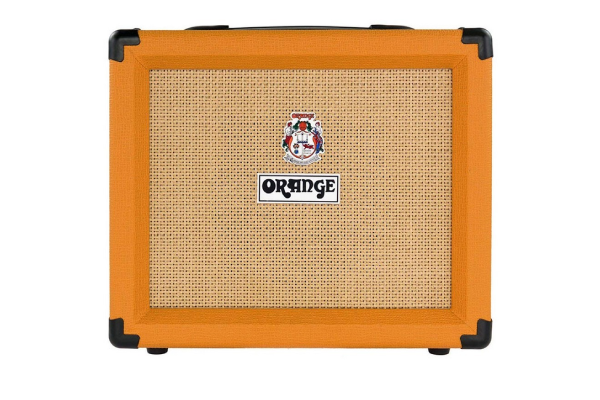
Orange amplifiers occupy a special place in guitar culture, and the Crush 20RT brings that distinctive British voice to budget-conscious players without dilution or compromise. I approached this amp with both excitement and skepticism—could a solid-state Orange really capture the aggressive midrange character and harmonic complexity that defines the brand?
The defining characteristic here is the tone. Orange’s signature voice—that pushed, compressed midrange that cuts through band mixes like a heated blade—is present and accounted for. I’ve used this amp for classic rock, punk, and alternative styles where that slightly aggressive, always-present character serves the music perfectly. The clean channel provides adequate headroom for jazz and country applications, though pristine Fender-style cleans aren’t really what you purchase an Orange to achieve. The dirty channel is where this amplifier truly comes alive, delivering everything from edge-of-breakup crunch to full-bodied distortion with surprising complexity for solid-state circuitry.
What distinguishes the RT variant is the inclusion of genuine spring reverb—not digital emulation, but actual mechanical springs. After years of digital reverb proliferation, reconnecting with authentic spring reverb reminded me why this technology remained standard in guitar amps for decades. The sound is three-dimensional, responsive to playing dynamics, and adds appropriate space without artificial coloration. Adjusting reverb via the dedicated knob feels more musical and intuitive than scrolling through presets or navigating digital menus.
The Crush 20RT’s construction reflects Orange’s commitment to quality across their product range. The cabinet features robust tolex covering in the brand’s iconic livery, controls operate with satisfying resistance, and the overall impression conveys permanence rather than planned obsolescence.
Practical features enhance the amp’s versatility without cluttering the straightforward interface. The headphone output incorporates Orange’s CabSim circuit, which emulates speaker cabinet response for more realistic tone when practicing silently or recording direct. The auxiliary input accommodates jam-along practice sessions, though I found myself wishing for slightly more input gain to better match modern smartphone output levels. The 10-inch Voice of the World speaker delivers surprisingly full-range response, though the closed-back cabinet design does emphasize midrange frequencies at the expense of some low-end extension.
If you’re drawn to music that benefits from present, forward midrange character—think alternative rock, punk, classic British invasion sounds, or modern indie textures—this amplifier speaks your language fluently. It’s less versatile than modeling amps with multiple channels and digital effects, but what it does, it does with conviction and personality.
Pros:
- Authentic Orange tone character with aggressive midrange presence
- Genuine spring reverb provides musical, responsive ambience
- Robust construction quality that reflects brand heritage
- CabSim headphone output for realistic silent practice tone
- Distinctive visual aesthetic with iconic Orange livery
- Straightforward controls make dialing in tones intuitive
Cons:
- Less versatile than multi-channel modeling alternatives
- Clean tones lack the headroom and sparkle of Fender-style amplification
- Single-channel design limits real-time switching between clean and dirty sounds
- Closed-back cabinet emphasizes midrange at expense of low-end extension
Yamaha THR10II
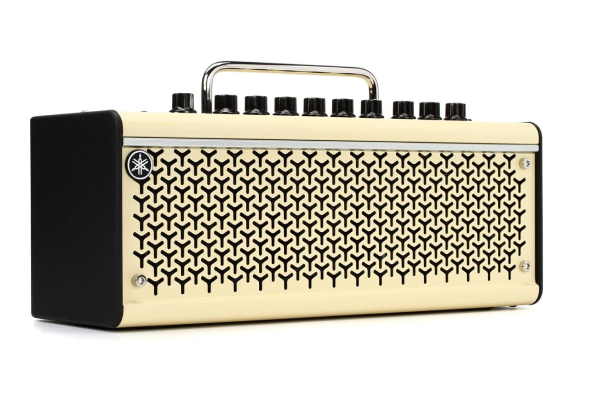
The Yamaha THR10II exists in a category somewhat apart from traditional amplifiers, and that distinction is precisely what makes it invaluable for modern guitarists balancing musical ambitions with practical living situations. After incorporating this amp into my daily practice routine and using it extensively for songwriting and pre-production work, I’ve come to view it as an essential tool rather than merely a convenient practice solution. The design philosophy here prioritizes realistic tone at whisper volumes, comprehensive connectivity, and integration with contemporary music creation workflows.
Yamaha’s amplifier modeling delivers surprisingly convincing representations of classic and modern tones. The fifteen amp models span clean, crunch, lead, hi-gain, and specialty voices, each implemented with attention to the subtle harmonic characteristics that define the original circuits. I was particularly impressed by how the Deluxe Crunch model captures that Fender-style breakup sweetness—the way notes bloom and sustain with musical compression rather than harsh clipping. The Brit Hi model handles high-gain applications more convincingly than I anticipated from such a compact package, maintaining articulation and note definition even under extreme distortion.
The USB connectivity transforms this amp into a complete recording interface. I’ve tracked guitar parts directly into my DAW using the THR10II’s amp modeling and effects, then reamped those signals through different settings to explore tonal options during mixing. The process is remarkably transparent—what you hear through the speakers translates accurately to recorded signals. The included Cubase AI software provides a capable starting point for musicians beginning their recording journey, though professional users will likely integrate the amp with their existing production environments.
Practical considerations reveal thoughtful design throughout. The battery operation capability (six AA batteries provide approximately six hours of operation) makes this genuinely portable—I’ve used it for outdoor practice sessions and travel situations where wall power wasn’t guaranteed. The auxiliary input handles backing tracks and instructional videos effectively, while the headphone output delivers convincing cabinet-simulated tone for completely silent practice. The USB charging port for mobile devices acknowledges the reality that modern practice sessions often involve smartphones or tablets for reference materials.
The physical footprint deserves specific mention. This amp occupies minimal desk or shelf space, making it ideal for musicians working within limited square footage. The aesthetic design is contemporary and understated—it looks equally appropriate in a music studio or a modern living space. Build quality feels substantial despite the compact dimensions, with controls that operate smoothly and a cabinet construction that minimizes resonance at higher volumes. For musicians seeking comprehensive functionality without dedicating significant physical space to amplification, exploring different instruments and their amplification needs often leads back to solutions like the THR10II.
Pros:
- Extended Stereo technology creates immersive soundstage beyond physical speaker size
- Exceptional tone quality at whisper volumes for apartment-friendly practice
- Comprehensive USB audio interface functionality for direct recording
- Battery operation enables genuinely portable practice sessions
- Fifteen amp models plus extensive effects processing
- Compact footprint ideal for limited space situations
Cons:
- Limited volume output for band rehearsal or small performance applications
- Proprietary power supply rather than standard IEC connection
- Higher price point than traditional practice amps with similar wattage
- Speaker configuration doesn’t project sound effectively in larger rooms
Blackstar ID:Core Stereo 10 V3
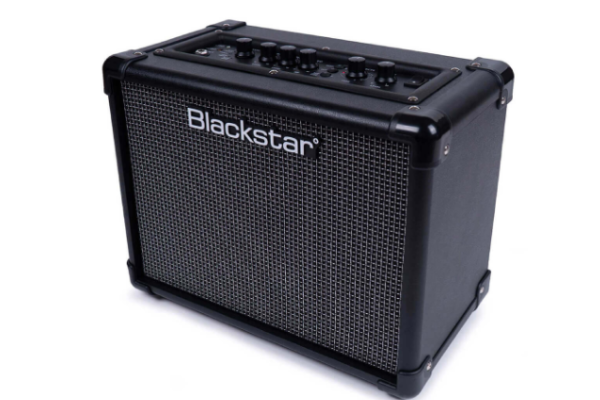
Blackstar’s Super Wide Stereo technology creates an immediately noticeable sense of spatial dimension. The stereo speaker configuration produces convincing depth and width, particularly when using modulation effects like chorus, phaser, or delay. I found myself gravitating toward this amp for practicing ambient and textural material where the stereo field contributes significantly to the overall musical experience. Compared to mono practice amps, the ID:Core delivers a more engaging listening environment that makes extended practice sessions less fatiguing and more inspiring.
The six voice channels (Clean Warm, Clean Bright, Crunch, Super Crunch, OD 1, OD 2) cover essential tonal territories with musical accuracy. The Clean Bright setting delivers sparkling clarity suitable for funk and country applications, while OD 2 ventures into modern high-gain territory with sufficient saturation for metal and hard rock styles. The Voice control within each channel provides additional tonal shaping, effectively doubling the available amplifier voices.
Blackstar’s Architect software integration extends the amp’s capabilities substantially. The editor provides access to detailed parameter adjustments, additional effects types, and preset management that transforms the ID:Core from a simple practice amp into a comprehensive tone-shaping platform. I spent time creating custom patches for specific songs and practice scenarios, then stored them in the amp’s memory for instant recall. This level of programmability typically requires significantly more expensive equipment, making its presence here particularly noteworthy.
The effects section deserves specific attention. Modulation, delay, and reverb effects are simultaneously available, allowing you to build complex ambient textures without external pedals. The effects quality exceeded my expectations—particularly the reverb algorithms, which range from subtle room ambience to vast hall spaces without sounding overly digital or artificial. For players interested in exploring how effects shape guitar tone, the ID:Core provides an excellent educational platform that encourages experimentation. Similar to comparing different headphones to understand how frequency response affects music perception, working with the ID:Core’s effects helps develop your ear for spatial processing and tone sculpting.
Practical features enhance the amp’s everyday usability. The USB connectivity enables direct recording with included cabinet simulation, the headphone output provides convincing tone for silent practice, and the auxiliary input accommodates jam-along sessions with backing tracks. The compact dimensions make this amp apartment-friendly and travel-appropriate, while the construction quality suggests durability beyond typical budget equipment.
Pros:
- Super Wide Stereo creates immersive spatial dimension for engaging practice experience
- Six voice channels with Voice control provide extensive tonal variety
- Simultaneous modulation, delay, and reverb effects without external pedals
- Architect software unlocks detailed editing and preset management
- USB connectivity for direct recording with cabinet simulation
- Compact footprint suitable for limited space situations
Cons:
- 10-watt output insufficient for most rehearsal or performance applications
- Stereo effect somewhat diminished when listening from off-axis positions
- Software required for accessing advanced features and detailed editing
- Clean headroom limited compared to dedicated clean amplifiers
Frequently Asked Questions
What makes a guitar amplifier good for beginners under $200?
The best beginner amplifiers under $200 combine straightforward controls with genuine versatility. After working with dozens of students, I’ve found that amps like the Fender Champion 20 or Blackstar ID:Core work particularly well because they provide multiple tones without overwhelming new players with complexity. Built-in effects eliminate the immediate need for pedal purchases, while headphone outputs facilitate quiet practice in shared living situations. The key consideration is choosing an amp that sounds musical at bedroom volumes—many traditional designs only achieve their best tone when pushed to levels inappropriate for home use.
Can I use these budget amps for band rehearsals?
The Boss Katana-50 MkII stands alone in this price category for genuine rehearsal applications. Its 50-watt output and efficient speaker design provide sufficient volume to remain audible alongside drums and bass in typical rehearsal environments. I’ve successfully used the Katana in full-band contexts for rock, punk, and metal styles without feeling underpowered. The remaining amplifiers on this list serve better as practice and recording tools—their lower wattage outputs struggle to compete with acoustic drums and bass amplification in the same physical space.
How do modeling amps compare to traditional tube amplifiers?
Having spent decades playing both technologies, I can confirm that tube amplifiers still offer subtle harmonic complexity and touch responsiveness that modeling hasn’t completely replicated. However, the practical gap has narrowed considerably. For home practice, recording applications, and learning contexts, modern modeling amps like those featured here deliver more than adequate tone quality. The convenience factors—multiple amp voices, built-in effects, direct recording capabilities, headphone outputs—often outweigh the subtle tonal differences that only become apparent in direct comparison. Think of it similarly to how comparing modern earbuds reveals that different technologies serve different priorities—convenience versus absolute fidelity.
Should I buy a more expensive amp with fewer features or a budget amp with many features?
This decision depends entirely on your musical priorities and usage context. I generally recommend that developing players choose feature-rich budget amps because versatility supports exploration and learning. Having access to multiple amp voices, various effects, and different tonal characters helps you discover your preferences and develop your ear. Once you’ve identified specific tones and applications that matter most to your music, investing in specialized equipment makes more sense. The exception would be if you’re absolutely certain about your tonal direction—if you only play jazz and exclusively want pristine clean tones, investing in a quality amp with exceptional clean channel performance serves you better than a multi-featured modeling amp.
What accessories do I need with a budget guitar amplifier?
Most amplifiers in this price range include everything necessary for immediate operation, but a few accessories significantly enhance the experience. A quality instrument cable (I recommend 10-15 foot length for home use) ensures reliable signal transmission without noise or interference. If your amp lacks built-in effects and you want to expand your tonal palette, a simple overdrive or distortion pedal provides an excellent starting point. For amps with effects loops, a basic delay or reverb pedal integrates beautifully with the amp’s preamp distortion. Consider a padded amp cover for protection during storage or transportation, and if you plan to record, an SM57 microphone remains the industry standard for capturing guitar amplifiers. Many players also appreciate a footswitch for channel switching, though this applies primarily to amps offering that functionality.
How important is speaker size in budget amplifiers?
Speaker size significantly influences an amplifier’s tonal character and volume projection. The Boss Katana-50 MkII’s 12-inch speaker contributes substantially to its full-range tone and ability to function in rehearsal contexts. However, speaker size isn’t everything—driver quality, cabinet design, and amp voicing all contribute to final tone. The Yamaha THR10II achieves remarkable tonal balance despite its small speakers through careful acoustic design and DSP processing. Consider speaker size within the context of your intended applications—bedroom practice favors compact designs, while rehearsal and recording applications benefit from larger speaker diameters.
Can I achieve professional recording results with amplifiers under $200?
Absolutely. I’ve recorded commercial-quality guitar tracks using every amplifier on this list. The key factors are proper microphone placement, appropriate room acoustics, and skilled post-processing rather than amplifier cost. The Boss Katana-50 MkII and Yamaha THR10II both offer direct recording capabilities that bypass microphone techniques entirely, providing cabinet-simulated signals that integrate beautifully into modern productions. The mixing context matters enormously—once your guitar track sits alongside drums, bass, vocals, and other instrumentation, the subtle differences between budget and premium amplification become increasingly difficult to perceive. For musicians exploring different songs and developing their recording skills, these budget amplifiers remove cost as a barrier to achieving professional results.