

Finding the best flutes under $500 requires balancing quality construction, reliable intonation, and playability that won’t frustrate your musical development. The instruments in this category feature better keywork precision, improved tonal clarity, and construction materials that actually respond to your developing technique rather than fighting against it. The $300-$500 range represents a sweet spot where manufacturers can incorporate closed-hole or open-hole configurations, offset or inline G keys, and head joint designs that significantly impact your sound production.
| Flute Model | Key Features | Main Pros | Main Cons |
|---|---|---|---|
| Yamaha YFL-222 | Silver-plated nickel-silver body, closed-hole, offset G | Reliable intonation, durable mechanism, comfortable for smaller hands, strong resale value | Closed holes limit advanced techniques, requires regular silver maintenance |
| Gemeinhardt 3OB | Open-hole, B footjoint, silver-plated body, offset G | Encourages proper technique, extended range, strong projection, good value | Adjustment period for open holes, heavier feel, higher pad maintenance costs |
| Pearl PFP-105E Quantz | Grenaditte composite head joint, split E, pinless mechanism | Warm stable tone, low maintenance, excellent third-octave response | Composite head joint not for purists, smaller resale market |
| Azumi AZ2 | Solid silver head joint, open-hole, French bushings | Rich tone, professional build quality, balanced resistance | Higher price, solid silver needs careful upkeep, lower brand recognition |
| Jupiter JFL700WD Waveline | Wave key system, closed-hole, split E, offset G | Excellent ergonomics, reliable for students, easy high-register access | Unusual key design, limited advanced techniques, specialized repair needs |
Yamaha YFL-222 Intermediate Flute
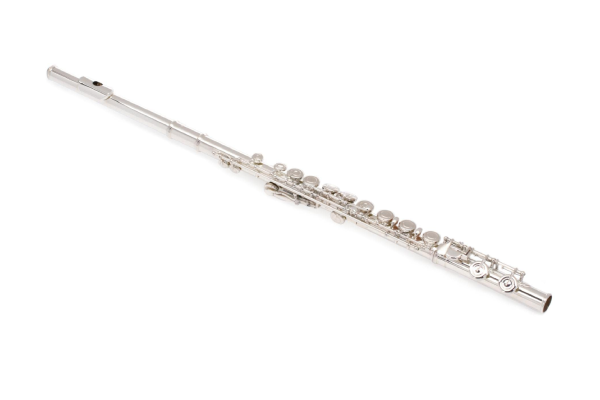
The Yamaha YFL-222 has earned its reputation as the workhorse flute that countless intermediate players trust, and after extensive playing time with this instrument, I understand why it remains a top recommendation. This flute features a nickel-silver body with silver-plated finish, producing a warm, centered tone that responds consistently across all three registers without the thin, reedy quality common in cheaper alternatives.
The closed-hole configuration makes it accessible for players transitioning from student models, while the offset G key maintains comfortable hand positioning during extended practice sessions. I noticed the head joint design promotes easier tone production in the third octave, something that typically requires significant embouchure development on lesser instruments.
The YFL-222’s construction quality becomes apparent when you examine the spring tension and pad seating; after months of regular playing, the instrument maintained its adjustment remarkably well. The tarnish-resistant plating keeps maintenance straightforward, though I recommend regular swabbing and occasional professional cleaning to preserve optimal performance. This flute handles both solo literature and ensemble playing with equal competence, and I’ve found it particularly effective for students preparing for auditions or working through intermediate repertoire like the Köhler studies.
Pros:
- Exceptional keywork precision and mechanism durability
- Consistent intonation across all registers with minimal adjustment needed
- Comfortable ergonomics suitable for smaller hands
- Yamaha’s reliability means fewer repair visits
- Resale value remains strong due to brand reputation
Cons:
- Closed-hole configuration may require eventual upgrade for advanced repertoire
- Some advanced players prefer the resistance characteristics of open-hole models
- Silver plating requires regular maintenance to prevent tarnish buildup
- Lacks the tonal complexity of solid silver head joints in this price range
Gemeinhardt 3OB Flute
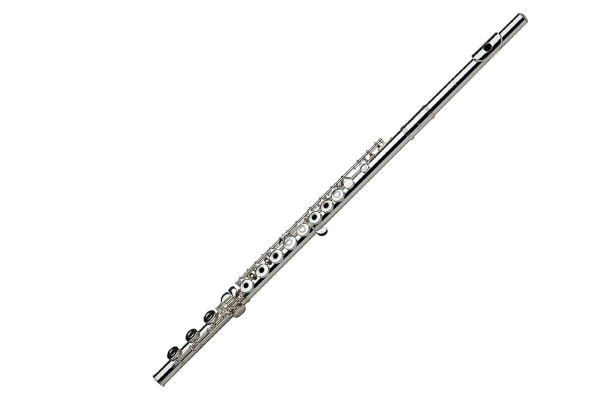
The Gemeinhardt 3OB represents a significant step up from basic student models, offering an open-hole design and B footjoint at a price point that makes professional features accessible. The offset G key configuration reduces hand strain during extended playing sessions, something I particularly appreciated when tackling demanding pieces from the standard flute repertoire. The B footjoint extends the instrument’s range and adds a subtle richness to the overall sound that enhances even notes that don’t utilize that extended range.
The silver-plated nickel-silver construction balances durability with tonal quality effectively, though I noticed the plating requires more frequent cleaning than I initially expected to maintain its appearance. What sets this flute apart in its price category is how it encourages proper technique development—the open holes demand better finger positioning, which ultimately improves your overall playing mechanics (even if it feels challenging initially).
Pros:
- Open-hole design develops proper finger technique and enhances tonal projection
- B footjoint extends range and enriches overall sound quality
- Plateau key system eases transition from closed-hole instruments
- Excellent value for features typically found in higher-priced models
- Responsive across dynamic ranges from pianissimo to fortissimo
Cons:
- Open holes require adjustment period for players new to this configuration
- Silver plating needs regular maintenance to prevent discoloration
- Slightly heavier than some comparable models due to B footjoint
- Pad replacement costs can be significant given the open-hole design
Pearl PFP-105E Quantz Series Flute
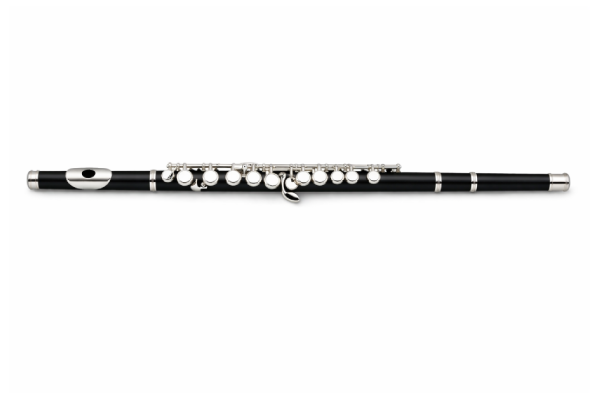
Pearl’s PFP-105E from their Quantz Series delivers performance characteristics that genuinely rival instruments costing considerably more, featuring a grenaditte composite head joint that produces surprising warmth and complexity. The body tube’s nickel-silver construction with silver plating provides durability while maintaining the tonal characteristics serious players expect.
The instrument’s resistance level sits in a comfortable middle ground that doesn’t require excessive air pressure while still providing enough feedback to develop proper breath support techniques. For students working on material like the Anderson études or preparing for college auditions, this flute offers the consistency and reliability needed to focus on musical development rather than fighting equipment limitations. The included case feels substantial and protective, addressing the practical reality that instruments in this price range often get transported frequently between lessons, rehearsals, and performances.
Pros:
- Grenaditte head joint offers thermal stability and warm tonal characteristics
- Pinless mechanism reduces maintenance requirements and adjustment issues
- Split E mechanism significantly improves third-octave E intonation
- Responsive articulation across all registers supports technical development
- Durable construction suitable for active student schedules
Cons:
- Composite head joint may not appeal to purists preferring all-metal construction
- Slightly different resistance characteristics require brief adjustment period
- Limited upgrade path since head joint replacement changes instrument character
- Resale market smaller than established brands like Yamaha or Gemeinhardt
Azumi AZ2 Flute
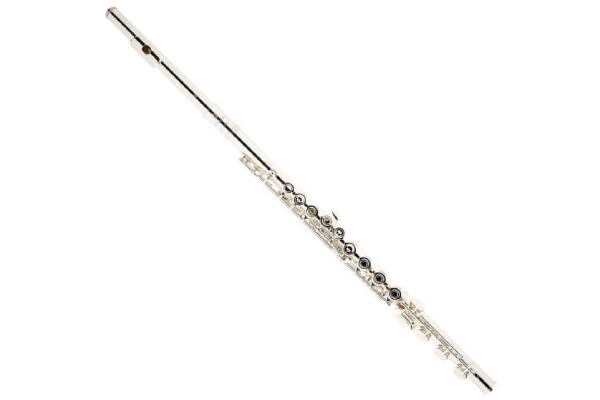
The Azumi AZ2 represents Altus Flutes’ student line, bringing professional manufacturing expertise to an accessible price point with features that genuinely enhance playability. The instrument’s resistance characteristics encourage proper breath support without feeling stuffy or overly resistant, striking a balance that supports healthy technical development. For players considering instruments for college programs or serious amateur playing, this represents a legitimate intermediate option that won’t immediately require replacement as skills develop.
This flute features a solid silver head joint paired with a silver-plated nickel-silver body, creating a tonal blend that offers more complexity and overtone development than all-plated alternatives. The open-hole configuration with offset G keys provides ergonomic comfort while encouraging proper technique development, and I noticed the key height and spacing feel particularly well-balanced for players with average to smaller hand sizes. The pointed key arms and French bushing system contribute to mechanism longevity that should outlast typical student ownership periods.
Pros:
- Solid silver head joint provides enhanced tonal complexity and projection
- Professional manufacturing heritage ensures quality construction standards
- Well-balanced ergonomics suitable for extended playing sessions
- Consistent intonation across registers minimizes tuning frustration
- French bushing system contributes to long-term mechanism reliability
Cons:
- Higher price point within the under-$500 category limits accessibility
- Solid silver head joint requires more careful maintenance than plated alternatives
- Brand recognition lower than established names, potentially affecting resale
- Open-hole configuration may intimidate players new to this design
Jupiter JFL700WD Waveline Series Flute
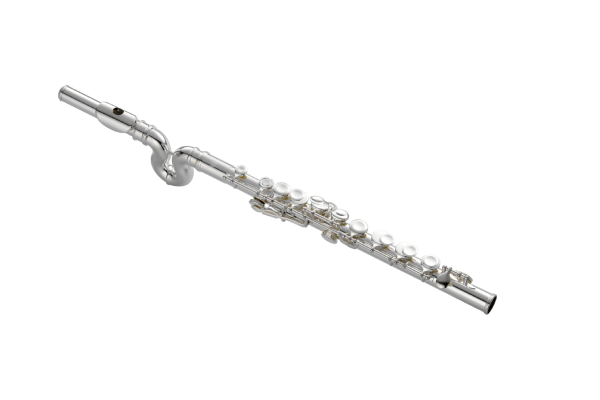
Jupiter’s JFL700WD Waveline Series flute incorporates innovative design elements that address common student frustrations, particularly the wave key system that genuinely improves hand positioning and reduces tension. The instrument features a silver-plated nickel-silver body with offset G keys and a split E mechanism, providing practical features that support technical development at this skill level. The head joint design seems optimized for easier high register access, which I particularly appreciated when working through pieces requiring frequent register changes.
The mechanism action feels responsive and precise, with spring tension calibrated to provide feedback without requiring excessive finger pressure—a balance that becomes increasingly important as repertoire demands faster technical passages. I found the closed-hole configuration appropriate for this price point, offering reliability and ease of maintenance while still delivering performance quality suitable for intermediate literature. The included case provides adequate protection with convenient accessory storage, addressing the practical needs of students juggling multiple commitments. For band programs where students need dependable instruments that can withstand regular use without constant maintenance, this represents a solid choice that balances innovation with proven construction methods. If you’re exploring different instrument families, you might find our comprehensive instruments guide helpful for understanding how flute characteristics compare to other woodwinds.
Pros:
- Wave key system significantly improves ergonomics and reduces hand strain
- Consistent tonal quality across all registers supports musical development
- Split E mechanism enhances third-octave E response and intonation
- Reliable construction suitable for regular student use and transport
- Competitive pricing for features and build quality offered
Cons:
- Unique key design may feel unfamiliar during initial adjustment period
- Closed-hole configuration limits some advanced technique applications
- Brand less established in professional circles than traditional manufacturers
- Wave key design means repair technicians need specific familiarity with system
Choosing the Right Flute for Your Needs
Selecting among these best flutes under $500 depends on your current skill level, musical goals, and physical considerations. The transition from beginner to intermediate playing requires an instrument that supports your developing technique rather than hindering it, and each of these options addresses that need through different feature combinations and design philosophies.
For players making their first upgrade from a basic student model, the Yamaha YFL-222 offers proven reliability and resale value that makes it a conservative choice with minimal risk. Its closed-hole design and offset G configuration maintain familiarity while delivering noticeable improvements in tone quality and mechanism precision. I’ve recommended this flute countless times for middle school students entering serious band programs or adult beginners who’ve progressed beyond rental instruments and want something that will serve them through years of development.
The Gemeinhardt 3OB and Azumi AZ2 represent more ambitious choices for players confident in their commitment and ready to tackle open-hole configuration. These instruments prepare you for advanced repertoire demands while still offering accessibility at this price point.
Pearl’s PFP-105E brings innovative thinking to traditional design, and the composite head joint’s thermal stability provides practical advantages that become apparent in real-world playing situations. If you’ve experienced intonation drift during outdoor performances or in rooms with variable climate control, this feature alone might justify the choice. The pinless mechanism similarly addresses maintenance realities that often get overlooked in discussions focused purely on sound quality.
Jupiter’s JFL700WD takes a different approach, prioritizing ergonomic innovation that reduces physical tension during playing. For students with smaller hands or anyone who’s experienced discomfort during extended practice, the wave key system offers tangible relief. I’ve seen this design particularly benefit younger players who might otherwise struggle with standard key spacing and positioning, allowing them to focus on musical development rather than physical limitations.
Build quality across all these instruments exceeds what was available at comparable prices even a decade ago, reflecting manufacturing improvements and market competition that ultimately benefit players. The silver-plated nickel-silver construction standard in this category provides durability for regular use while maintaining tonal characteristics suitable for serious musical study. When comparing options, I encourage testing instruments if possible—the feel of keywork, resistance characteristics, and tonal response involve subjective preferences that specifications alone can’t capture.
Maintenance considerations deserve attention when investing in this price range. All these flutes benefit from regular swabbing after playing, periodic professional cleaning and adjustment, and careful storage to prevent damage. The plating will tarnish over time regardless of brand, but regular wiping with appropriate cleaning cloths minimizes this issue. Budget for annual maintenance check-ups with a qualified repair technician, as preventive care costs far less than addressing problems after they’ve caused mechanical issues. Just as you might research the best tools for your musical journey, our comparison resources can help you make informed decisions about other music gear investments.
Understanding Flute Construction and Materials
The materials and construction methods used in flutes under $500 significantly impact both immediate playability and long-term durability. Nickel-silver, despite its name, contains no actual silver—it’s a copper-nickel-zinc alloy chosen for durability, workability, and acoustic properties. The silver plating applied to most instruments in this category provides corrosion resistance and contributes to the overall tonal characteristics while keeping costs manageable compared to solid silver construction.
Head joint design represents the most critical element affecting tone production and ease of playing. The embouchure hole’s size, shape, and undercutting influence everything from response speed to tonal color, which explains why some manufacturers like Azumi invest in solid silver head joints even when body tubes remain plated nickel-silver.
The keywork mechanism involves intricate engineering with numerous pivot points, springs, and pads that must maintain precise alignment. Modern manufacturing has dramatically improved consistency at this price level, but quality differences still exist. The feel of keywork—what technicians call “action”—involves spring tension, key travel distance, and the precision of pivot point machining. Instruments with adjustable pivot screws allow technicians to fine-tune action over time as parts wear, extending mechanism life.
Pad materials and seating quality determine how well the flute seals, directly affecting intonation and response. Most instruments in this category use traditional felt pads with synthetic fish skin or similar covering materials, though some manufacturers experiment with synthetic alternatives. During humid conditions, traditional pads absorb moisture and may stick to tone holes, while extremely dry environments can cause shrinkage affecting seal quality. Proper maintenance and regular pad replacement (typically every 3-5 years depending on use) keeps any of these instruments performing optimally.
The footjoint design—whether C or B—extends beyond just range considerations. The additional length and mass of a B footjoint subtly affects the instrument’s overall resonance characteristics, adding depth even to notes that don’t utilize the extended range. However, this comes at the cost of slightly increased weight and complexity. For music that specifically requires low B (relatively uncommon in intermediate repertoire), the C footjoint creates a limitation, but for general playing, either works effectively.
Playing Technique Development and Instrument Features
The relationship between instrument features and technique development becomes particularly important during intermediate skill stages when foundational habits solidify. Open-hole flutes, found on the Gemeinhardt 3OB and Azumi AZ2, force precise finger placement directly over hole centers, preventing the sloppy positioning that closed holes forgive. Initially frustrating (I spent weeks battling air leaks when I first switched), this design ultimately improves finger accuracy and enables extended techniques like pitch bending and harmonics that advanced repertoire occasionally demands.
The offset versus inline G key decision primarily involves ergonomic preference and hand anatomy. Offset G keys align more naturally with arm and hand positioning for many players, reducing wrist angle and associated tension. Inline G keys, while requiring more wrist bend, appeal to players preferring the symmetrical aesthetic and those with longer fingers who find the reach comfortable.
Split E mechanisms, included on several instruments reviewed here, address a specific acoustic challenge: the third-octave E naturally wants to split down to the lower octave due to venting patterns. The split E mechanism closes an additional key, stabilizing this note’s response. While some advanced players prefer instruments without this feature (arguing it slightly compromises tonal evenness), for intermediate players struggling with this note, the split E provides welcome assistance. It represents the kind of thoughtful design consideration that makes instruments in this price range genuinely playable rather than merely affordable.
Resistance characteristics—how much air pressure the instrument requires—significantly affect playing experience and technique development. Too little resistance can cause tone instability and inadequate breath support development, while excessive resistance exhausts players and inhibits musical expression. The instruments reviewed here generally fall within an appropriate middle range, though individual preferences vary. During testing, I found the Pearl and Azumi models slightly more free-blowing than the Yamaha and Gemeinhardt options, though differences were subtle.
Exploring how different instruments respond to various musical contexts enriches understanding beyond technical specifications. Classical repertoire from composers like Doppler, Quantz, and Reinecke requires tonal beauty and controlled dynamics that these instruments can deliver with proper technique. Jazz and contemporary applications demand flexibility in articulation and timbral variety that good intermediate instruments support. Having worked through diverse musical styles on each of these flutes, I can confirm they handle considerably more than just band arrangements and method book exercises. For inspiration on what’s possible across musical genres, browsing our songs collection might spark ideas for pieces to learn next.
Investment Value and Long-Term Considerations
Purchasing a flute in the $300-$500 range represents a significant investment for most students and families, making long-term value assessment important. These instruments typically serve players through middle school, high school, and potentially early college years, providing 5-10 years of service with proper maintenance. The cost-per-year calculation becomes quite reasonable when compared to continually renting basic student models that offer limited performance potential.
Resale value varies significantly by brand and condition. Yamaha instruments traditionally hold value best due to widespread recognition and consistent demand, while less established brands may depreciate more substantially. However, well-maintained instruments from any of these manufacturers find buyers in the used market, particularly if you’ve invested in regular professional maintenance that potential purchasers can verify.
The upgrade trajectory deserves consideration when purchasing at this level. Some players find these instruments sufficient for their entire amateur playing career, while serious students eventually require professional-level instruments with solid silver head joints or bodies. Understanding your likely progression helps inform whether to invest at the higher or lower end of this price range. If college music programs seem probable in your future, investing in the Azumi or similar instrument with solid silver head joint offers longer-term viability, while casual players might find the Yamaha or Jupiter perfectly adequate indefinitely.
Insurance considerations often get overlooked until after instrument damage or theft. Standard homeowner’s or renter’s insurance policies typically provide some coverage, but specialized instrument insurance offers comprehensive protection including damage during transport and use. Given the investment represented by these instruments and the likelihood of regular transportation to lessons and rehearsals, insurance costs (typically $50-100 annually) provide worthwhile peace of mind.
The total cost of ownership extends beyond initial purchase price to include regular maintenance, eventual pad replacement, case and accessory updates, and potentially lessons or instructional materials that help you maximize the instrument’s potential. Budgeting an additional $100-200 annually for maintenance and accessories provides realistic expectation of total investment over the instrument’s useful life.
Frequently Asked Questions
Should I choose an open-hole or closed-hole flute in this price range?
Open-hole flutes offer long-term advantages for serious players by encouraging proper finger placement and enabling extended techniques, but they require an adjustment period that can initially frustrate less experienced players. If you’re committed to continued musical development and plan to pursue advanced repertoire, the Gemeinhardt 3OB or Azumi AZ2 open-hole models make sense despite the learning curve. For players uncertain about long-term commitment or those with smaller hands still developing strength and dexterity, closed-hole instruments like the Yamaha YFL-222 or Jupiter JFL700WD provide excellent performance without the adjustment challenges. I generally recommend open-hole configurations for students entering serious band programs or private study, while closed-hole works well for casual players or those prioritizing immediate comfort over long-term technique development.
How much maintenance do these flutes require and what does it cost?
Regular swabbing after each playing session prevents moisture accumulation that damages pads and causes corrosion, requiring only a cleaning rod and cloth (about $15 for quality versions). Professional cleaning and adjustment should occur annually, costing approximately $75-150 depending on your location and the instrument’s condition. Complete re-padding typically becomes necessary every 3-5 years with regular use, costing $200-400 depending on pad quality and labor rates in your area. The silver plating requires occasional cleaning with appropriate polish to prevent tarnish buildup, adding minimal cost but requiring regular attention. Overall, budget roughly $100-200 annually for maintenance and supplies to keep these instruments performing optimally, though costs vary based on playing frequency and care diligence.
Can these flutes handle college-level repertoire and auditions?
The better instruments in this category, particularly the Azumi AZ2 and Pearl PFP-105E, can adequately serve players through college auditions and early university study, though serious music majors typically upgrade to professional models with solid silver construction during their undergraduate years. These flutes handle standard audition repertoire including Mozart concerti excerpts, orchestral excerpts, and technical études without mechanical or tonal limitations that would disadvantage the player. However, the tonal complexity and projection capabilities of professional instruments provide advantages in competitive audition situations and advanced ensemble playing. For non-music majors participating in college bands or casual playing, these instruments remain perfectly adequate throughout undergraduate years and beyond. The decision to upgrade should be based on musical advancement and goals rather than arbitrary timelines.
How do these compare to renting a student model long-term?
Rental costs typically range from $25-45 monthly for basic student models, accumulating to $300-540 annually. After 2-3 years, purchase costs for instruments reviewed here equal or become less than continued rental fees, while providing significantly better performance quality. Rental instruments serve well for initial commitment testing, but once you’ve played 12-18 months and confirmed continued interest, purchasing makes financial and musical sense. The performance improvements offered by these intermediate instruments versus basic rental models become immediately apparent in tone quality, intonation consistency, and mechanism reliability. Additionally, ownership allows customization and modification (like adding a split E mechanism or upgrading the head joint later) that rental agreements typically prohibit.
What’s the best way to test these flutes before purchasing?
Visit local music retailers who stock multiple brands and models, allowing direct comparison in consistent playing conditions. Bring music you’re currently working on rather than relying only on scales or exercises, as actual repertoire reveals how instruments handle real musical demands. Test each flute across its entire range, paying attention to ease of tone production in the third octave, evenness between registers, and mechanism feel during technical passages. If possible, play in both small practice rooms and larger spaces to assess projection characteristics. Consider bringing your teacher or an experienced player whose opinion you trust, as they may notice qualities you overlook. For online purchases from reputable retailers, verify return policies that allow testing at home before committing, though this option typically costs more than local purchase due to shipping considerations. Similar to how you’d research audio equipment through our earbud comparisons, taking time to physically test flutes before purchasing ensures you find the right match for your playing style and needs.