
Portable speaker sound quality has become a defining factor for music enthusiasts seeking premium audio experiences on the go. Whether you’re hosting outdoor gatherings, traveling, or simply enjoying music at home, understanding what separates exceptional portable speakers from mediocre ones can transform your listening experience. This comprehensive guide explores the technical aspects, key features, and practical considerations that determine superior sound performance in portable audio devices.
Understanding Portable Speaker Sound Quality Fundamentals
Sound quality in portable speakers depends on multiple interconnected factors that work together to deliver clear, balanced audio. The core components include driver size and configuration, amplifier power, digital signal processing, and acoustic design. Unlike stationary home audio systems, portable speakers must balance performance with portability, battery efficiency, and durability.
Driver configuration plays a crucial role in sound reproduction. Most quality portable speakers feature dedicated drivers for different frequency ranges: tweeters for high frequencies, mid-range drivers for vocals and instruments, and woofers or passive radiators for bass response. The size and quality of these drivers directly impact the speaker’s ability to reproduce accurate sound across the entire frequency spectrum.
Frequency Response and Audio Range
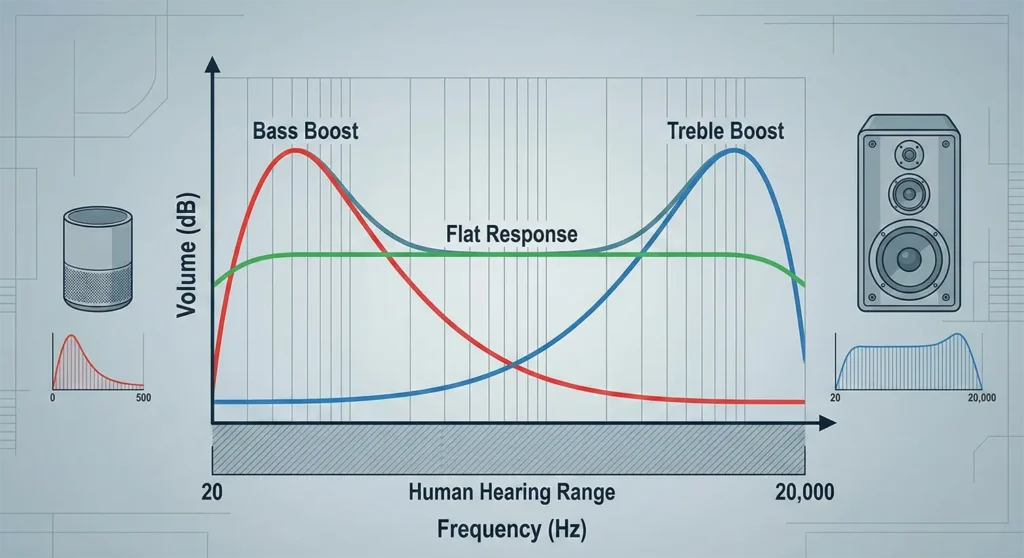
Frequency response indicates the range of sound frequencies a speaker can reproduce, measured in Hertz (Hz). Human hearing typically ranges from 20 Hz to 20,000 Hz (20 kHz). Premium portable speakers aim to cover as much of this range as possible, though physical size limitations often constrain deep bass reproduction below 60-80 Hz.
A flat frequency response curve indicates that a speaker reproduces all frequencies at relatively equal volumes, resulting in more accurate, natural sound. Many manufacturers tune their speakers with slight emphasis on bass or treble to match consumer preferences, but the most authentic reproduction comes from balanced frequency response.
Top 3 Portable Speakers with Great Sound Quality
Bose SoundLink Flex
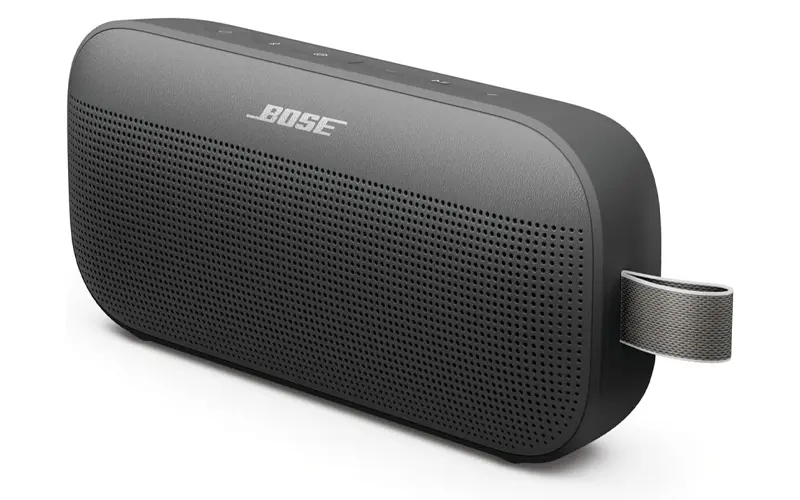
The Bose SoundLink Flex delivers exceptional sound quality through proprietary PositionIQ technology that automatically adjusts audio output based on speaker orientation. Its custom-engineered transducer and dual passive radiators produce surprisingly deep bass for its compact size, while maintaining clear midrange and crisp highs. The speaker features an IP67 waterproof rating, making it ideal for outdoor use without compromising acoustic performance. With up to 12 hours of battery life and Bluetooth connectivity supporting high-quality codecs, the SoundLink Flex offers consistent, balanced sound across all volume levels.
JBL Charge 5
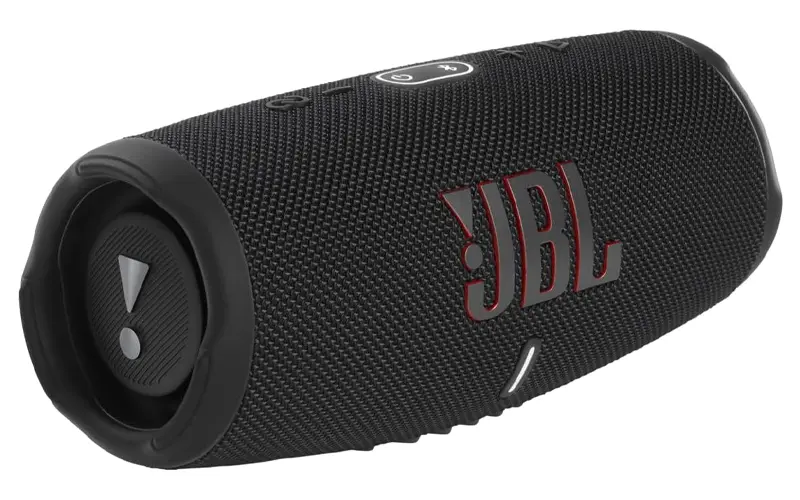
The JBL Charge 5 stands out with its powerful driver configuration featuring a racetrack-shaped woofer, separate tweeter, and dual JBL bass radiators that deliver punchy low-end response and detailed high frequencies. This portable speaker produces room-filling sound with minimal distortion even at maximum volume, thanks to its 40-watt amplifier and optimized DSP tuning. The IP67-rated design ensures durability in any environment, while the built-in powerbank functionality adds practical versatility. With approximately 20 hours of playtime and JBL PartyBoost capability for pairing multiple speakers, the Charge 5 combines impressive audio performance with extended usability.
Marshall Emberton II
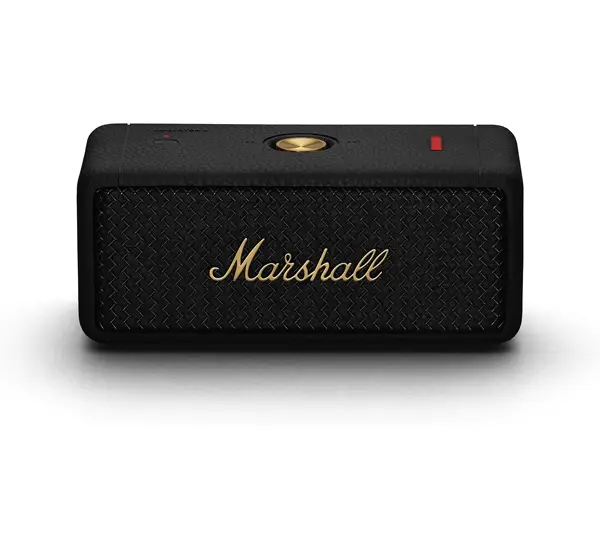
The Marshall Emberton II offers true 360-degree sound through its dual-driver configuration that projects audio omnidirectionally with remarkable clarity and depth. Marshall’s signature sound tuning emphasizes balanced frequency response with controlled bass, articulate midrange, and smooth treble that suits rock, jazz, and acoustic genres exceptionally well. The compact speaker features True Stereophonic multi-directional sound technology, ensuring consistent audio quality regardless of listener position. With over 30 hours of battery life, Bluetooth 5.1 connectivity, IP67 water resistance, and wireless charging capability, the Emberton II delivers premium sound quality in an iconic, portable package.
Key Technical Specifications That Impact Sound Quality
Driver Size and Configuration
Driver diameter significantly influences sound quality, particularly in bass reproduction. Larger drivers can move more air, creating deeper, more powerful bass notes. Common portable speaker drivers range from 40mm to 70mm, with some premium models featuring even larger units.
Active driver count also matters. Stereo speakers with dual drivers provide better sound separation and imaging than single-driver designs. High-end portable speakers may include four or more drivers arranged in specific configurations to create wider soundstages and improved directionality.
Amplifier Power and Efficiency
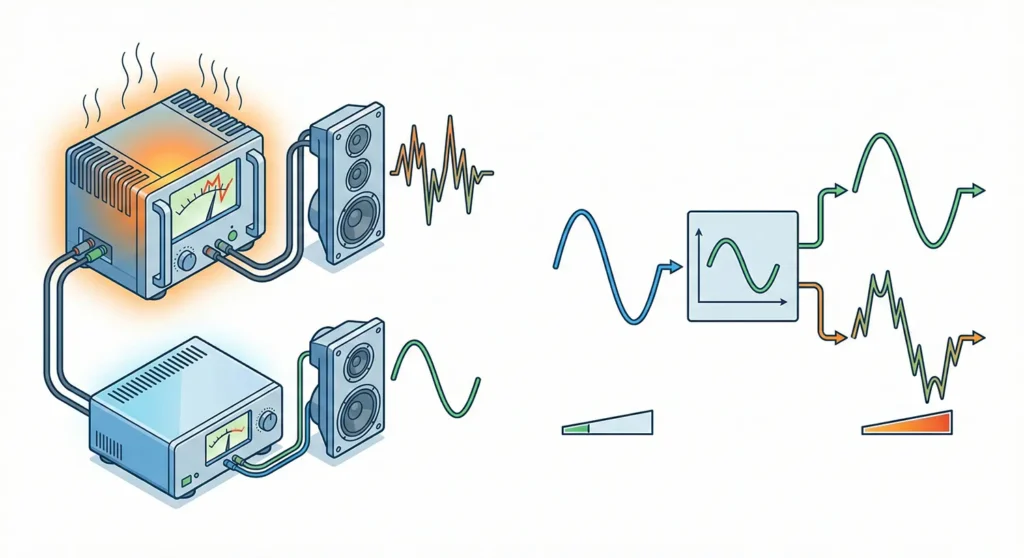
Amplifier wattage determines maximum volume levels and dynamic range capability. However, raw power alone doesn’t guarantee quality. Efficient amplifier design paired with well-matched drivers produces cleaner sound with less distortion, especially at higher volumes.
Total Harmonic Distortion (THD) measures audio signal degradation through the amplification process. Lower THD percentages (typically below 1%) indicate cleaner amplification. Premium portable speakers maintain low distortion even at peak volumes, ensuring clarity regardless of listening level.
Digital Signal Processing Technology
Modern portable speakers employ sophisticated DSP algorithms to optimize sound output. These processors can enhance bass response, prevent driver overextension, adjust equalization based on environmental factors, and create virtual surround effects. Advanced DSP compensates for physical limitations inherent in compact speaker designs.
Some manufacturers implement adaptive EQ that automatically adjusts sound based on volume level, ensuring consistent tonal balance whether listening quietly or at maximum output. This technology prevents the common issue where speakers sound tinny at low volumes or muddy when pushed hard.
Acoustic Design Elements
Cabinet Construction and Materials
Speaker enclosure design profoundly affects sound quality. Rigid, well-braced cabinets minimize unwanted vibrations and resonances that color sound. Premium materials like aluminum, high-density plastics, and composite materials provide necessary stiffness while maintaining portability.
Internal cabinet volume and port design influence bass response. Properly tuned bass reflex ports enhance low-frequency output by allowing rear driver movement to contribute to sound production. Sealed designs offer tighter, more controlled bass but typically with less extension.
Passive Radiators and Bass Enhancement
Passive radiators are unpowered drivers that vibrate sympathetically with active drivers, extending bass response without requiring additional amplification. This approach allows manufacturers to achieve deeper bass in compact enclosures while maintaining battery efficiency.
The size, weight, and tuning of passive radiators determine their effectiveness. Larger, heavier radiators produce deeper bass but require more powerful active drivers to activate them properly. Well-implemented passive radiator designs can make small speakers sound surprisingly full and rich.
Codec Support and Wireless Audio Quality
Bluetooth Codec Comparison
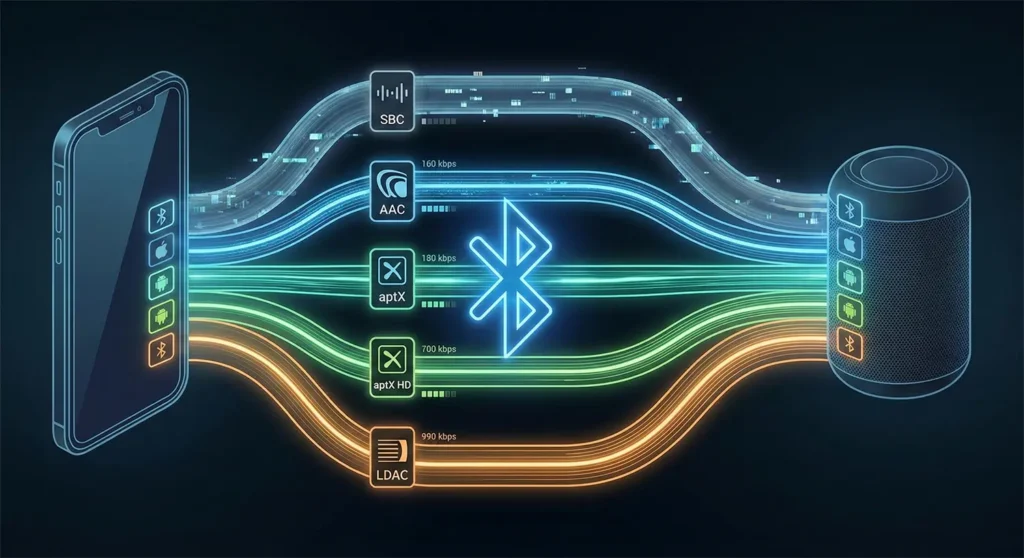
Bluetooth codec selection significantly impacts wireless audio quality. Standard SBC (Subband Coding) provides baseline quality but often introduces compression artifacts. Advanced codecs like AAC, aptX, aptX HD, and LDAC offer superior sound through higher bitrates and more efficient compression algorithms.
AAC delivers excellent quality for Apple device users, while aptX and aptX HD provide enhanced performance with compatible Android devices. LDAC, supporting up to 990 kbps bitrate, approaches near-lossless wireless transmission quality. Speaker and source device must both support the same codec to achieve optimal results.
Wireless Range and Stability
Bluetooth version affects both connection stability and potential audio quality. Bluetooth 5.0 and newer versions offer extended range, improved connection stability, and support for higher-quality audio transmission. These improvements reduce dropouts and maintain consistent quality even with obstacles between source and speaker.
Multi-device connectivity and seamless switching capabilities enhance user experience without compromising audio quality. Advanced antenna design and signal processing help maintain strong connections in challenging environments.
Environmental Factors Affecting Performance
Outdoor vs. Indoor Acoustics
Portable speakers perform differently in various environments. Indoor spaces with reflective surfaces create natural reverb and bass reinforcement, while outdoor settings lack these acoustic enhancements. Many manufacturers optimize their waterproof outdoor speakers with enhanced bass and increased maximum volume to compensate for open-air dissipation.
Surface placement dramatically affects sound quality. Speakers placed on hard, flat surfaces benefit from boundary reinforcement that enhances bass response. Elevated placement or soft surface positioning may reduce bass but can improve clarity and reduce vibration-induced distortion.
Volume Level and Distance Considerations
Optimal listening distance varies by speaker design and size. Most portable speakers perform best at 3-10 feet distance, where driver integration creates cohesive sound. Closer positioning may reveal individual driver characteristics, while excessive distance reduces detail and impact.
Many quality speakers maintain tonal balance across their volume range, though some exhibit frequency response shifts at different levels. Testing speakers at various volumes during evaluation ensures they perform well in your typical use scenarios.
Evaluating Sound Quality: Practical Testing Methods
Critical Listening Techniques
Assessing portable speaker sound quality requires systematic evaluation using familiar music across diverse genres. Well-recorded acoustic tracks reveal clarity and natural timbre, while bass-heavy electronic music tests low-frequency extension and control. Complex orchestral pieces challenge dynamic range and detail retrieval.
Pay attention to midrange clarity, as this frequency range contains most musical information including vocals and primary instruments. Recessed or overly forward midrange indicates poor tuning. High frequencies should sound crisp without harshness or sibilance. Bass should feel controlled and tuneful rather than boomy or one-note.
Comparative Analysis
Direct A/B comparison between speakers reveals subtle quality differences. Using identical source material and volume levels, switch between speakers to assess tonal balance, detail retrieval, soundstage width, and bass quality. Note which speaker presents music more naturally and effortlessly.
Consider how different portable speaker brands approach sound tuning. Some prioritize accuracy, while others emphasize excitement through enhanced bass or treble. Your preference depends on listening priorities and typical music genres.
Premium Features Enhancing Audio Experience
Stereo Pairing and Multi-Speaker Systems
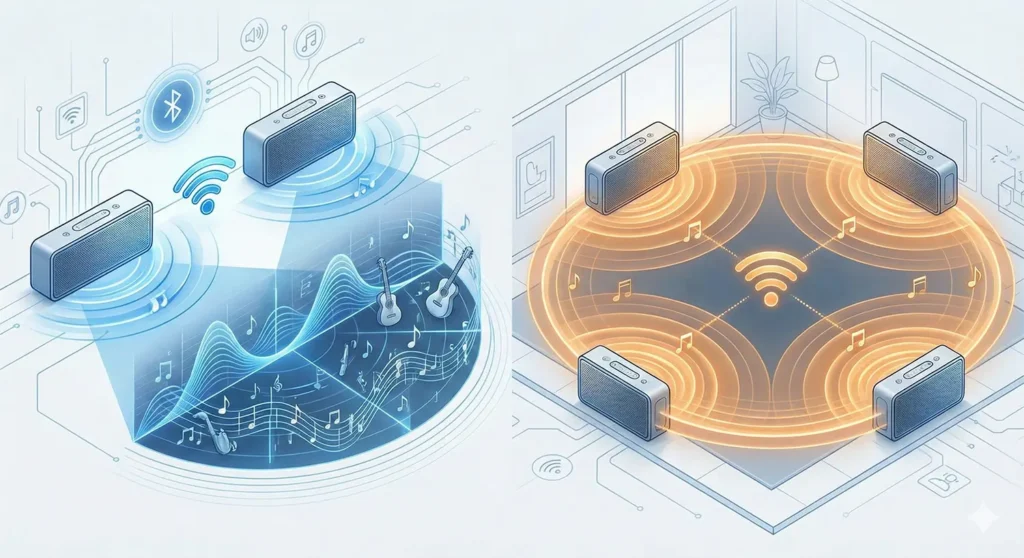
True wireless stereo (TWS) pairing allows two identical speakers to create separated left and right channels, dramatically improving soundstage and imaging. This configuration transforms portable audio from mono or pseudo-stereo to genuine stereo separation, enhancing spatial awareness and musical enjoyment.
Multi-room and party mode features enable synchronized playback across multiple speakers without maintaining stereo separation. While not improving individual speaker quality, these modes create immersive experiences in larger spaces or outdoor areas.
Equalization and Sound Customization
App-based EQ controls allow users to tailor sound signatures to personal preferences or compensate for environmental acoustics. Parametric equalizers provide precise frequency adjustment, while preset modes offer quick access to genre-optimized tuning.
Advanced speakers may include room correction algorithms that analyze acoustic environment and automatically optimize output. These adaptive systems can significantly improve sound quality in challenging spaces with strong reflections or bass nulls.
Battery Performance and Power Management
Power Consumption and Audio Quality Relationship
Battery capacity affects potential playback duration, but power management systems influence whether speakers maintain consistent sound quality as batteries deplete. Quality speakers implement voltage regulation that preserves audio performance until batteries reach critically low levels.
Maximum volume capability often decreases as battery charge diminishes. Premium speakers manage this gracefully, maintaining clean sound at reduced volumes rather than introducing distortion. Some models offer power-saving modes that limit volume or disable features like LED lighting to extend playback duration.
Charging Technology and Convenience
USB-C charging has become standard in modern portable speakers, offering faster charging speeds and universal compatibility. Some premium models support quick-charge technology, providing several hours of playback from brief charging sessions.
Battery longevity affects long-term sound quality, as degraded batteries may not supply adequate power for optimal amplifier performance. Replaceable batteries extend speaker lifespan, though most portable speakers use internal rechargeable cells.
Build Quality and Durability Impact
Weather Resistance and Sound Integrity
IPX ratings indicate water and dust resistance levels. While primarily protecting electronics, weather sealing affects acoustic design. Sealed speakers require different port configurations and may sacrifice some bass extension for protection, though premium designs minimize these compromises.
Rubberized coatings and reinforced grilles protect drivers from impact while maintaining acoustic transparency. Heavy-handed protection can dampen high frequencies, so quality speakers balance durability with sonic performance.
Long-Term Performance Reliability
Driver materials influence both immediate sound quality and long-term durability. Quality cone materials resist degradation from UV exposure, temperature fluctuations, and moisture. Suspension components must maintain elasticity over years to preserve bass response and prevent driver damage.
Amplifier component quality determines whether speakers maintain performance standards through extended use. Premium capacitors, heat management systems, and robust circuit design ensure consistent sound quality regardless of speaker age or usage intensity.
Price vs. Performance Considerations
Diminishing Returns in Audio Quality
Audio quality improvements follow diminishing returns as price increases. Mid-range speakers often deliver 80-90% of flagship performance at half the cost. Premium models justify higher prices through superior materials, refined tuning, advanced features, and better build quality rather than dramatic sonic superiority.
Identifying your priorities helps determine appropriate budget allocation. If maximum volume and bass are primary concerns, different speakers excel than those prioritizing midrange clarity and accurate timbre. Consider typical use scenarios when evaluating price-to-performance ratios.
Value-Focused Recommendations
Several performance tiers exist in portable speaker markets. Budget options under $50 provide basic functionality with acceptable sound for casual use. Mid-range speakers between $100-200 deliver genuine quality suitable for serious listening. Premium models above $300 offer refinement and features justifying higher costs for discerning users.
Brand reputation correlates with quality consistency but doesn’t guarantee superiority. Established audio companies bring acoustic engineering expertise, while newer brands may offer innovative features or aggressive pricing. Research specific models rather than relying solely on brand names.
Future Trends in Portable Audio Technology
Emerging Technologies
Spatial audio processing creates three-dimensional soundstages from compact speakers through psychoacoustic manipulation and precise driver control. While effectiveness varies, this technology represents meaningful advancement in portable audio immersion.
Improved battery technologies promise extended playback without size or weight penalties. Solid-state amplification advances enable greater power efficiency, allowing smaller speakers to achieve impressive output levels while maintaining quality.
Sustainable Design Practices
Environmental considerations increasingly influence speaker design. Recyclable materials, repairable construction, and energy-efficient components reflect growing sustainability awareness. These practices need not compromise sound quality, as responsible design often correlates with thoughtful engineering overall.
Modular designs allowing component upgrades or battery replacement extend product lifecycles while reducing electronic waste. Some manufacturers now offer trade-in programs and recycling initiatives supporting circular economy principles.
Frequently Asked Questions
What factors most significantly affect portable speaker sound quality?
Driver quality and size, amplifier power and design, cabinet construction, and digital signal processing are the primary determinants of portable speaker sound quality. Larger drivers typically produce better bass response, while quality amplifiers maintain clean sound at all volumes. Well-designed cabinets minimize unwanted resonances, and advanced DSP optimizes frequency response. Codec support for wireless transmission also impacts audio fidelity, with aptX HD and LDAC providing superior quality compared to standard Bluetooth codecs.
Does higher wattage always mean better sound quality in portable speakers?
Higher wattage increases maximum volume capability but doesn’t automatically ensure better sound quality. Efficient amplifier and driver pairing matters more than raw power specifications. A well-designed 20-watt speaker can outperform a poorly implemented 40-watt model in clarity, tonal balance, and overall musicality. Consider Total Harmonic Distortion ratings and driver quality alongside power specifications when evaluating sound quality potential.
How much does Bluetooth codec affect portable speaker audio quality?
Bluetooth codec selection significantly impacts wireless audio quality. Standard SBC codec introduces noticeable compression artifacts, particularly in complex music passages. Advanced codecs like AAC, aptX, aptX HD, and LDAC preserve more musical detail through higher bitrates and better compression algorithms. The difference becomes most apparent in quiet passages, high-frequency detail, and dynamic range. Both your source device and speaker must support the same advanced codec to achieve quality improvements.
Can small portable speakers deliver quality bass response?
Small portable speakers face physical limitations in deep bass reproduction due to driver size and cabinet volume constraints. However, passive radiators, bass reflex port tuning, and DSP enhancement allow compact speakers to achieve surprisingly full bass within their size limitations. Expect useful bass response down to 60-80 Hz from quality small speakers, though they cannot match larger models in sub-bass extension or bass impact at high volumes.
How important is stereo pairing for portable speaker sound quality?
Stereo pairing dramatically improves sound quality by creating true channel separation and wider soundstage. Two speakers positioned several feet apart produce distinct left and right channels, enhancing spatial information and instrument placement. This configuration transforms listening experience compared to single-speaker mono or simulated stereo. For serious music listening, stereo pairing represents one of the most significant quality upgrades available in portable audio.
Do waterproof speakers compromise sound quality?
Weather-resistant design requires acoustic compromises, as sealed enclosures and protected ports affect sound output. However, premium waterproof speakers minimize these impacts through careful engineering. High-quality waterproof models can match or approach non-weatherproof equivalents in sound quality while providing environmental protection. The key is selecting well-designed waterproof speakers rather than assuming all weather resistance degrades audio performance.
How long should a quality portable speaker maintain performance?
Quality portable speakers should maintain sound performance for 5-7 years or longer with proper care. Battery capacity degrades over time, affecting maximum volume capability, but audio circuitry and drivers remain stable if not physically damaged. Premium speakers use durable components resistant to environmental degradation. Regular firmware updates can even improve performance over time through DSP refinements and feature additions.
What’s the difference between 360-degree and directional portable speakers?
360-degree speakers radiate sound omnidirectionally, providing consistent coverage throughout a space but potentially sacrificing soundstage precision. Directional speakers focus output in specific directions, creating more defined stereo imaging and better performance in the intended listening position. Neither approach is inherently superior; choice depends on use case. 360-degree designs excel for gatherings where listeners surround the speaker, while directional models suit focused listening scenarios.